MODEL ON TEST: ELECTRIC GS – MILEAGE – 1,991
It isn’t something you’ll often find said about cars, but the Mokka Electric is a case study in the inflation-busting effects of maturing technology. When it launched back in 2021, a mid-specification version
of Vauxhall’s first compact electric crossover cost £32,435 on the road, which is around £40,500 in today’s money. With scale economies and some government support in its favour, its closest equivalent now comes in at £5,000 cheaper – and it’s a much better car, too.
Those improvements have happened incrementally. Fine-tuning late in 2021 extended the range from 201 to 209 miles, while 2024’s Long Range variant wrung 250 miles out of a more efficient motor and larger battery. It’s proved popular – one in three Mokka customers opted for the EV last year, according to Department for Transport figures, and a mid-life update plus the Government’s £1,500 Electric Car Grant can only help.
However, this has become a crowded field. Several of the Mokka’s closest rivals are mechanically similar products from other Stellantis brands, but it’s also facing new competition from the Ford Puma Gen-E – an electric version of the UK’s best-selling car.And although it falls just short of the Vauxhall on range (at 233 miles), the Ford is significantly cheaper, helped by the full £3,750 Electric Car Grant.
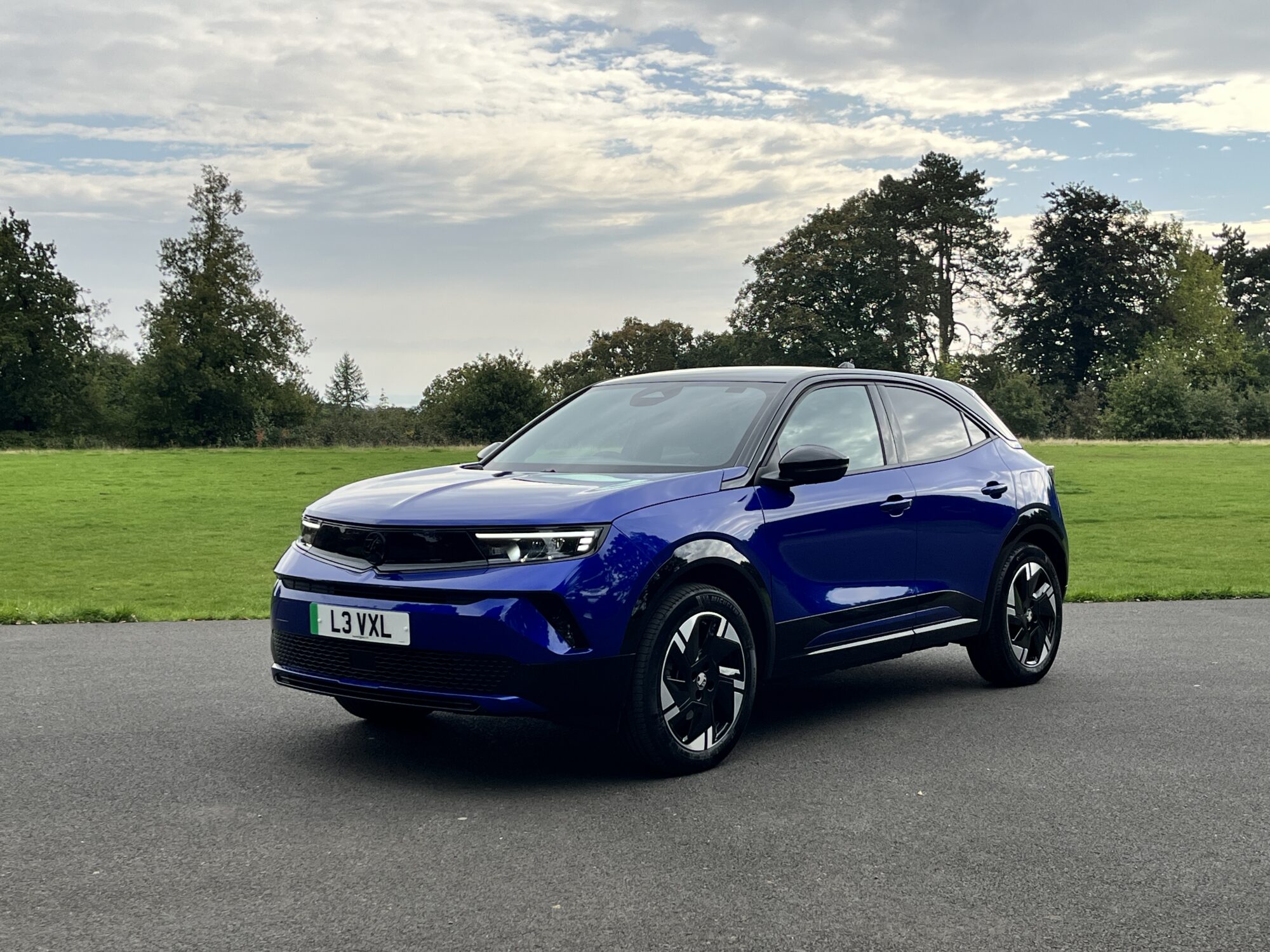
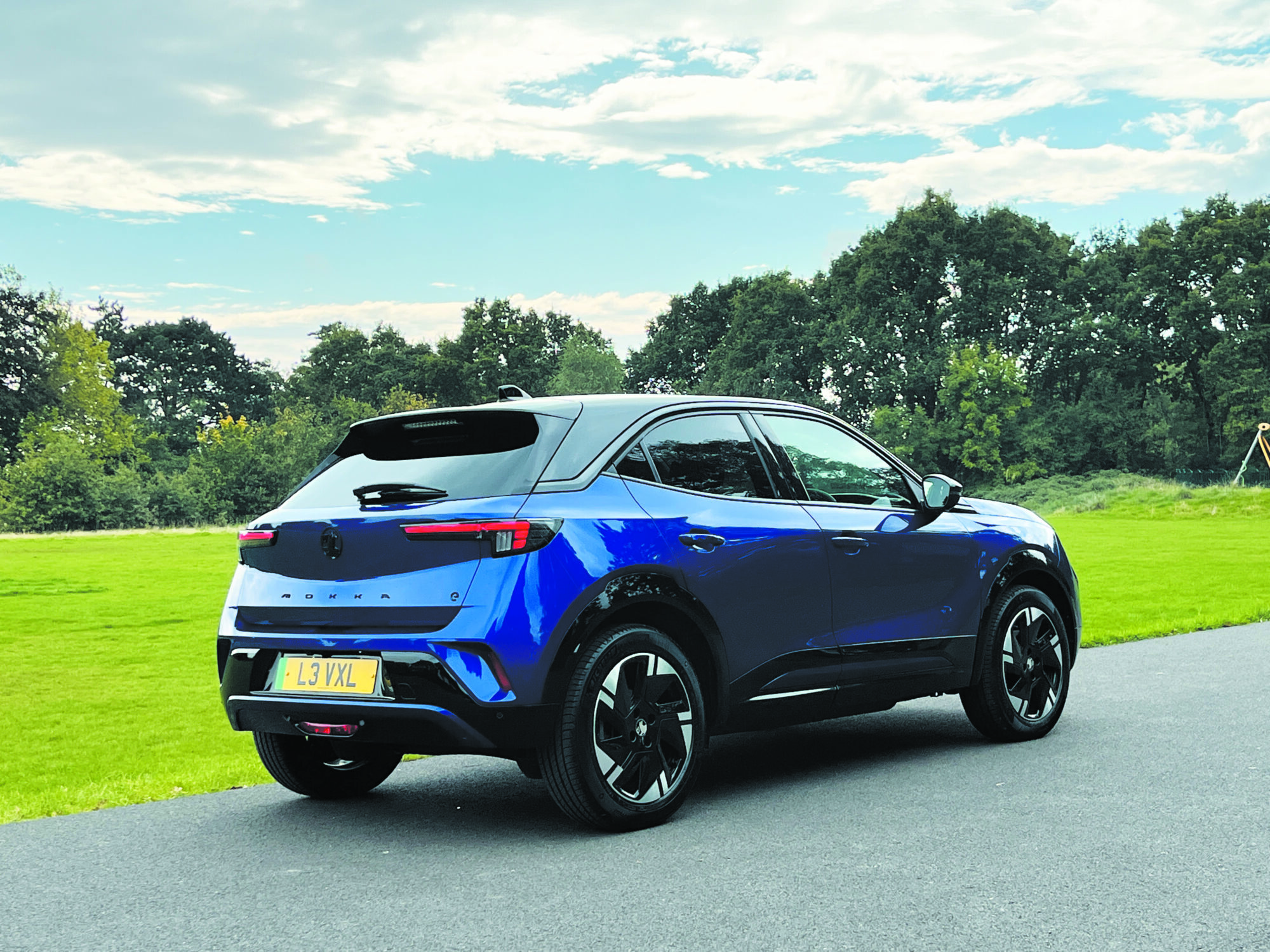
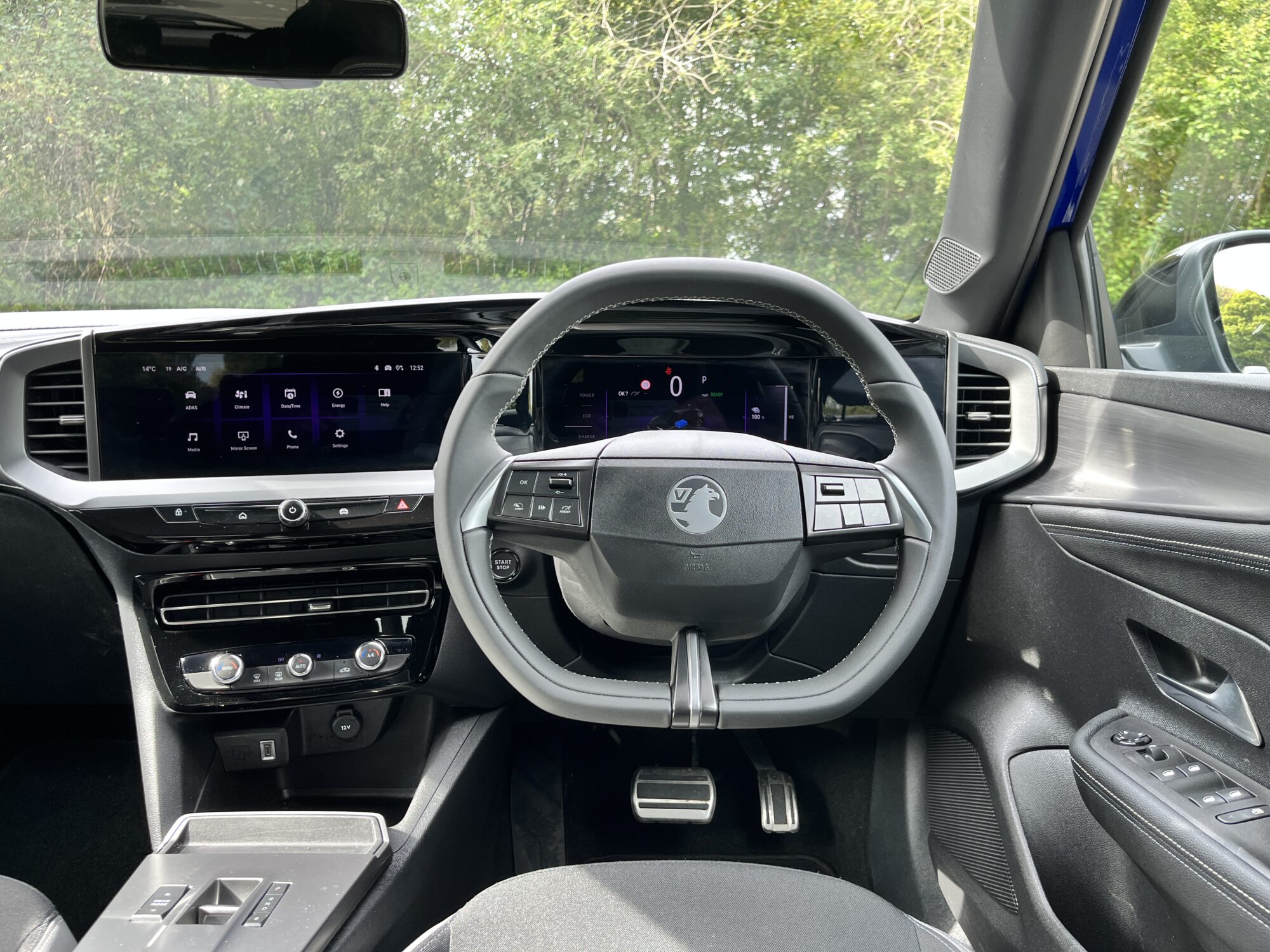
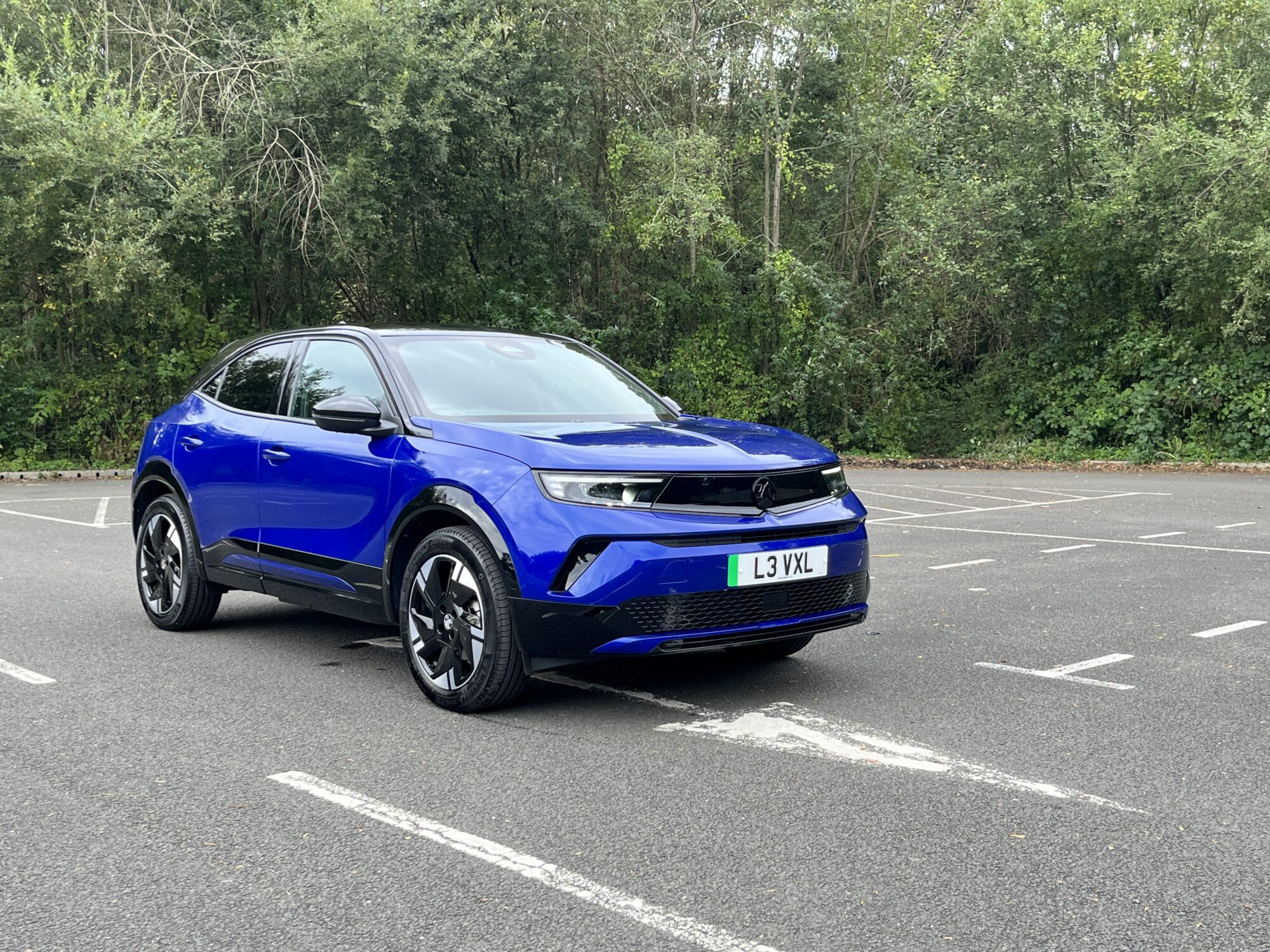
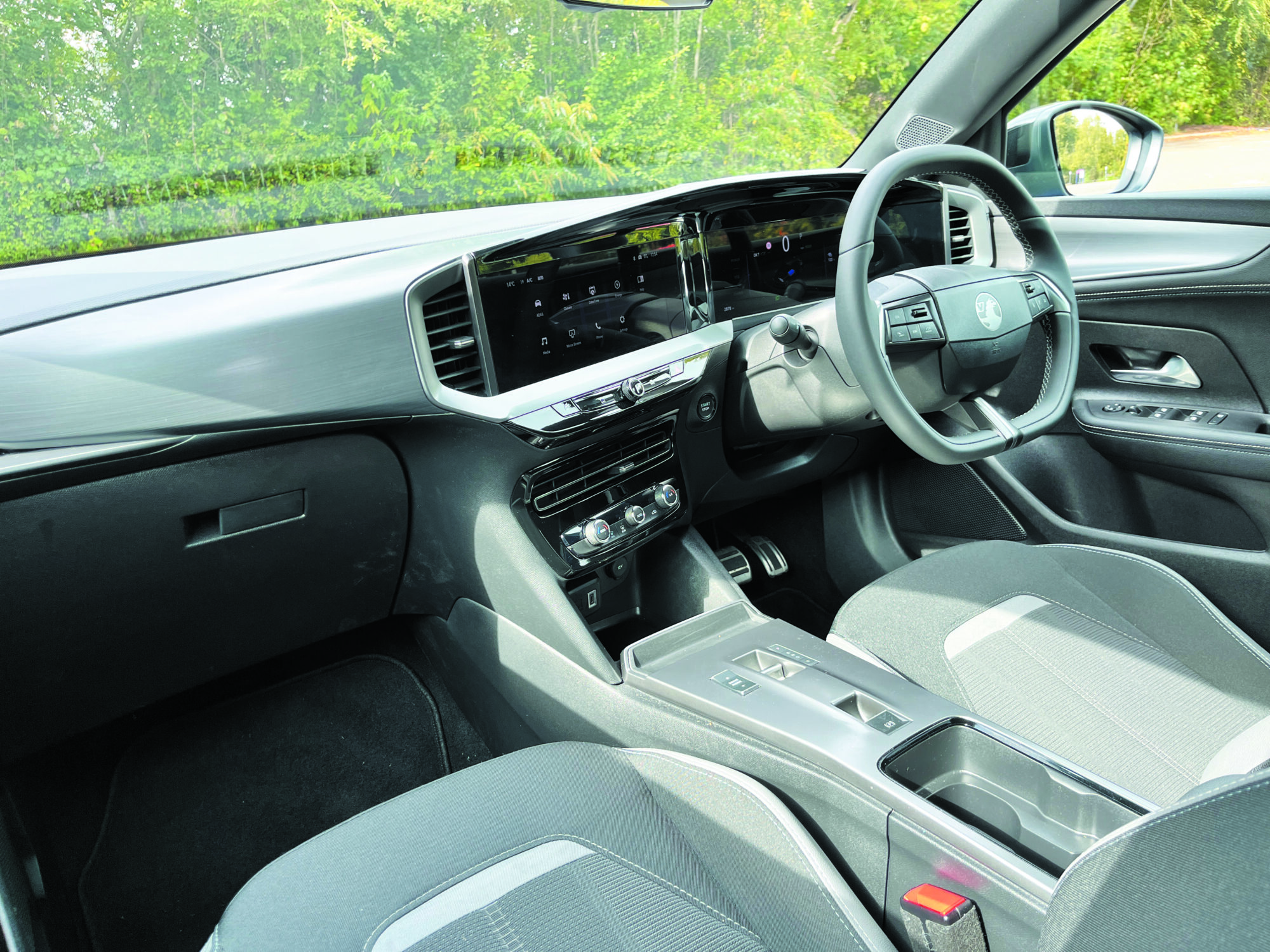
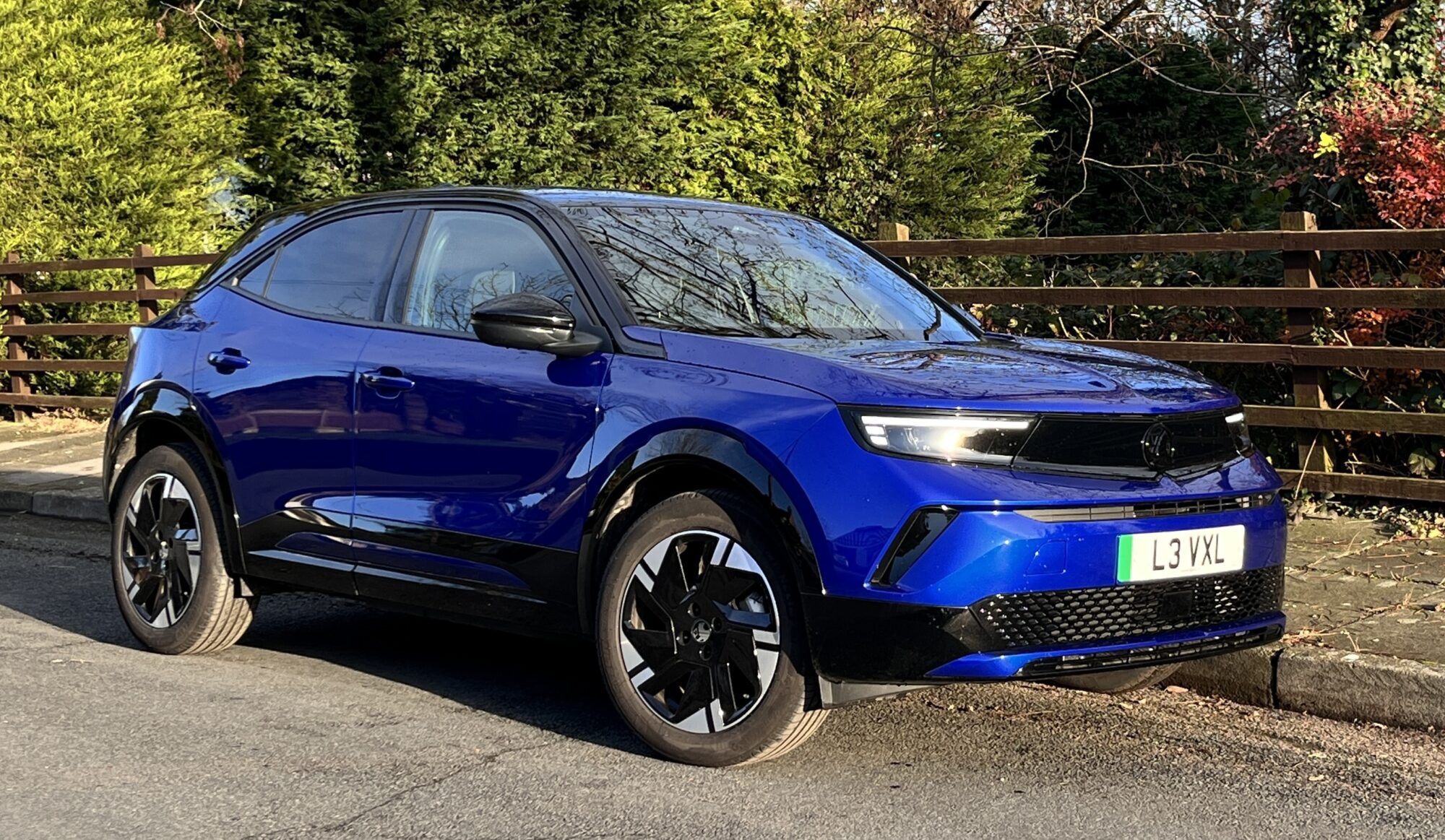
The Mokka has aged well, so there’s been no need for major visual updates here. Subtle tweaks to the headlights align it with the smaller Frontera, while only the entry-level Griffin misses out on the new gloss black body cladding. Inside, all versions now have a 10-inch touchscreen, fewer buttons on the centre console and a similar steering wheel to the Grandland. If it wasn’t for the £650 Colibri Blue paint (one of three colours added during the update) you’d be forgiven for not noticing at all.
Vauxhall recently launched a sporty 278bhp GSE version, but the core of the Mokka Electric range is slimmer than it was. There are three trim levels, all equipped with what used to be called the Long Range powertrain, which combines a 154bhp electric motor and 54kWh battery pack. On paper, this offers 250 miles to a full charge, which takes around seven and a half hours
on a typical 7.4kW home charger, or five hours on 11kW or faster public units. It can also take up to 100kW at a DC rapid charger which (in theory) would restore 200 miles (80%) in half an hour.
Even the entry-level trim level gets essentials including LED headlights, cruise control, rear parking sensors and a 10-inch touchscreen with wireless Android Auto and Apple CarPlay. Our mid-specification GS is largely a style- focused upgrade, marked out by larger aerodynamic wheels, rear privacy glass and a shark-fin antenna, but also adds a useful 180-degree reversing camera and passenger seat height adjustment. Heated seats, built-in navigation with live charging point data and Vauxhall’s clever assisted driving and matrix LED headlights are reserved for the Ultimate trim.
There are no option packs. Selecting a colour other than black adds £650 to the price (the no-cost paint might have changed by the time you read this), but the only other cost option is a £400 heat pump. It’s the only backwards step since 2021, as launch models included this as standard equipment, and a worthwhile upgrade for regular road-trippers as it offers more efficient cabin heating and reduces range
loss in winter.Ours doesn’t have it.The only other choice is whether to spend Vauxhall’s £500 charging contribution on a home wallbox, or credit for plugging in at public chargers.
First impressions are positive. In a world of rising prices and ‘shrinkflation’ (same price, less product), the Mokka feels like a sensibly specified option which could suit even single-car families, and it’s become a much better all-rounder since it launched four years ago. Some things really do get better with age.
ALEX GRANT
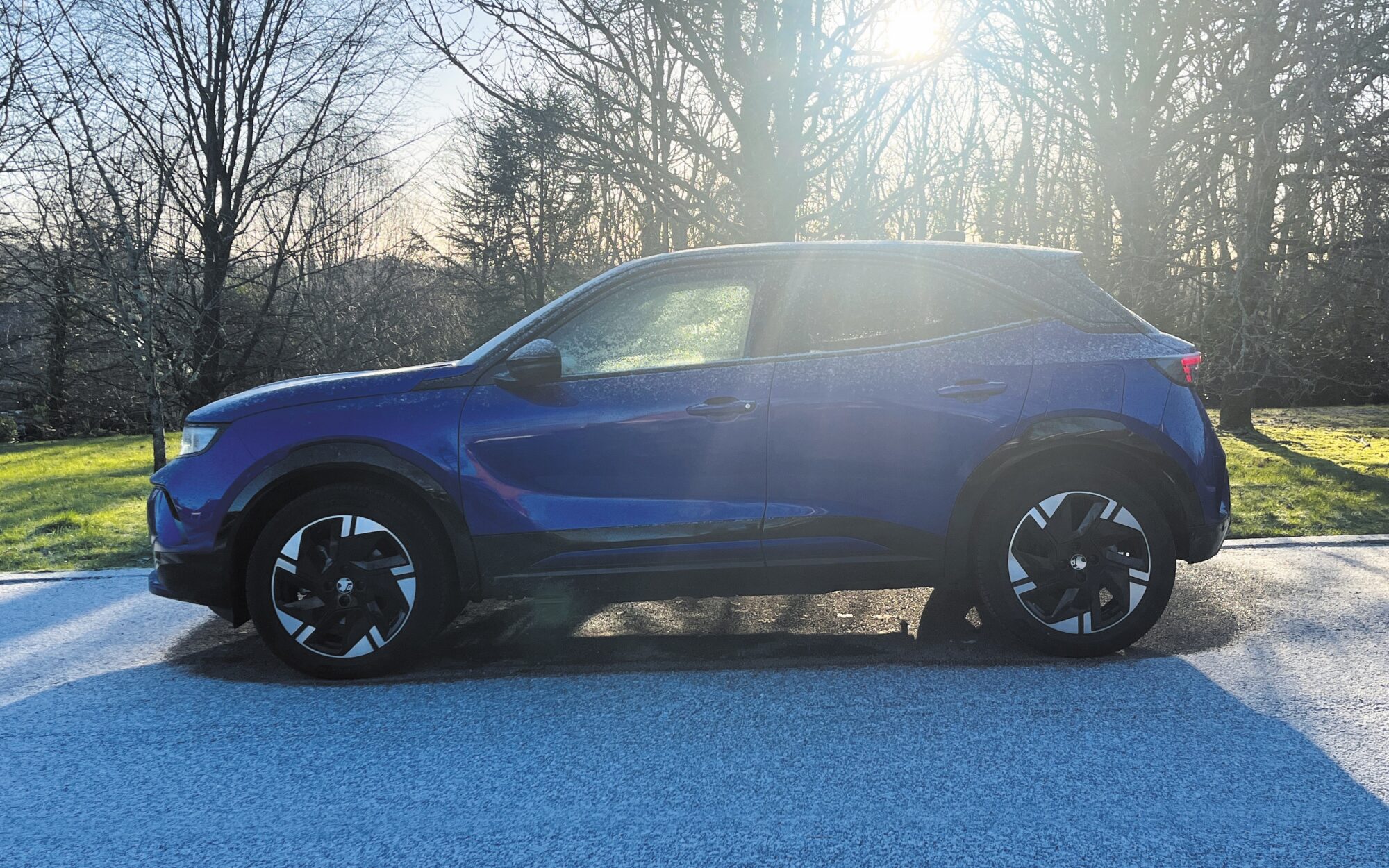
WHAT’S HOT: Colibri Blue suits the Mokka perfectly – and really stands out in car parks full of monochrome paint.
WHAT’S NOT: It isn’t unusual in this segment, but the metal-effect dash inserts feel a bit cheap to the touch.
STANDARD EQUIPMENT: 10-inch digital instruments, 18-inch alloy wheels with Michelin e-Primacy 195/60 R18 tyres and tyre repair kit, 60/40 split/fold rear seats, Alarm system, Ambient lighting, Anti-lock brakes with electronic brakeforce distribution and brake assist, Automatic headlights, Autonomous emergency braking with pedestrian detection, Climate control, Cruise control with speed limiter, DAB radio with 10-inch touchscreen, navigation system, 6-speakers, USB sockets, voice control and steering wheel controls, Driver drowsiness detection, Driver, passenger, side, and head airbags with passenger side de-activation, Electric and heated mirrors, Electric park brake, Electric front windows, Electronic stability programme with traction control, Emergency e-call system, Hill start assist, ISOFIX child seat, safety fasteners for rear outer seats, Keyless start, LED daytime running lights, LED headlights
with automatic high beam LED taillights, Rain sensing windscreen wipers, Rear parking sensors, Rear privacy glass, Remote central locking, Reversing camera, Traffic sign recognition, Tyre pressure monitors, Wireless Android Auto, Apple CarPlay and Bluetooth smartphone compatibility
OPTIONAL EQUIPMENT: Colibri Blue metallic paintwork (£650)
FACTS & FIGURES:
Our cars: Vauxhall Mokka Report 2
MODEL ON TEST: ELECTRIC GS – MILEAGE – 2,838
As you might well have heard, my hometown of Cardiff recently became the first in the UK to penalise the now-ubiquitous SUV. Well, sort of. Despite countless news stories illustrated with crossovers, our Mokka isn’t affected by the council’s hiked-up on-street parking permits. Like most of the cars that make up the SUV’s 60% share of UK sales, it’s lighter than the 2.4-tonne gross weight threshold where those
fees apply. And it’s no less talented as a family-mover as a result.
It probably helps to re-frame these vehicles. Cardiff Council is out to dis- incentivise heavy cars regardless of bodystyle, but specifically name-checked SUVs as heavier, more space-hungry and less efficient than an equivalent hatchback. I’d argue that “equivalent” is debatable – the Mokka is, effectively, a Corsa SUV, but it’s more likely to appeal to drivers who’d otherwise be sizing up into an Astra.
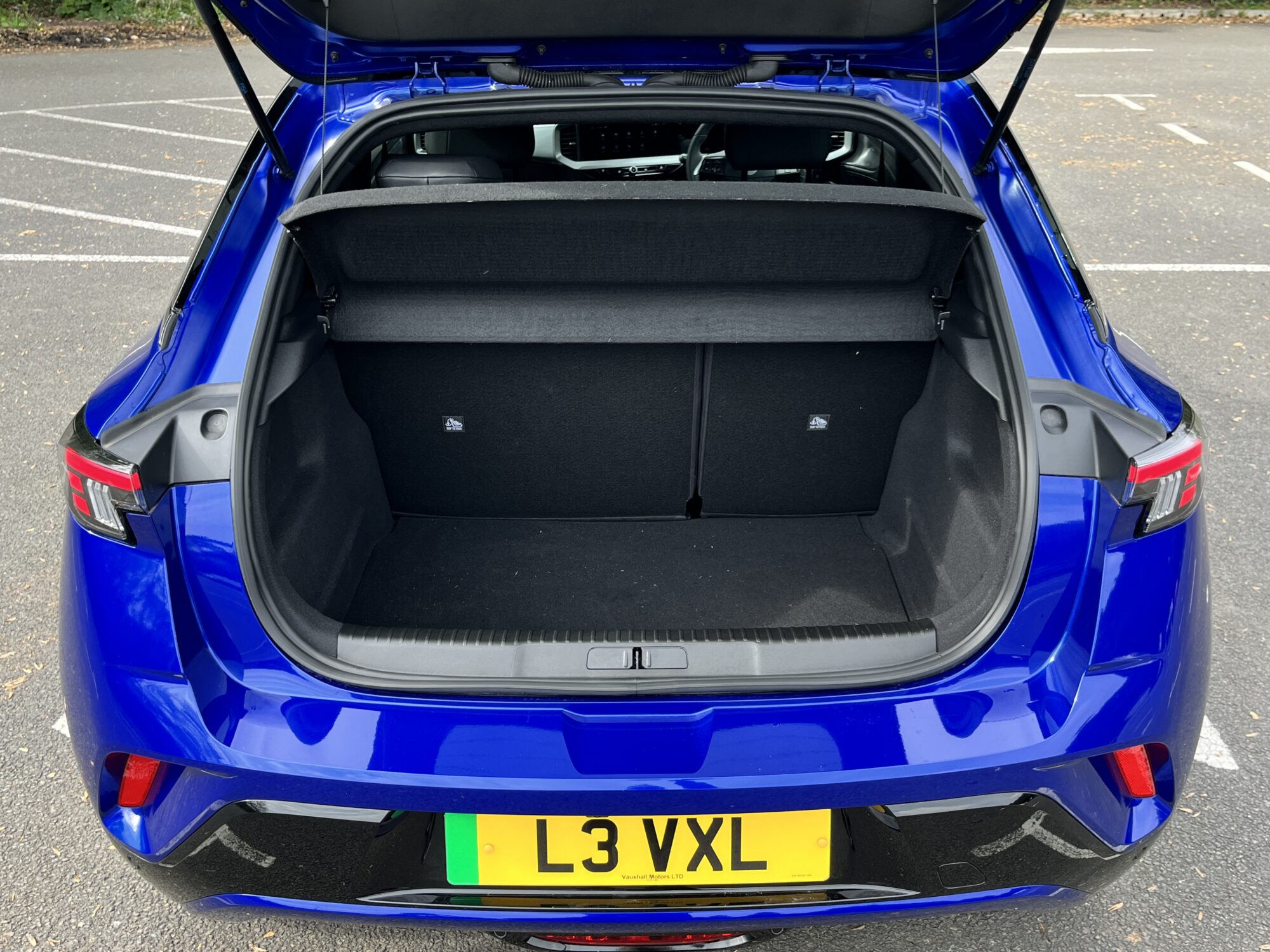
Size and weight wise, it slots almost exactly halfway between those two cars. Electric variants of all three models lose a bit of luggage space compared to their petrol or mild hybrid counterparts – in this case, a loss of 40 litres with the seats up, or 45 with them folded.The layout of that boot space is very different in each model, though.
Drivers moving out of a Corsa get an extra 154mm of width and 206mm of height (1mm and 179mm compared to the Astra) but a shorter load length. There’s 667mm behind the Mokka’s rear bench, 1,418mm with the rear seats folded, compared to an impressive 885 to 1,697mm in the Corsa and 770
to 1,589mm in the Astra. Curiously, the Mokka has the lowest maximum boot capacity in that group, coming in 20 litres (half a carry-on suitcase) lower than the Corsa when it’s loaded to the roof. That shorter load area could also be tricky with a bulky buggy chassis.
In practice, I’ve found the Mokka very accommodating as a family-mover and business trip companion. The kids’ bags and my overnight gear all sling nicely into the boot without any issues, and in GS specification there’s no panicky electric tailgate to contend with in the rain. My biggest criticism is the parcel shelf, which is constantly coming unclipped from its hinges and getting wedged in a semi-upright position that blocks the rear view. A ‘frunk’ for the charging cable would also be useful. The tall roofline benefits rear passenger space most. Whereas the Corsa requires some stooping to get under the rear door frame (and I’m not that tall), the Mokka is easier to get in and out of and much roomier for adults. My kids miss having a central armrest, but reading lights in the back are particularly useful for recovering lost toys and socks now the evenings are drawing in. Plenty of rivals don’t have them.
I get a little bored of the anti-SUV mentality, as those who demonise the ubiquitous soft-roader forget that most are bought for practicality rather than vanity. With plenty of useful space on board, and a compact footprint that’s well suited to city centres, I reckon it’ll take some sizeable financial penalties to nudge swathes of the SUV-buying 60% of the British public into something else.
ALEX GRANT
WHAT’S HOT: I’m surprised by the on-paper statistics – the Mokka feels surprisingly spacious for such a small car.
WHAT’S NOT: The parcel shelf desperately needs a tighter- fitting set of hinges to stay put.
FACTS & FIGURES
Our cars: Vauxhall Mokka Report 3
MODEL ON TEST: ELECTRIC GS – MILEAGE – 3,844
Spontaneity. It’s one of those ownership aspects I’m often asked about when people probe my experiences driving electric cars. What if you had a sudden change of plans, and a flat battery to contend with? Wouldn’t that be a good reason to crave the ease of a short petrol station stop? Not really.
During a wet Friday evening a few weeks back, I was idly doomscrolling social media when the algorithm dropped a last-minute opportunity my way. Chicane, one of my favourite trance acts from my teens, posted a video highlighting the last few tickets to one of his live band shows in Shepherds Bush the following day. Tempting…
I love an unplanned trip, but this one had a few hurdles in the way. The Mokka was down to a single-digit battery percentage, Shepherds Bush is a 280-mile roundtrip from Cardiff (that’s 30 more than Vauxhall claims from a full charge), and I was exhausted enough to be put off booking it straight away.
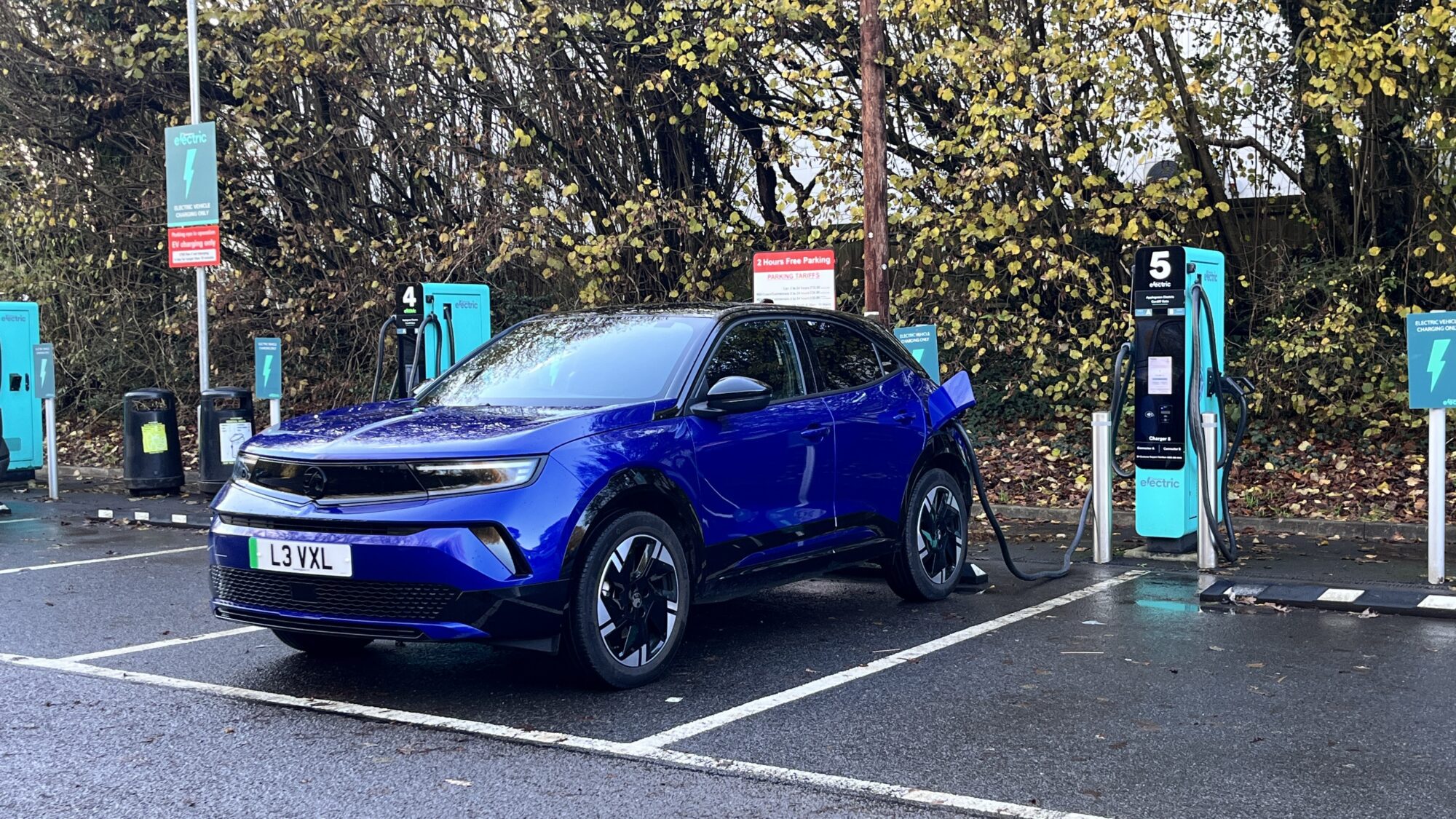
A hybrid Mokka run down to fumes would have required a quick trip to the nearest fuel station under those circumstances. Its electric counterpart only required a slightly damp sprint out to the driveway to plug it in. I woke to a fully charged battery (checked via the My Vauxhall app) and an equally re-energised brain, so booked the ticket before I got out of bed. I could have got enough range for the outbound trip with a half-hour stop at our local Tesla Superchargers.
New to (or hesitant) drivers tend to imagine EV ownership involves long hours waiting at charging stations. The Mokka doesn’t set any records for range (I’m getting around 220 on the motorway) or fast charging (topping out at a mediocre sounding 100kW) but I’ve found both are plenty. I’m usually ready for a break after between 100 and 120 miles, and I’ll unplug when I’m ready to leave instead of waiting to get to 80%.
This time, though, I pushed on through to the slower, cheaper chargers in Westfield shopping centre. I dumped the car with around 30% charge, and by the time I got back to it after the gig, it was back up at 99% for the drive home – and pre-warmed via the app. Aside from some issues finding Westfield’s chargers in the first place, it’s a case study in simple EV driving.
Allow me a soapbox for a moment. I remember EVs from the early 2010s, where every mile of range was critical on the motorway and poorly chargers leaving me with sweaty-browed searches for a Plan B. Today, I’d warn against going for the biggest batteries. If you can plug in at home, then a motorway range of around 200 miles and 100 to 150kW charging is plenty, and there’s likely to be somewhere to plug in near to your destination.
Is this as straightforward as a splash and dash forecourt visit? Not quite. But a spot of chargepoint hunting in a massive car park feels like a small trade-off against the convenience of plugging in at home the rest of the time. Roll on the next spontaneous road trip.
ALEX GRANT
WHAT’S HOT: The Mokka’s unbranded audio system is great for re-living the best bits of the gig you’re driving from.
WHAT’S NOT: Adaptive cruise control is only available on the top- specification Ultimate trim. I’ve missed it on long drives.
FACTS & FIGURES
Our cars: Vauxhall Mokka Report 4
MODEL ON TEST: ELECTRIC GS – MILEAGE – 4,452
There’s only one charging point at the Grant household, but we often have a couple of cars getting a top- up at the back end of our garden. One of them is usually an electric or plug-in hybrid car getting a mains top-up on the drive, while the other is my 35-year-old Volkswagen Polo, sheltered from the Welsh weather and hooked up to its CTEK trickle charger in the garage. Our Mokka has used both of those chargers.
I’d expected to get stuck into the nitty- gritty of charging at some point, but I hadn’t planned for that discussion to go further than the high-voltage battery. Despite the column inches EV charging tends to get, our off-street parking spot means I’ve yet to run the Mokka’s range down far enough to break a sweat wondering if I’ll get home. Instead – and this doesn’t tend to come up so often – I’ve hit a snag that isn’t EV-specific. The 12-volt battery has let me down.
It’s a sensitive subject. The Polo developed an alternator fault last summer which, in slow-moving traffic with the headlights and heaters on, would steadily deplete the battery and eventually kick the early-90s electronic fuel injection system into a tailspin. This would have been a lot harder to manage without that CTEK on standby, and I’ve discovered that this can be just as much of a headache for electric cars.
The job at hand differs. There’s no need for an EV’s 12-volt battery to deliver the spike of energy needed to crank an engine into life, but it remains a critical component.With the car switched off, the low-voltage system powers things like the alarm, locks and immobiliser, and any connected features that tick over in the background. It also nudges the high-voltage system into life, either with a tap of the pre-conditioning function or to drive away.
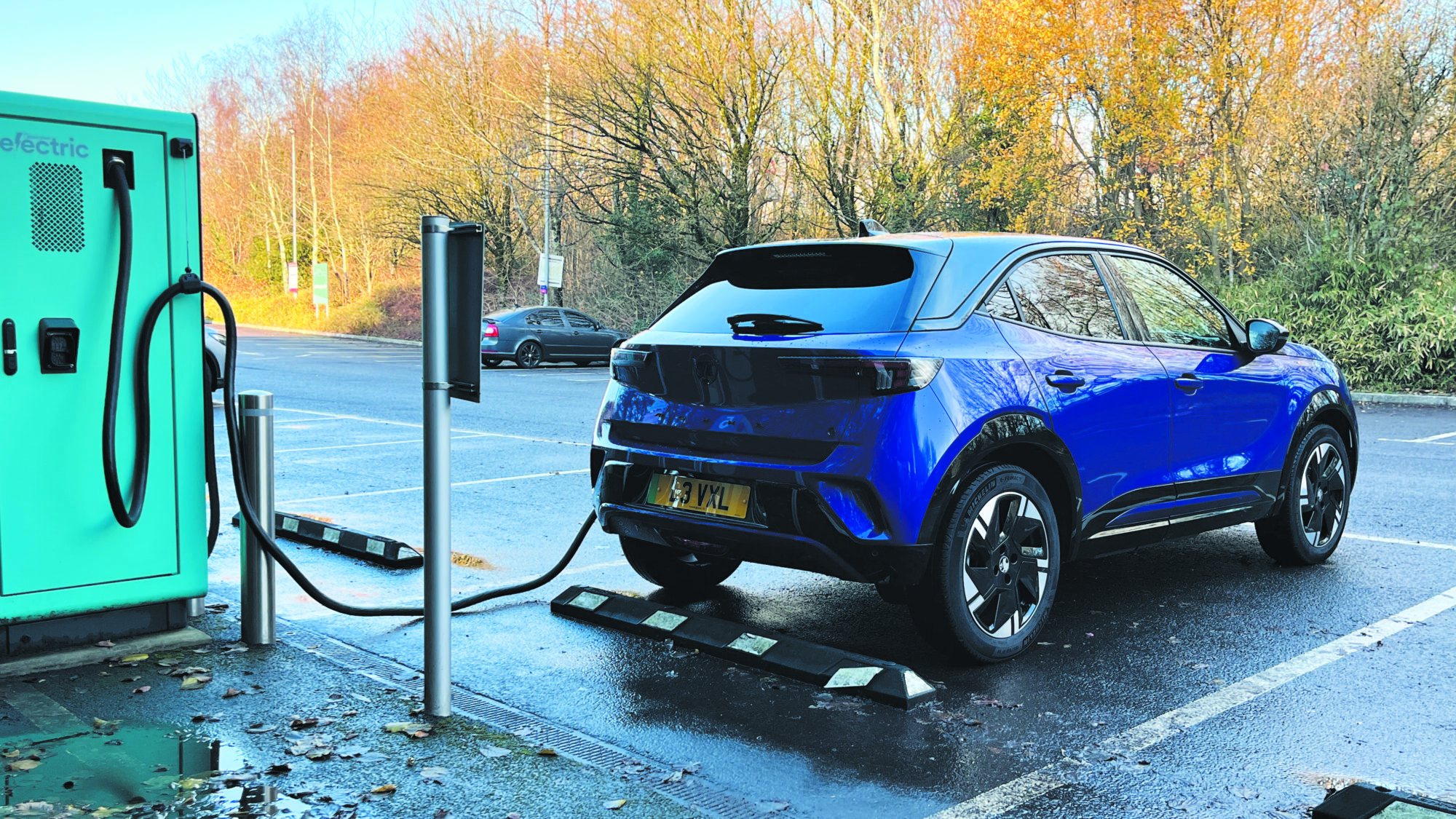
This introduces the same weak link scenario you get in a fuelled vehicle. A fully charged EV with a flat 12-volt battery won’t start (or even unlock without using the key blade), and that means they’re just as vulnerable to cold weather as petrol or diesel cars.To give you some idea, recovery firm Green Flag claims battery-related breakdowns surged 26% month-on month in November 2024. It’s also forecast that almost half a million cars will have the same issue in the three months to the end of January 2026. That’s five every minute. Unfortunately, I’m one of them. Having already topped it up with the CTEK in September, the Mokka responded to a week of local journeys during a cold snap by throwing a tantrum on the school run. The result? Multiple error messages, a refusal to go into gear, and an unplanned overnighter at our local dealership delegating two days of errand-running to the Polo.
Despite the dramatic delivery, the fault was as expected – a weak, and easily replaced, 12-volt battery, swiftly replaced with the help of the RAC and Evans Halshaw in Cardiff, and it’s been faultless ever since.Yes, we’re still charging two cars at once, but at least there’s no fight for that hard-working CTEK now.
ALEX GRANT
WHAT’S HOT: The Mokka’s cabin, every morning, even when it’s icy. Pre-conditioning never gets old.
WHAT’S NOT: All that heater usage is nibbling away at the average energy efficiency.
FACTS & FIGURES
Our cars: Vauxhall Mokka Report 5
MODEL ON TEST: ELECTRIC GS – MILEAGE – 5,147
Despite all the fuss about buyers switching to SUVs, I don’t think car buying habits have changed much since I was a kid, and I’ve had an unexpected reminder this month.A friend found herself in need of a rental car for a few weeks while waiting for her new car to be delivered. She opted for a Volkswagen ID.3 “or similar” – effectively asking for an electric Golf. The “or similar” turned out to be a Mokka Electric. How’s that for a sign of the times?
Rather like one might expect of a Golf, I’ve found our Mokka to be a very easy companion, so I think it’s a fair substitute, and it was a top-specification (if you overlook the sporty GSE) Ultimate trim. I’ve become so familiar with our mid-level GS that it was interesting to poke around the next level up, to see how Vauxhall is luring buyers to push the budget.
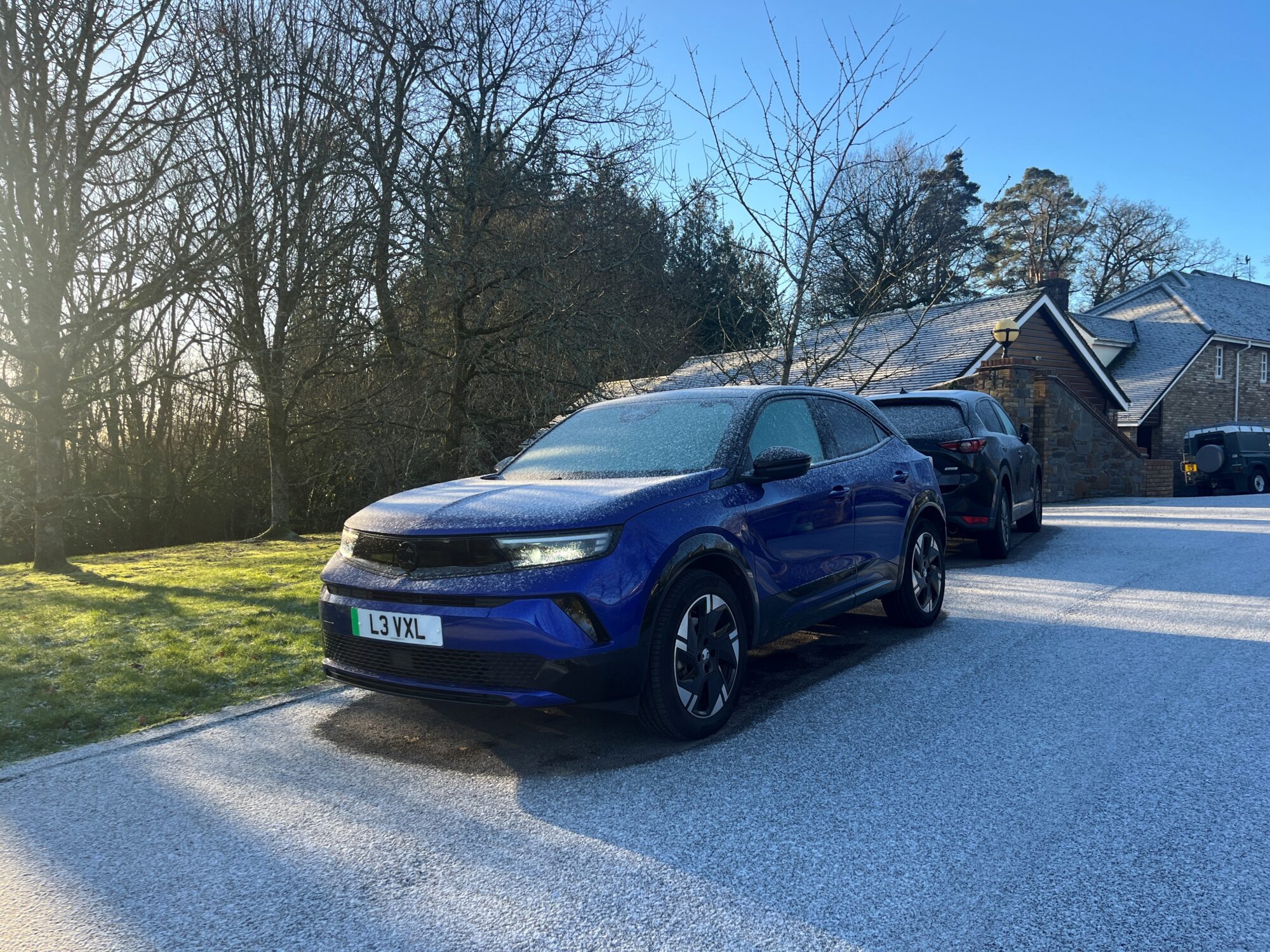
Mid-specification is usually a safe starting point if you’re car shopping, and our Mokka has most of the essentials ticked. I’ve got twin 10-inch screens with the prerequisite Android Auto, Apple CarPlay and a high- resolution reversing camera, cruise control, excellent LED headlights and twin USB ports in the back to keep the kids’ devices and motion sickness inducingly topped up. However, Ultimate adds a few features that I’d want if I was buying a Mokka. It’s the only version with keyless entry (which makes keyless start genuinely useful),has heated seats (which help avoid range loss in winter) and adaptive cruise control (which I rate as a regular motorway driver). If you’re new to EVs, Ultimate is also the only version with built in navigation and Vauxhall’s excellent route planner that includes convenient charging stops.
I could live without the wireless phone charger, front parking sensors (it’s a small car) and the movable boot floor (which creates a separate compartment) is a nice-to-have, but the Intelli-Lux matrix LED headlights are a desirable part of the top specification. They effectively allow you to run full beam on dark rural roads, by blanking out the sections that would dazzle other drivers. It’s great technology. The only gap in the Ultimate trim is the heat pump system, which is a £400 option and would help with winter efficiency.
It’s a relatively cheap upgrade, too. I ran some quotes through Vauxhall’s finance calculator and, based on a £3,000 deposit, 48-month term and 8,000 miles a year, the GS comes out at £353 per month compared to £381 for the Ultimate.For my use case,I reckon that’s a small price to pay, and both come with a £500 voucher to either add a home charger or to put towards using the still- pricey public networks.
If you’re less fussed on having all options ticked, I’d nudge would-be GS customers towards the entry-level Griffin trim too.There’s a visual downgrade,with smaller wheels and textured black plastic body cladding instead of gloss black, but equipment wise, it’s only a reversing camera, rear seat USB ports and alarm short of the next version up. It misses out on the interest free credit of other models and the resulting monthlies (at the time of writing) are higher – but it’s a very complete specification if you can spot a deal.
ALEX GRANT
WHAT’S HOT: Switching in and out of other cars reminds me how intuitive the Mokka’s mix of buttons and screens is.
WHAT’S NOT: It’s picky, but nobody can find the tailgate release – which is above the number plate.
FACTS & FIGURES
Our cars: Vauxhall Mokka Report 6
MODEL ON TEST: ELECTRIC GS – MILEAGE – 5,351
There’s something very satisfying about finding a car that matches your daily driver needs perfectly, and I’ve been impressed at how well the Mokka has stood up. Home charging, zero tailpipe emissions and a compact footprint are ideal for my mostly urban usage, but it’s also shrugged off motorway miles with space for the kids and luggage on board. However, the last couple of months have nudged it outside of its comfort zone.
Hopefully it’s an edge case, and I’m in no rush to re-live what has been a very busy festive period. I moved house at the end of January, with all of the usual uncertainty about completion dates, so I made use of the December work slowdown to start boxing lesser- used possessions and moving them into storage. It’s moments like this where a Combo Life comes into its own, but its smaller sibling didn’t require many extra trips to the storage unit.
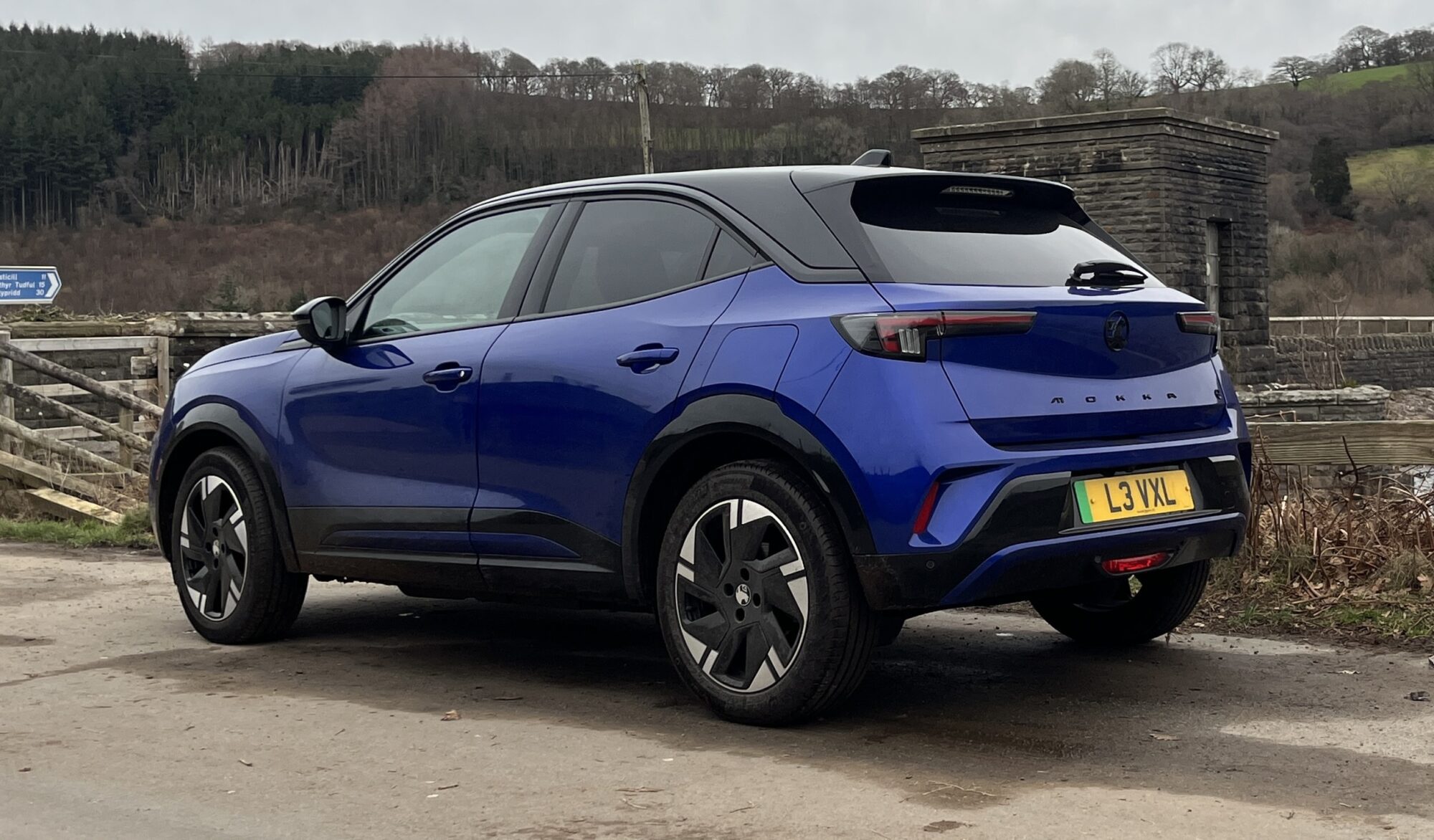
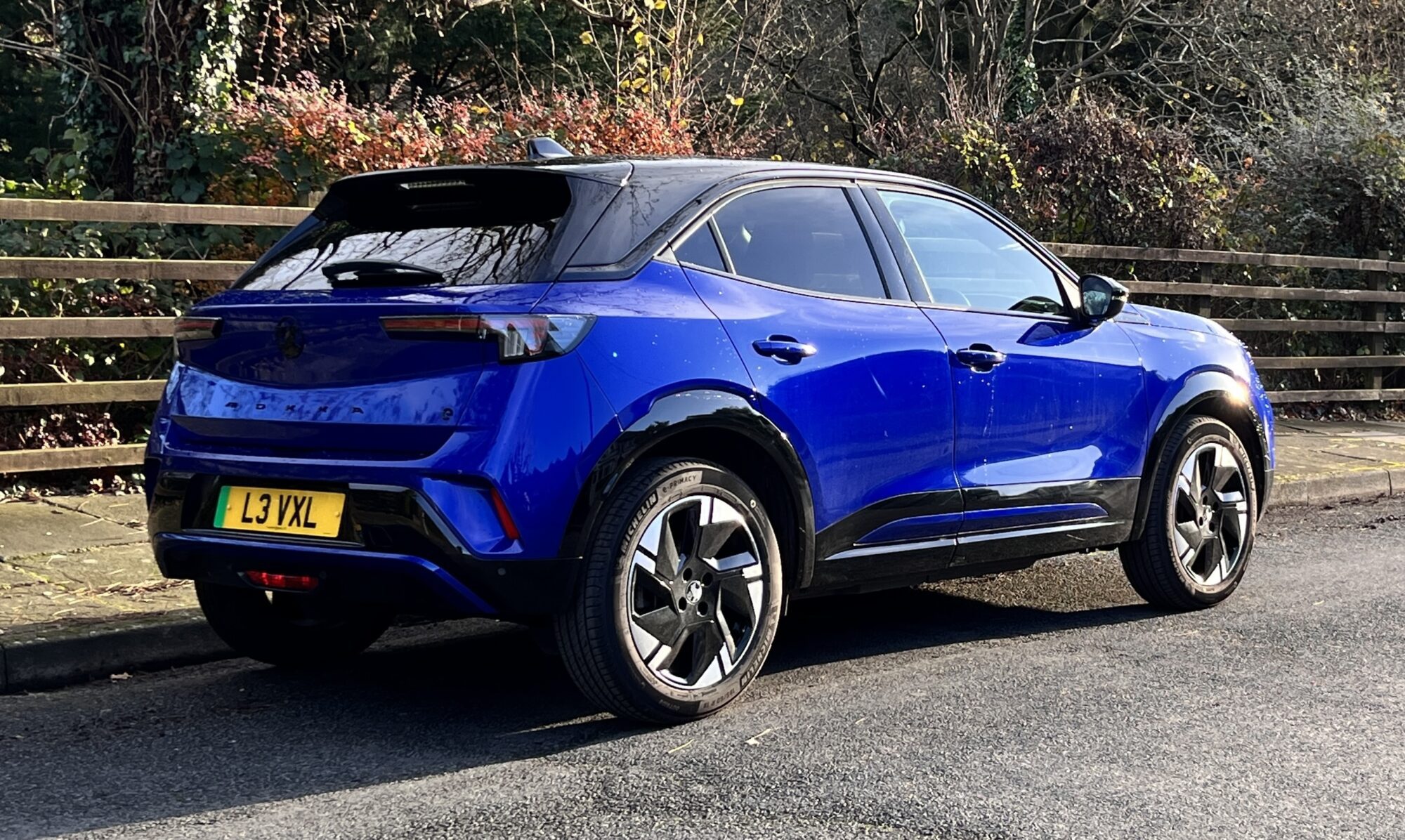
On the SUV scale, the Mokka sits more towards the ‘sport’ than ‘utility’ – being neither boxy, nor particularly large. Top- specification Ultimate versions get a false floor, but the GS loads into what would be the compartment underneath. There’s a maximum load height of 780mm, but it’s not clear where you’d get that – the area above the parcel shelf is compromised by the angle of the rear screen.
However, I was surprised to find I could fit a couple of large plastic boxes, at right angles, into the boot with three more across the folded rear bench. And kudos to Vauxhall for offering generous back doors and a tailgate aperture with no intrusion from the rear lights. It wouldn’t be my first choice for hauling bulky objects, but it’s easy to load to the gills, and that isn’t a given in this class.
The bigger challenge, after moving, was a crash course in life with an EV and no home charging. I have a driveway, and a Juice Booster 2 charger, which pulls a full 13 amps from a three-pin plug while monitoring the socket for overheating.The downside was having to leave my large kitchen window
ajar, which makes overnight charging unsafe. For around three weeks the Mokka grazed on whatever I could pick up while working from home – with a couple of faster sessions on the Vauxhall- branded points at my local Tesco.
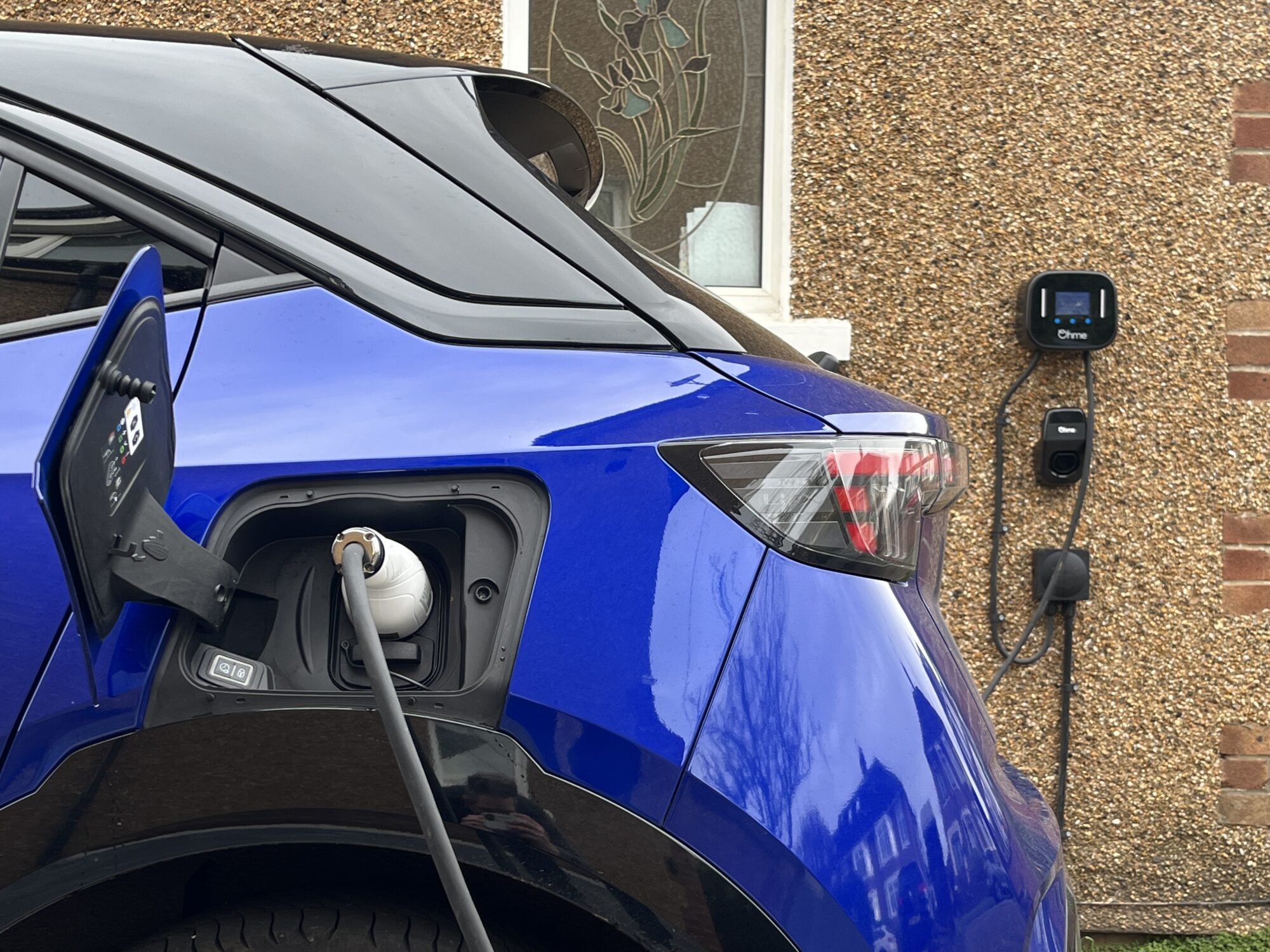
I’ve since added an Ohme Home Pro wallbox and, after years of writing about smart charging, I’m finally getting to experience the benefits first hand. Integrated with my Octopus Intelligent Go electricity tariff, it’s getting six solid hours of low-cost charging every night and nibbling at short periods of cheap, low/zero carbon energy during the day if I leave it plugged in. It’s a big step forward from the 12-year-old wallbox at my old house.
Convenience aside, at 7p per kilowatt- hour I’m down to around 2p per mile of electricity. That’s around a quarter of what I was paying on a flat rate tariff before the move, and the Ohme app claims a few of those sessions have used nothing but zero-carbon energy. Indirectly that’s another string to the Mokka’s proverbial bow – and means Vauxhall’s popular compact SUV is an even better fit for my lifestyle.
ALEX GRANT
WHAT’S HOT: Large rear doors and a wide tailgate aperture make it easy to get large items into the boot.
WHAT’S NOT: The sloping rear screen and step from the boot floor to the rear bench means it isn’t a natural load-mover.
FACTS & FIGURES
Our cars: Vauxhall Mokka Final Report
MODEL ON TEST: ELECTRIC GS – MILEAGE – 5,950
What is it that gives a car soul? Social media suggests rarity, noise and pistons are a step in the right direction, but I’m not convinced that it’s that clear cut. Sure, some cars have an inimitable identity right out of the box, but I think it’s possible for others to inherit that character organically, through the memories they help create, and the places they take you.
I was reflecting on this as I put our Mokka through a hand car wash session a few days before its end-of-term collection. This is by no means a rare car, nor an exhilarating drive, but my time with it has spanned an eight-month period where I’ve closed one long chapter of my life and settled into a new one. It’s helped me move house, taken me to far-flung gigs, and hosted long and rambling road trip chats with the closest people in my world. And in ‘living’ those moments with me, it’s become part of the family. I’m genuinely sorry to see it go.
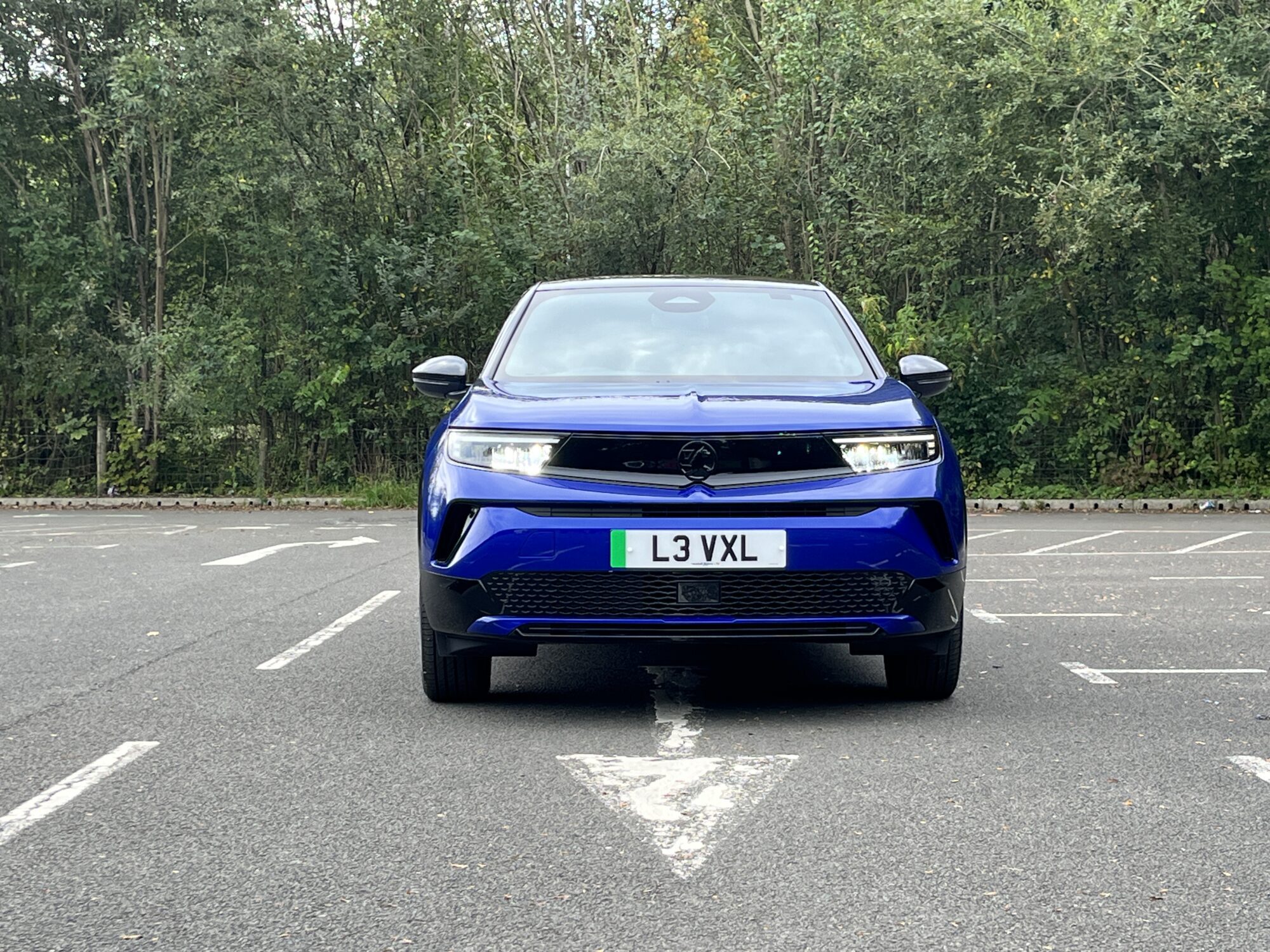
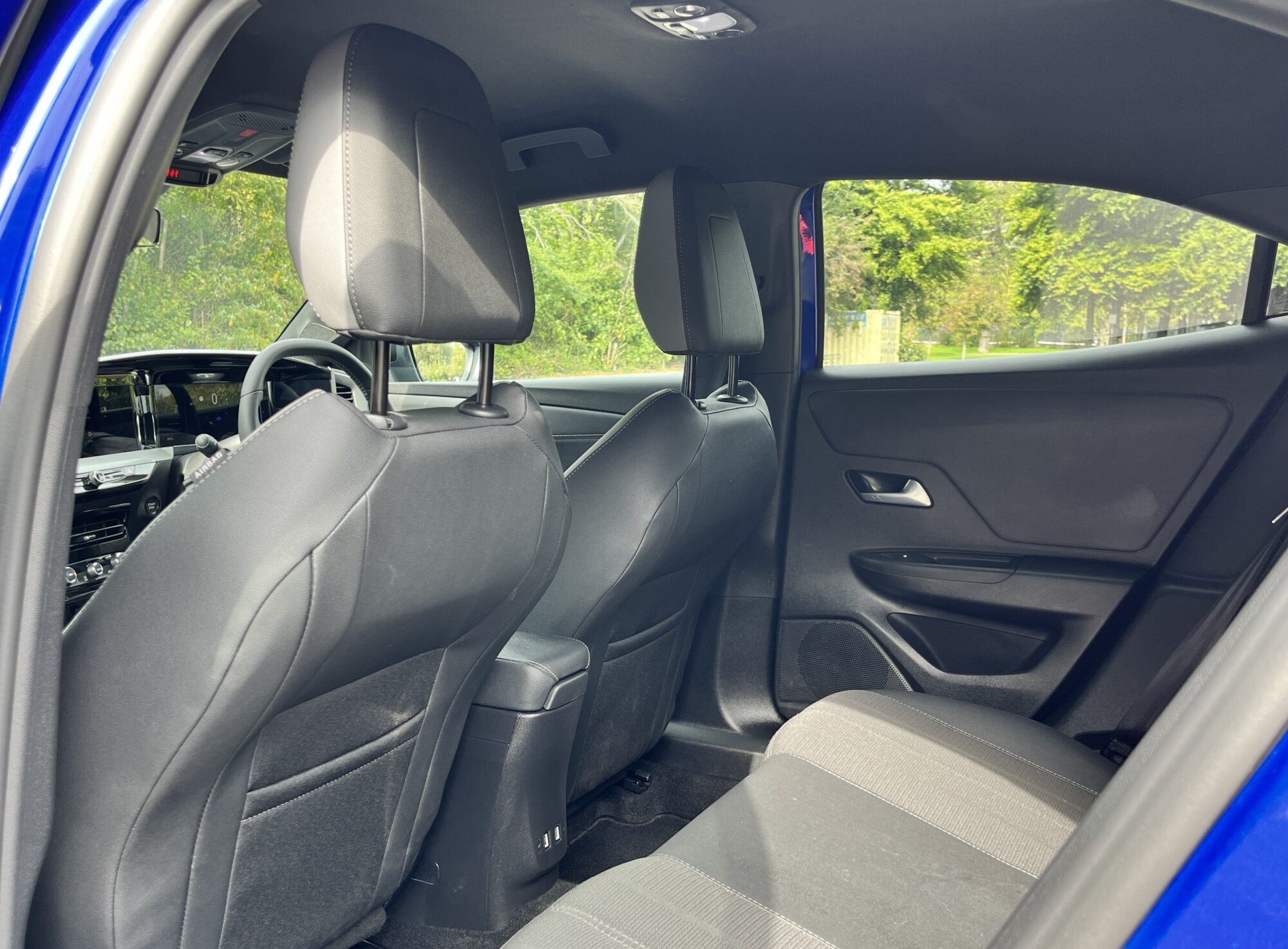
Compact SUVs are near-ubiquitous on UK roads, and the ease with which Vauxhall’s contender has slotted into my life shows why they’re so popular. Having a similar footprint to a Mk4 Astra (of 1999) makes ‘compact’ a moot point, but these cars shape up as very capable family transport.Taller adults have to stoop to get under the C-pillar, but the kids have enough space to spread out, and I’ve found it a comfortable road trip machine and versatile load-mover too.Add a roof box for holidays and I doubt dog-free families would need more space.
Those credentials apply regardless of powertrain, but the electric Mokka is specified to the same ‘just right’ ethos as the rest of the car. There are more efficient and longer-range electric SUVs (the Hyundai Kona and Kia Niro EV still set a very high bar) but I’ve been getting between 200 and 220 motorway miles to a full charge, which is plenty, and for local use I barely have to think about charging it. The 3.2 miles per kWh average efficiency says more about my extended use of cabin preconditioning through a long, wet winter than its road trip capabilities. It’s a very easy EV to live with.
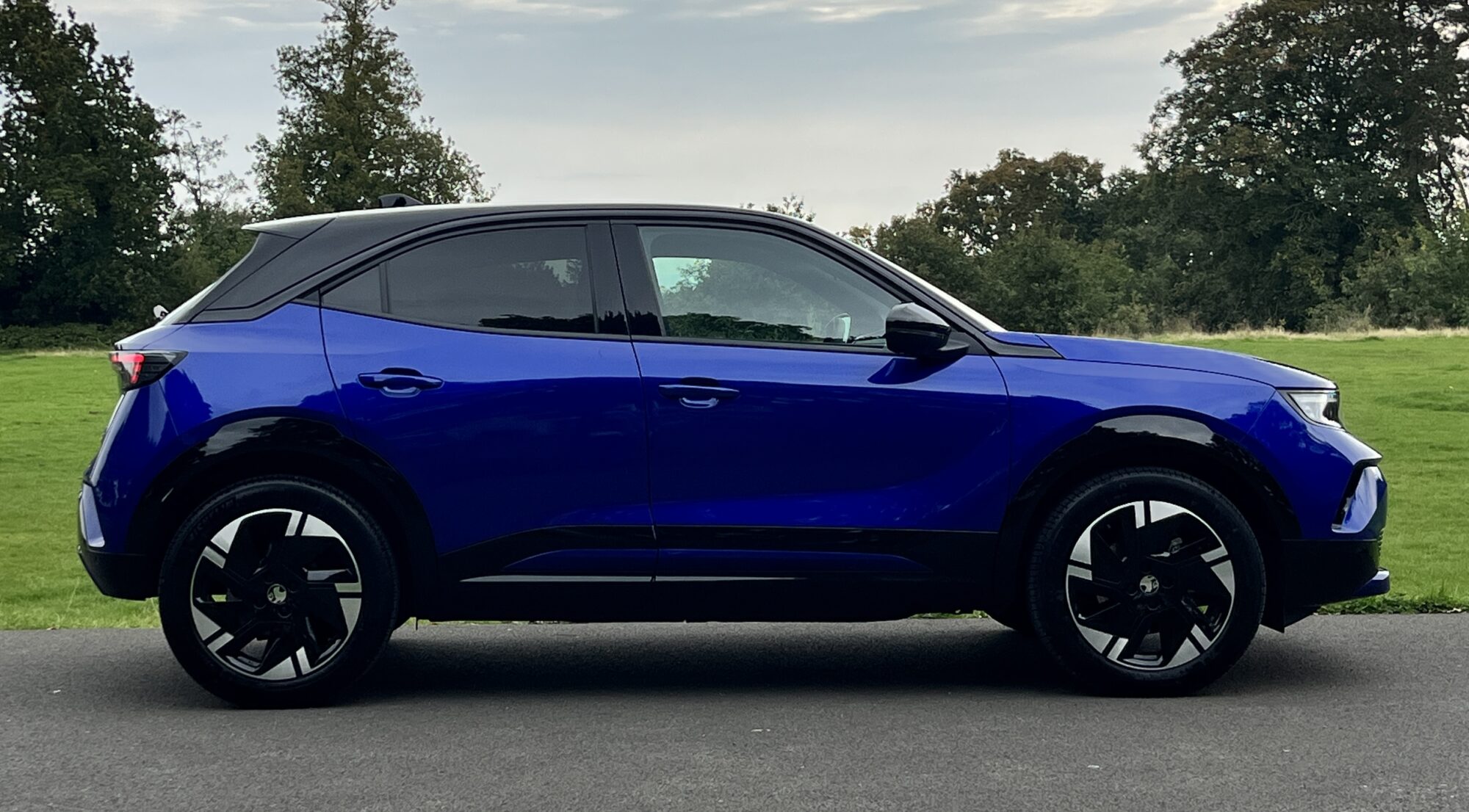
If I was to pick holes, it’s only because of the gaps in the specification. The mid-range GS trim loses out on the Griffin version’s heated seats – useful range-extenders in winter, as they are more efficient than heating the entire cabin – but doesn’t gain some of the most desirable goodies of the Ultimate version that sits above it. My needs are perhaps atypical for a Mokka owner but, for around £35 per month over a four-year PCP contract, I’d be tempted to step up a level for adaptive cruise control, built in navigation, keyless entry and Vauxhall’s excellent matrix LED headlights. The problem, for Vauxhall, is an influx of competition. Most of the Mokka’s rivals are mechanically similar products from other Stellantis group brands – the Peugeot e-2008, Fiat 600e and Jeep Avenger are all worth considering – so observations about range and efficiency are shared. Hyundai and Kia’s entrants are also well- established competition, while the Ford Puma Gen-E is electrifying one of the UK’s best-selling cars.All signs that this is a segment that’s inherently compatible with battery power.
Not that any of those have the attributes of a car that social media pundits might decide constitutes a soul. My needle has shifted in that regard – soul, it seems, typically relates to quirks and flaws that (not always undesirably) draw attention to a car. The Mokka’s lack of them has enabled it to be a calm and unintrusive environment for me to live through a memorable part of my life. And, in that, there’s definitely a sense of inherited soul.
ALEX GRANT
WHAT’S HOT: I rate Vauxhall’s customisable dual- screen setup, and it still has proper buttons for the climate control. Bravo.
WHAT’S NOT: The Mokka’s tailgate release is hidden away above the rear plate. Nobody can find it without guidance.
FACTS & FIGURES
© Motorworld Media 2023
Registered Office: 4 Capricorn Centre, Cranes Farm Road, Basildon, Essex. SS14 3JJ
Company Number: 8818356
Website designed by Steve Dawson