MODEL ON TEST: GR SPORT HYBRID 1.5 VVT-i AUTOMATIC
MILEAGE – 4,157
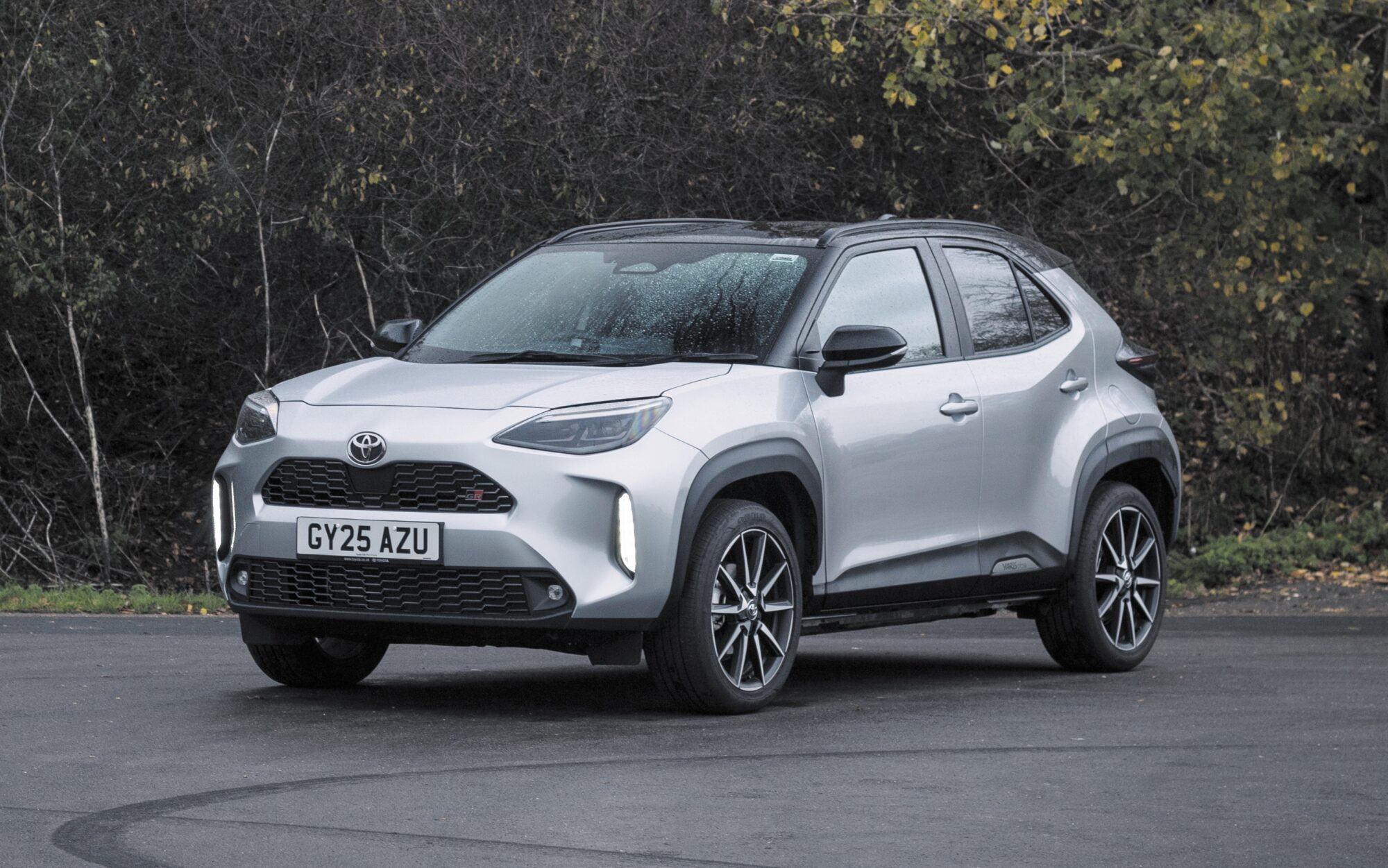
Welcome,everyone,to our new Toyota Yaris Cross GR Sport.Fresh from just under 3,600 miles at the hands of various journalists across the UK, it finds itself part of the Diesel&EcoCar fleet for the next six months.
The Yaris name will almost certainly be familiar to you. Designed in France and launched in Europe in 1999, the original Yaris hit the UK as a three- or five-door city dweller, with a 67bhp 1.0-litre petrol engine returning more than 50mpg. It was a sales success, exemplified by the fact the nameplate is still with us two and a half decades later. As you can see, however, this is not a regular Yaris, or Yaris Hybrid, as
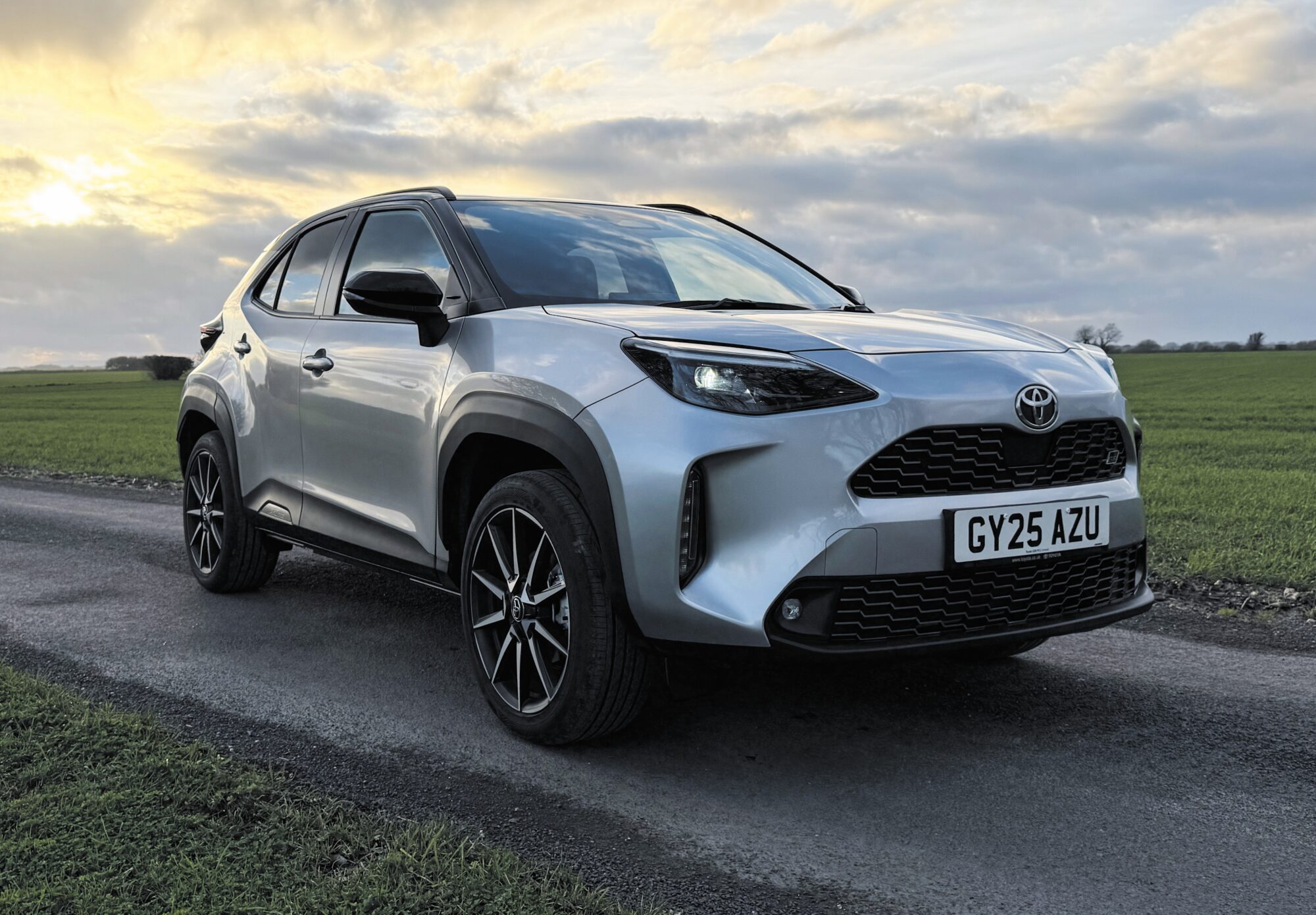
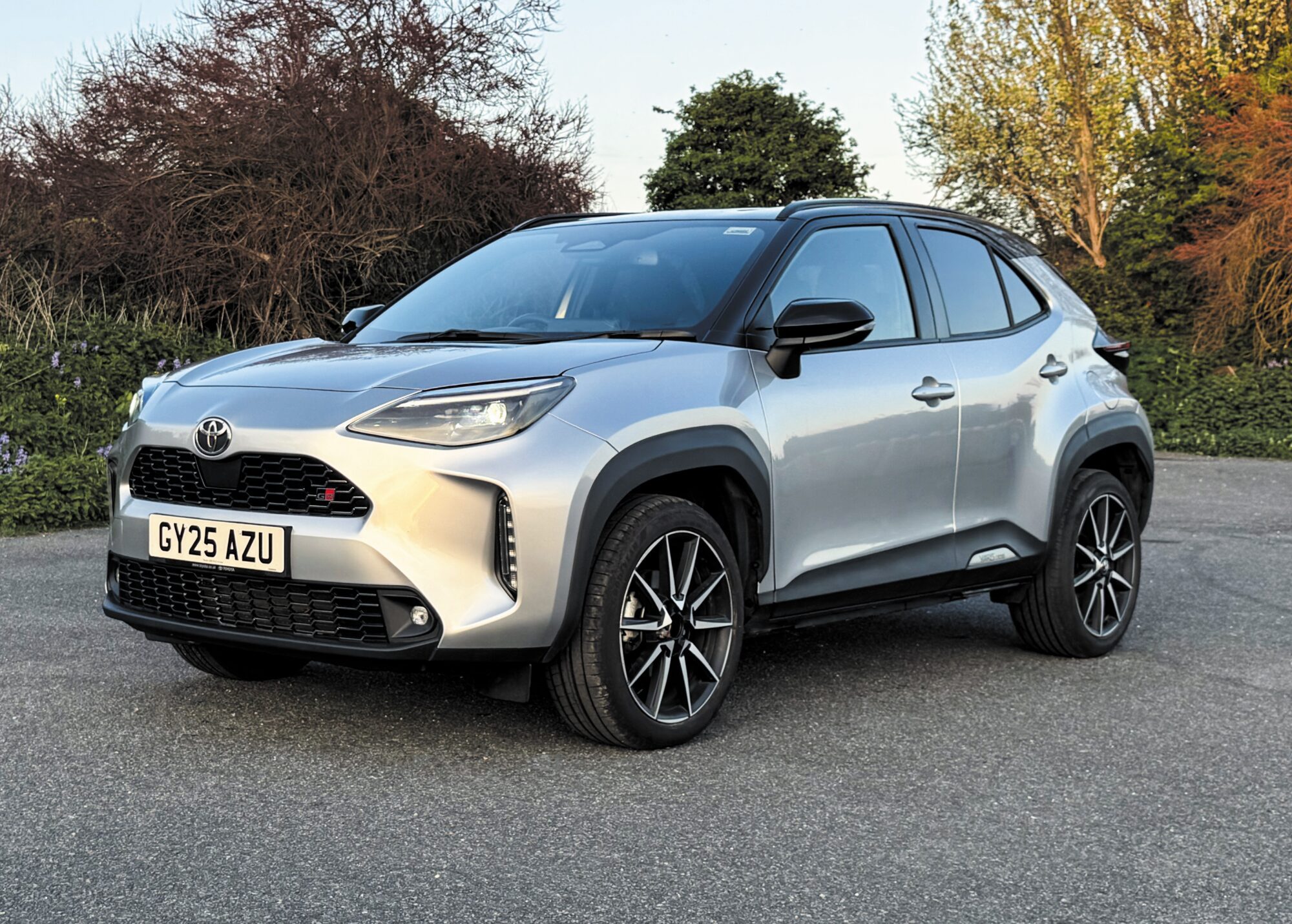
it now is, the purer ancestor of that original 1999 hatch. This is a Yaris Cross, the taller, wider, ever-so-slightly more spacious sibling, launched in 2021 and given a gentle refresh in 2024. Our hybrid hero is the GR Sport model. Despite the GR Sport name and my wishful thinking, sadly it didn’t arrive with paintwork inspired by one of Toyota’s Le Mans cars (the 2012 TS030 Hybrid is my personal favourite) or rally cars, which today all run under the GR moniker, or ‘Gazoo Racing’. But the two-tone look, standard on all GR Sport examples, finished in metallic black and silver on our car, is nonetheless smart. It’s worth noting that our test car was £32,245 when it was first registered in July, including the free bi-tone black and silver metallic paint. Pricing has now changed, so the equivalent car would cost £32,895, an uplift of £650.
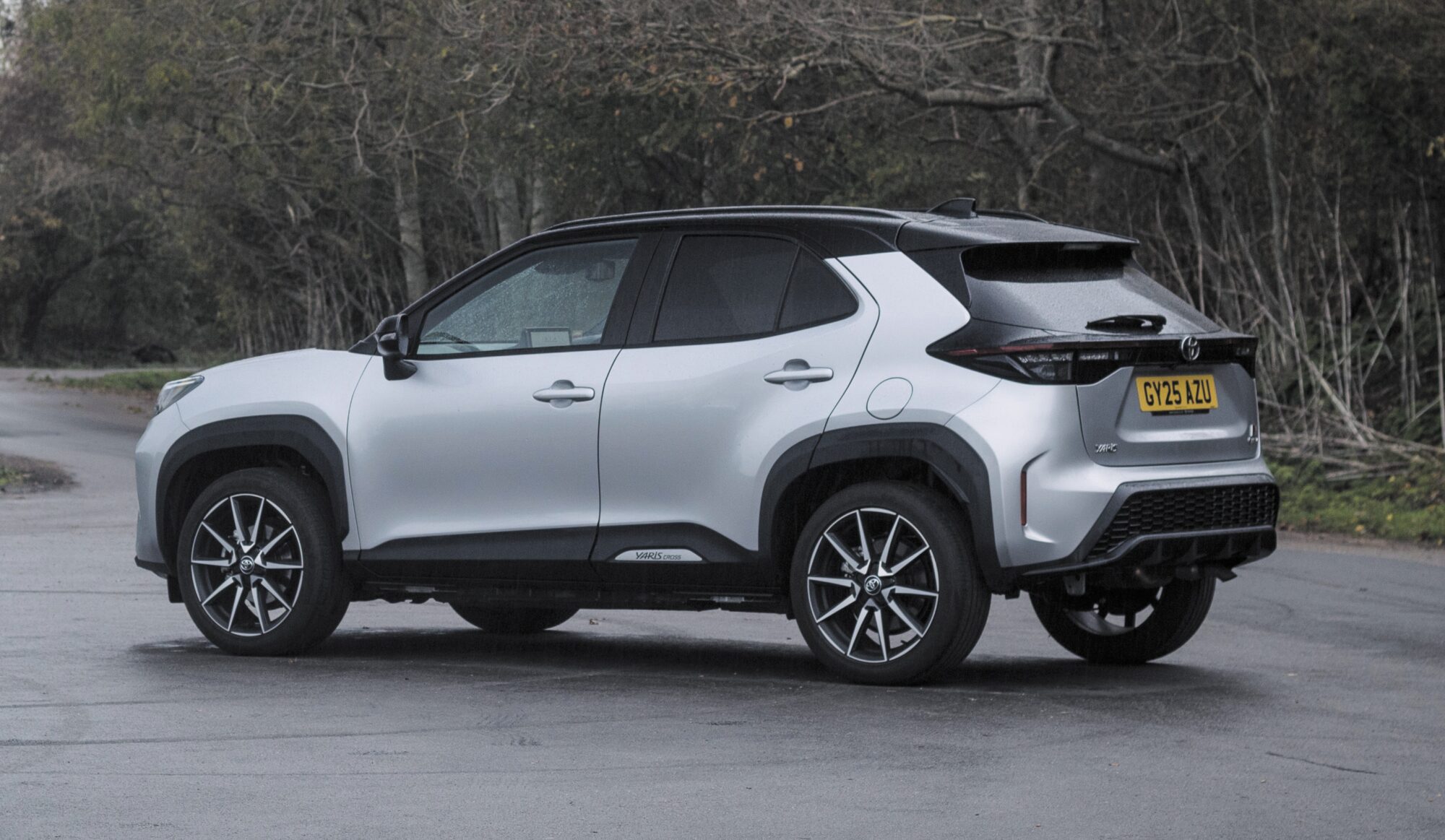
The GR Sport name doesn’t bring with it any extra degree of sportiness to the Yaris Cross, it being a trim level only and top of the tree above Icon, Design and finally Excel trim. There’s no power hike, no clever differential, no wild performance figures.You get the same 1.5-litre hybrid powertrain as every other Yaris Cross, with Toyota’s “e-CVT”. That being said, the Yaris Cross is now available with either a 114bhp or 129bhp powertrain, and front- or all- wheel-drive, depending on the model. Ours is the higher powered, front-wheel- drive model, with Toyota promising a delightful 58.8mpg. We’ll see how we get on with that in the coming months. On first inspection, this is a very smart, very straightforward motor vehicle. Though I’m pretty traditional when it comes to body styles, preferring a hatchback or estate over a crossover or full-blown SUV, it’s a nice-looking thing. The two-tone split of the GR Sport is a lovely distinguishing feature, as are the 18-inch matt black, machine faced alloy wheels. Jumping inside, there’s a 7-inch digital instrument panel and a 10.5-inch central touchscreen display. Initial impressions are that it isn’t the clearest display in the world, nor is it the simplest interface, but we’ll get into that once we’ve spent some more time behind the wheel and really got used to the way that it operates.
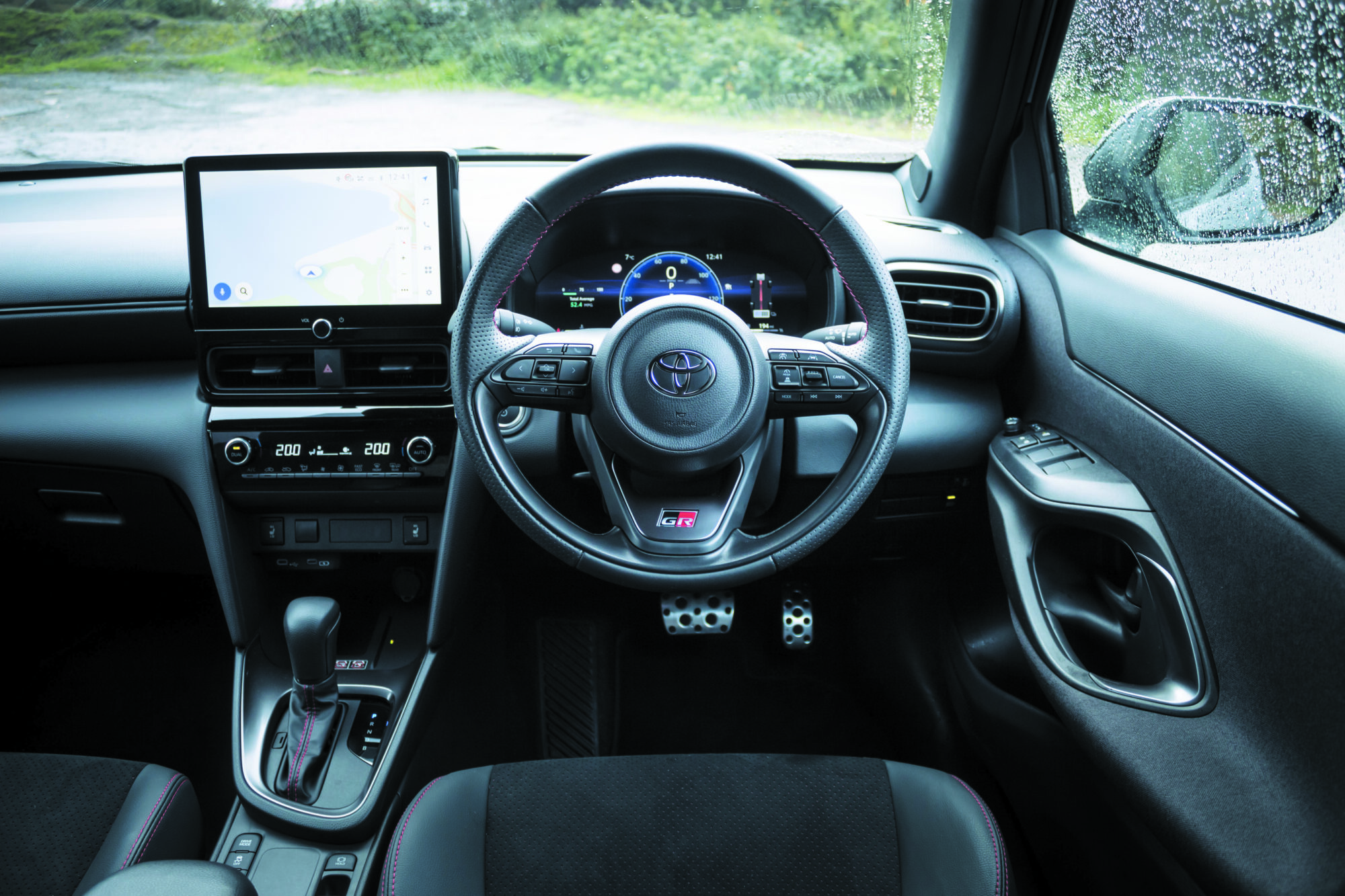
On the road, this feels very Toyota-ry. By that, I mean it feels like it’s been through test after test after test. Most cars are rigorously tested before going on sale, of course, but there’s a reassuring feeling of strength, resilience and polish here.The way the engine and electric motor interact with each other, for example, feels near enough flawless, as though Toyota’s engineers have fussed over the details until everything was absolutely spot-on before launching the car, which is exactly what you’d expect from a company with a reputation like Toyota. But – again – we’ll explore the powertrain and everything else this Yaris Cross has to offer over the coming months.
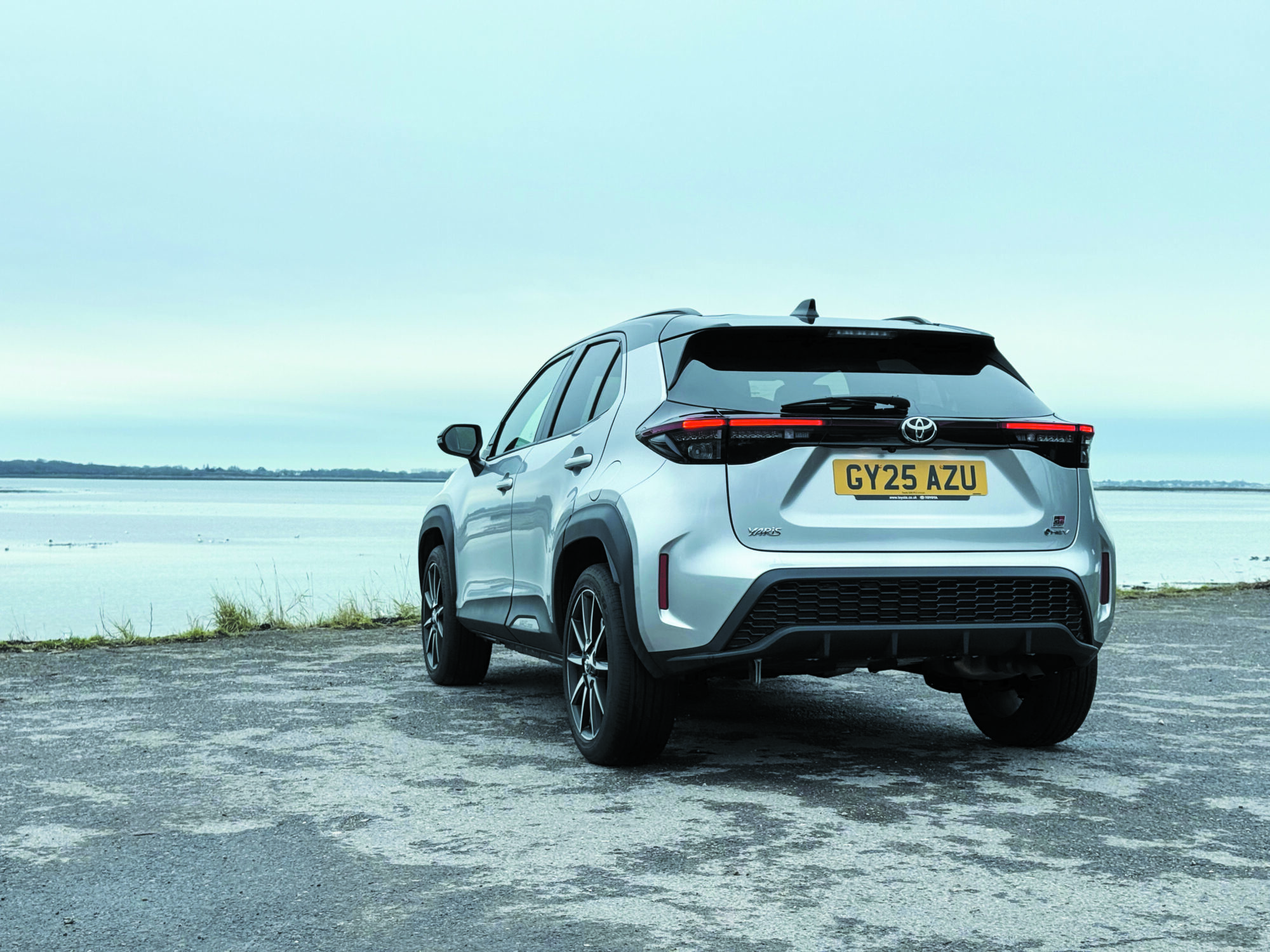
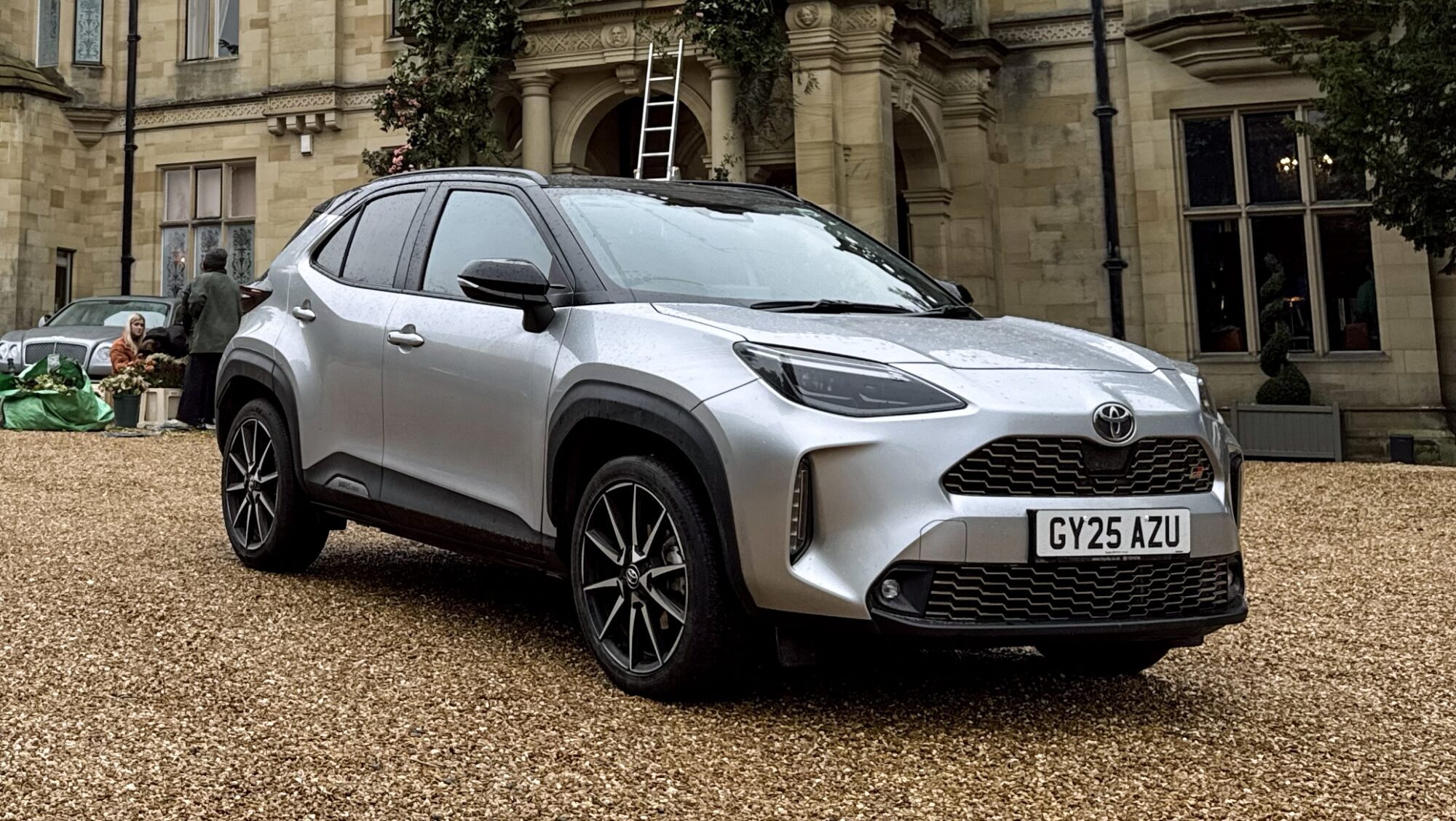
For now, we’ll go on a few small adventures, make the most of this beautiful autumnal weather (not
that you’d guess that from the accompanying photos) and report back. With the help of the GR branded key, we’ll also see how many people we can convince that we have a brand new Toyota GR Supra parked on our driveway.
SEÁN WARD
WHAT’S HOT: The heated seats are literally hot – they could smelt iron.
WHAT’S NOT: The steering wheel, because it isn’t heated – sad times.
STANDARD EQUIPMENT: 7-inch digital instruments, 17-inch alloy wheels with Goodyear EfficientGrip Performance 2 215/50 R18 tyres and tyre repair kit, 40/20/40 split/folding rear seats, Adaptive cruise control with speed limiter, Air purifier Alarm system, Ambient lighting, Anti-lock brakes with electronic brake force distribution and brake assist, Auto-dimming rear-view mirror, Automatic headlights, Autonomous emergency braking system with pedestrian, cyclist and junction detection, DAB radio with 10.5-inch touchscreen, navigation, 6-speakers, USB-C sockets, voice control and steering wheel controls, Driver drowsiness detection, Driver, passenger, side, head and central airbags with passenger side de-activation, Dual-zone climate control, Electric and heated mirrors with power folding, Electric park brake, Electric windows front and rear, Electronic stability programme with traction control, Emergency e-call system, Front sports seats, Heated front seats, Hill start assist, ISOFIX child seat, safety fasteners for rear outer seats, Keyless entry and start, Lane departure warning system, Lane keep assist, Leather steering wheel and gear knob, LED front fog lights, LED headlights with automatic high beam assist, LED taillights with sequential indicators, Rain sensing windscreen wipers, Rear privacy glass, Reversing camera, Roof rails, Sports body kit, Traffic sign recognition, Tyre pressure monitors, Wireless Android Auto, Apple CarPlay and Bluetooth smartphone compatibility and Wireless smartphone charger
FACTS & FIGURES
Our cars: Toyota Yaris Cross Report 2
MODEL ON TEST: GR SPORT 1.5 VVT-i HYBRID – MILEAGE – 4,430
We’re now one month down with our Yaris Cross, nicknamed Terry the Toyota (or Terrance, if we’re visiting a particularly posh area). It’s been an uneventful month in the best possible way, with no wild issues to report and no unexpected costs. So what have we been up to?
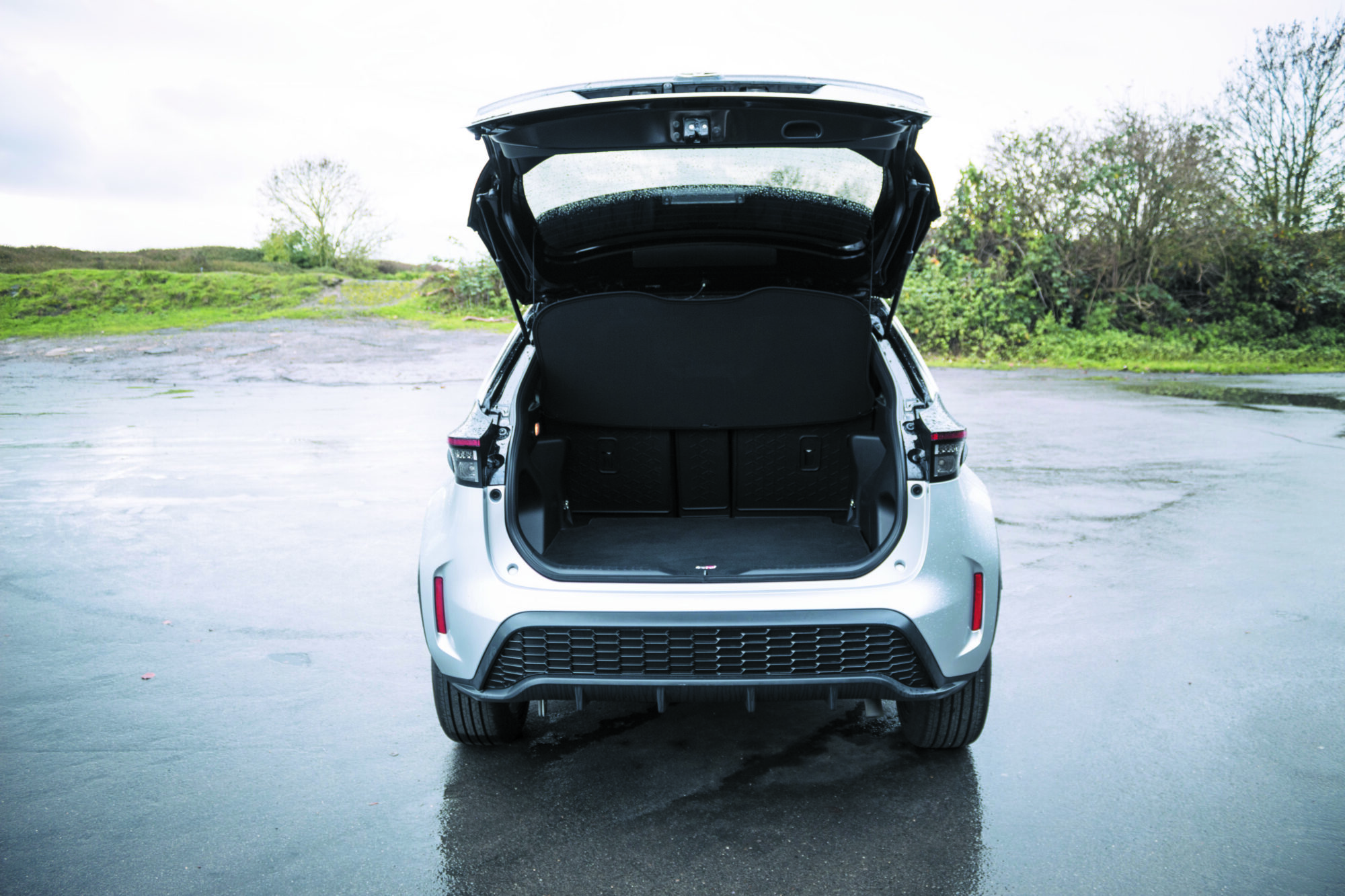
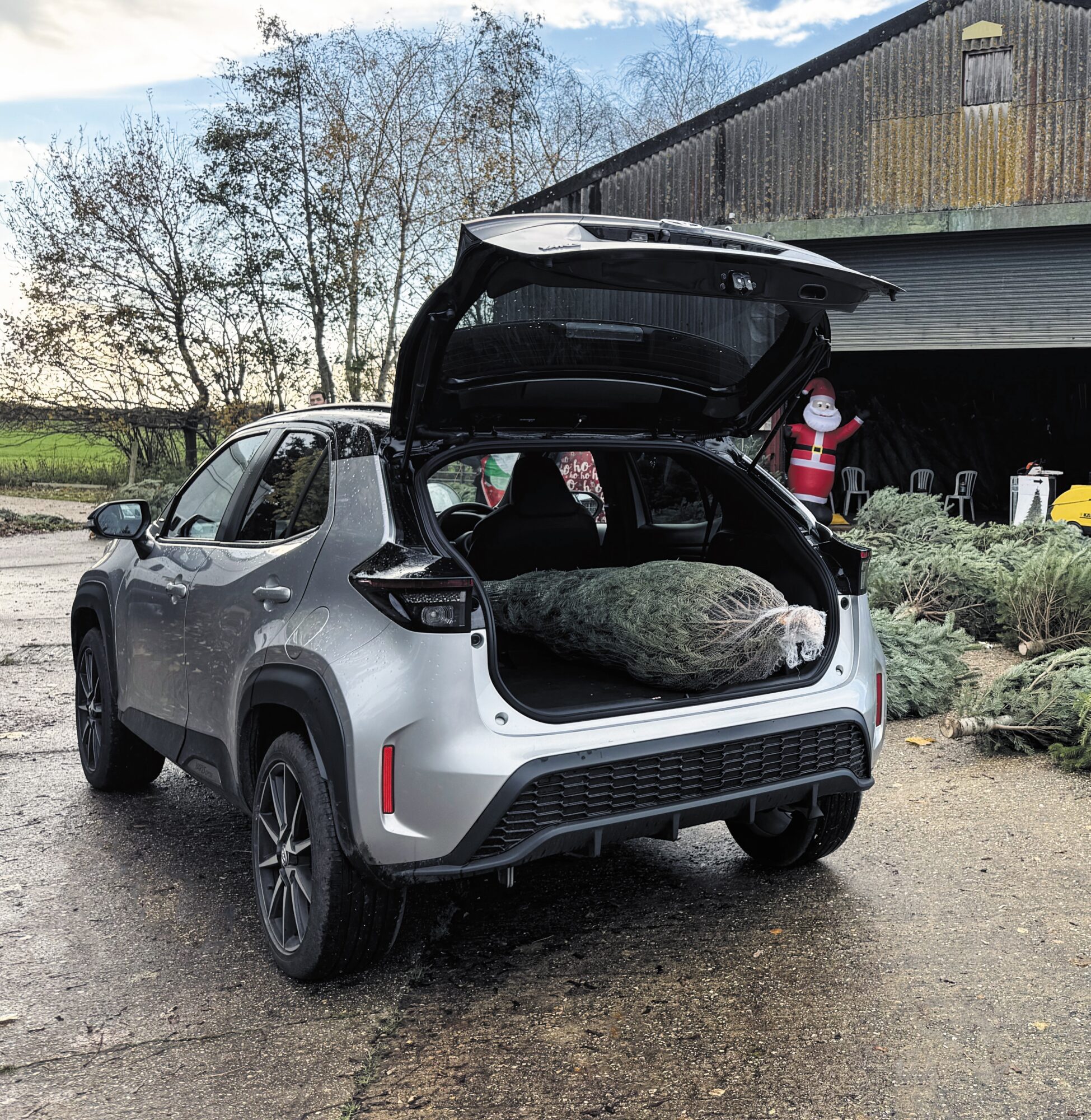
Well thanks to the magic of print deadlines, it’s only now I can tell you the Yaris Cross will happily accommodate a Christmas tree.With the rear seats folded as flat as they’ll go (which isn’t perfectly flat, mind), we were able to slot a six-foot-long Nordmann Fir neatly into the boot. It may be a small car, but the boot measures 397 litres, or 1,097 litres with the rear seats down, and both are very decent numbers indeed. One further boot-related observation, the rear seats aren’t split 60/40, but 40/20/40, which is a nice touch that adds a small, but noticeable extra, dose of practicality and versatility.
Away from festive boot packing, the car’s main activity this month, it’s been a time of observations and note-taking as we get to know it more. Something that became apparent from the very first time we slotted the car into reverse is the quality of the reversing camera. Honestly, my first mobile phone, a stunning 2005 Sagem myX-7, had a comparable camera resolution.You can see what’s behind you, so in that sense it’s doing what it needs to do, but it seems weirdly low-quality for a £30,000 car.
On the subject of technology that lets the side down, the audio system is a tad underwhelming.This I can forgive more easily than the below-average rear-view camera, because quality audio systems are seriously costly. But that’s my job here, to observe, judge and report back to you, the reader.The speakers do the job, but the overall audio experience feels a little thin.
Other observations in the first month? Without wanting to sound like the world’s grumpiest journalist, there’s no facility to boost the battery on demand, for example, if you know you’re going to be arriving in a town soon and you want to ensure the battery is fully charged.There is an EV mode,however, so you can tell the car you want to drive on battery power alone. Toyota’s reasoning is this is a ‘self-charging hybrid’, using the engine to top up the battery automatically, as well as recovering energy under braking, so you, the driver, doesn’t need to do anything other than put fuel in. Even so, it feels like a missed opportunity, even if you can only travel around a mile on electricity alone.
The final somewhat sub-par observation from these first few weeks is a loud, unusual resonance and vibration from the 1.5-litre engine. It only occurs at idle, never at load, and doesn’t happen all the time.You’re really not left with the impression that something is going to go bang, but it feels un-Toyota-ry. We’ll keep an eye on it as we cover more miles.
Those niggles shouldn’t give you the impression we’re unhappy with how Terry is performing overall, however. We’ll cover other elements of the Yaris Cross in the coming months, but there’s a lot to like here.The car’s size,for example,is something to really appreciate.So many modern machines are way bigger than they need to be for most day-to-day driving, but this is compact without feeling cramped, making parking an absolute doddle. The air conditioning system is excellent, too, with clearly organised, physical buttons, instead of trendy haptic controls or dials and sliders located on a screen for the infotainment system.
All in all, it’s been a good month, and Terry has made a strong first impression. But there’s still plenty more to learn about our little Yaris Cross.
SEÁN WARD
WHAT’S HOT: It’s way more practical than expected, with a really strong sized boot.
WHAT’S NOT: The reversing camera feels like it was made pre the 2008 financial crisis.
FACTS & FIGURES
Our cars: Toyota Yaris Cross Report 3
MODEL ON TEST: GR SPORT 1.5 VVT-i HYBRID – MILEAGE – 5,307
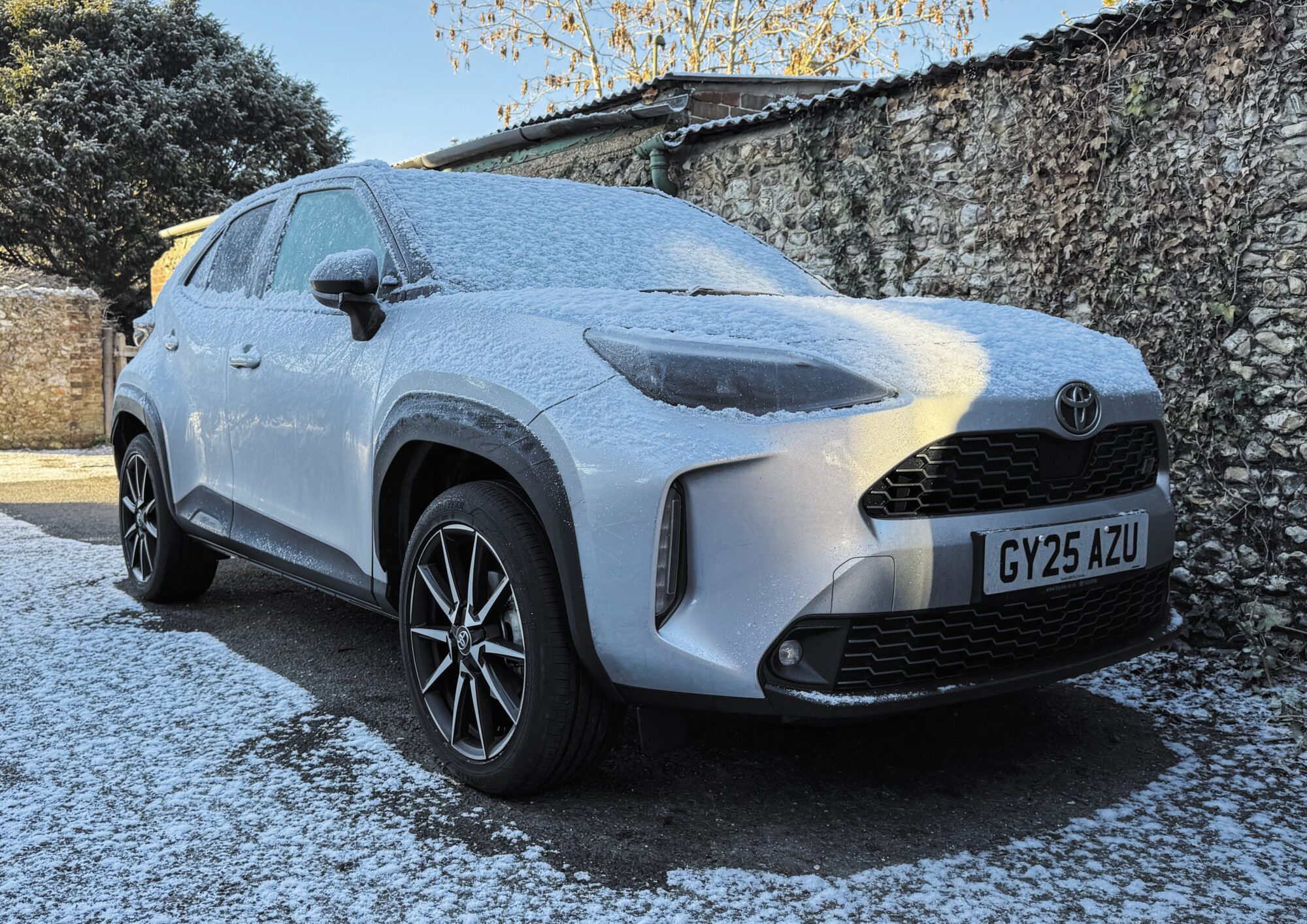
Since taking delivery of our Toyota Yaris Cross, it’s been an uneventful and relaxing partnership. That said, this past month saw the Yaris Cross tackle its biggest challenge so far: snow. Well, we say snow, but when you live in a village on the South Coast of England, just a mile or two from the sea, it’s not the whiteout you’re imagining. Where parts of the UK saw abandoned cars and so much snow you’d think you were in a scene from Fargo, we had a light dusting. The sort of cover you’d get with icing sugar on a Yule Log. What’s more, it had all melted by the time we could turn a wheel in the ‘extreme’ conditions.
It’s been a busy month, however, with plenty of time spent at the helm of the baby Toyota. That in turn has given us ample opportunity to really get to know how it drives.A car’s driving characteristics aren’t necessarily the top priority for some buyers, so long as it broadly stops, steers and goes the way they’d expect. But for others, little dynamic niggles will really irk.
As we mentioned in our first report, the brake pedal’s feel is really good. That’s possibly one of the dullest phrases a motoring writer could use, but it’s a real-world feeling to communicate. Many – if not most – fully electric and hybrid cars have brake pedals that are hard to judge. By that I mean when you put your foot on the pedal to slow down, you’ll brake more or less than you’d have expected for how far you’re pressing the pedal and the force you’re applying. You’ll also find that with your foot on the brake in a steady position, the amount of deceleration you get can change. All of this is down to how a car uses its electric motors as part of the braking system, which in turn recharges the batteries. This is often called ‘regen’, and the car is balancing that alongside using the actual brake discs and pads. A plus point for the Yaris Cross, it has one of the best brake pedals I’ve experienced in a hybrid, giving you the feel and braking force you’d expect 98% of the time.
The steering, too, is remarkably positive and easy to judge. Electric power steering systems can feel very odd, weirdly disconnected and light compared to the hydraulic set-ups you’d find in cars 15 years ago. But that’s not the case with the Toyota – it’s responsive and well weighted.
What’s proved the weakest part of the dynamic package is the suspension. It’s not bad or uncomfortable, but you can feel that it’s been set up to a cost. More sophisticated suspension rewards you with more control, less expensive set-ups go the other way. The Yaris Cross’ ride is a little busy, particularly at higher speeds, and over bumps it’ll take a moment for the wheels – particularly those up front – to settle down and recover from the impact they’ve just had to soak up. In heavy rain, too, you can feel puddles tug on the wheels where a more advanced suspension system would feel more robust. But compromise is all part and parcel of building a small car on account of the price point it commands.
Furthermore, on the driving experience, the roll you get as you turn the car into a corner isn’t wild or scary, but as much as you’d reasonably expect, and it’s quite fun. I’d certainly rather have a comfortable Toyota crossover than one that rolls less but feels like it’s been hit by a tank every time you drive over a speed bump.
And with that, here endeth this month’s edition of ‘how nerdy can you be talking about a hybrid crossover’.
SEÁN WARD
WHAT’S HOT: The brake pedal feels natural, a relatively rare feat for a hybrid.
WHAT’S NOT: The suspension can be a tad busy and lacks sophistication.
FACTS & FIGURES
Our cars: Toyota Yaris Cross Report 4
GR SPORT 1.5 VVT-i HYBRID – MILEAGE – 6,778
With a long drive pencilled in the diary, this month’s report looked set to be an account of how many miles I could eke out of the Yaris Cross from a single tank. Sadly, this report will be both a tale of efficient driving and how a pothole the size of the Isle of Wight can utterly ruin your day.
I’ll start with efficiency. I was to head from home, a seaside town called Emsworth on the south coast of England, to a photoshoot location in North Wales via an overnight stop west of Bristol to break up the journey.All of that would be done while trying to be as gentle on the accelerator as possible. Simple stuff. Filling the Yaris Cross’ tank to full and resetting the tip computer and fuel economy displays, I had 345 miles of range to play with, plus the hybrid battery pack at three quarters charge. Heading out onto the M27 at the start of the evening rush, I was immediately presented with more traffic than would have been ideal. Even so, aiming to maintain a speed of around 65mph, the Yaris Cross was sipping its fuel, with the economy display showing somewhere north of 63mpg at first, before dipping to 59mpg as I progressed along the M3,A34 and M4.
The traffic got heavier, but with everyone plodding along at 50mph we drifted back up to 60 and then 61mpg. The overall impression, then, was that with some degree of care at normal motorway speeds we could sit in the high fifties to the gallon, or better if we slowed into the 50 to 60mph window. We could use even less fuel with a few favourable hills, as the Yaris Cross’ 1.5-litre engine would turn off and the rotating wheels would recharge the battery via the regeneration system.
After 134 miles and a podcast or two, we made it to our overnight pitstop near Bristol, the display saying 60.9mpg and 250 miles of remaining range. At this point you might say “Seán, if you’d driven slower, you could’ve used less fuel”, and this is true. But this was never going to be an absolute test of economy, because there’s almost no stopping the lengths to which you could go to save fuel. I say that as someone who once drove from Goodwood to the Jim Clark Museum in Duns, Scotland, in a Ford Mustang Mach-E. That journey was completed in a near constant state of terror, at 45mph, without air conditioning, hardly using the brakes, and included the M25 and M1. It wasn’t an experience worth repeating.
Setting off at 06:00 the following morning, I crossed the Welsh border and began pushing north from near Newport, up through Bulith Wells, Llangurig, Llanidloes, Machynlleth, Corris, Ffestiniog
and to our destination at the Tanygrisiau Reservoir.The answer is no, I do not know how to pronounce those place names. The economy numbers had sunk to 57mpg, but having set off with 345 miles of range originally, I’d now covered 297 miles and had 36 miles remaining, which isn’t too bad.
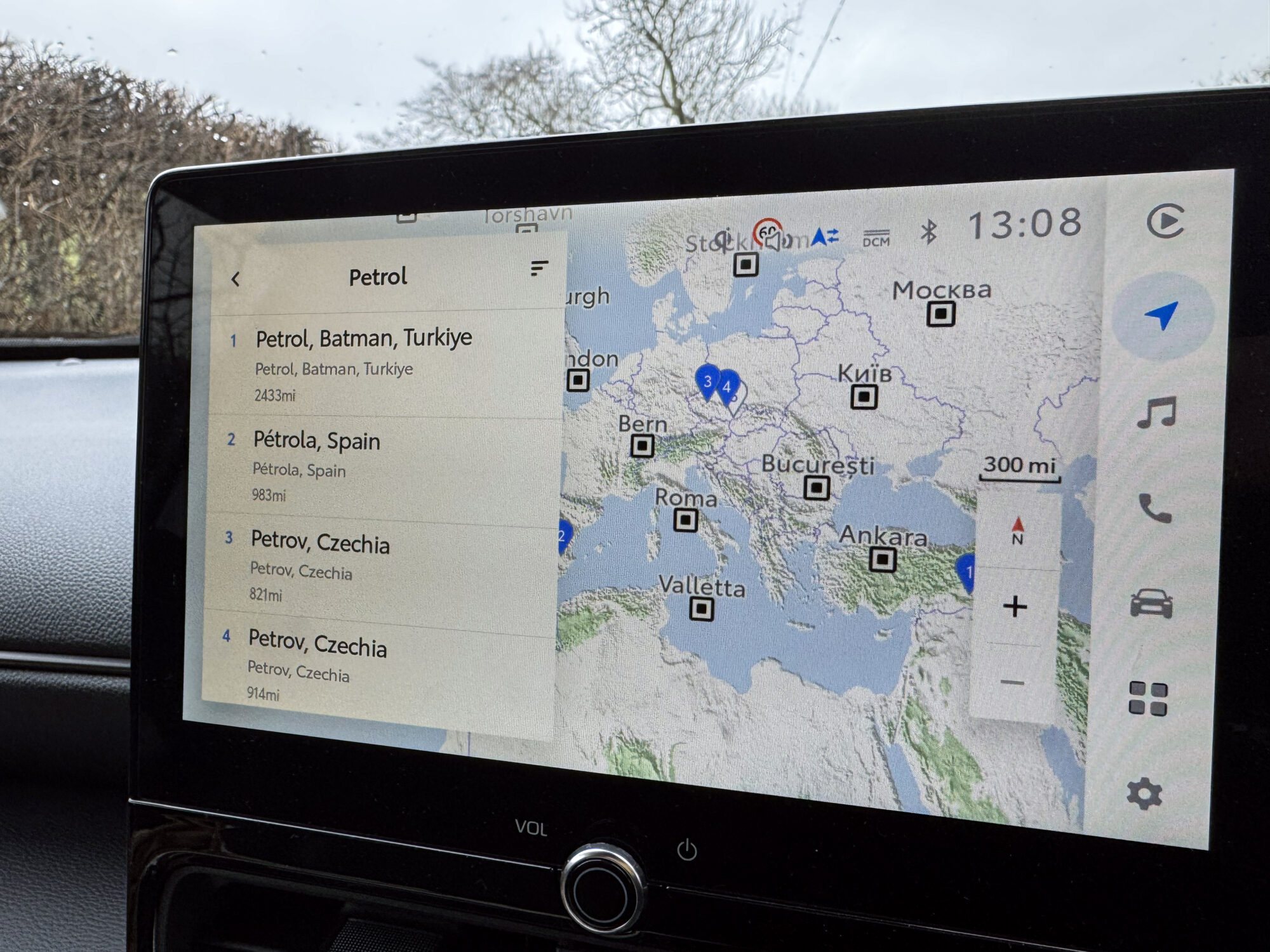
Helping with the photoshoot, I drove another 30 miles across snowy hills and mountain roads. Much to the detriment of my heart rate, the thought of urgently needing to find a petrol station didn’t occur to me until there were 10 miles of juice remaining. With flashbacks to my Mustang Mach-E trauma, the air conditioning went off, and I was driving as carefully as was humanly possible. Searching for ‘Petrol’ in the navigation system, Terry the Toyota helpfully tried to tell me there was a place called Petrol in Turkey, 2,433 miles away. Mercifully a fuel stop appeared in Penryndeudraeth and I pulled in with one mile of range remaining.To summarise, we managed 327.3 miles in seven hours and 30 minutes, averaging 57.3mpg. Considering there was traffic, hills, rain, snow, and I was driving at relatively normal speeds, that’s very respectable in my eyes.
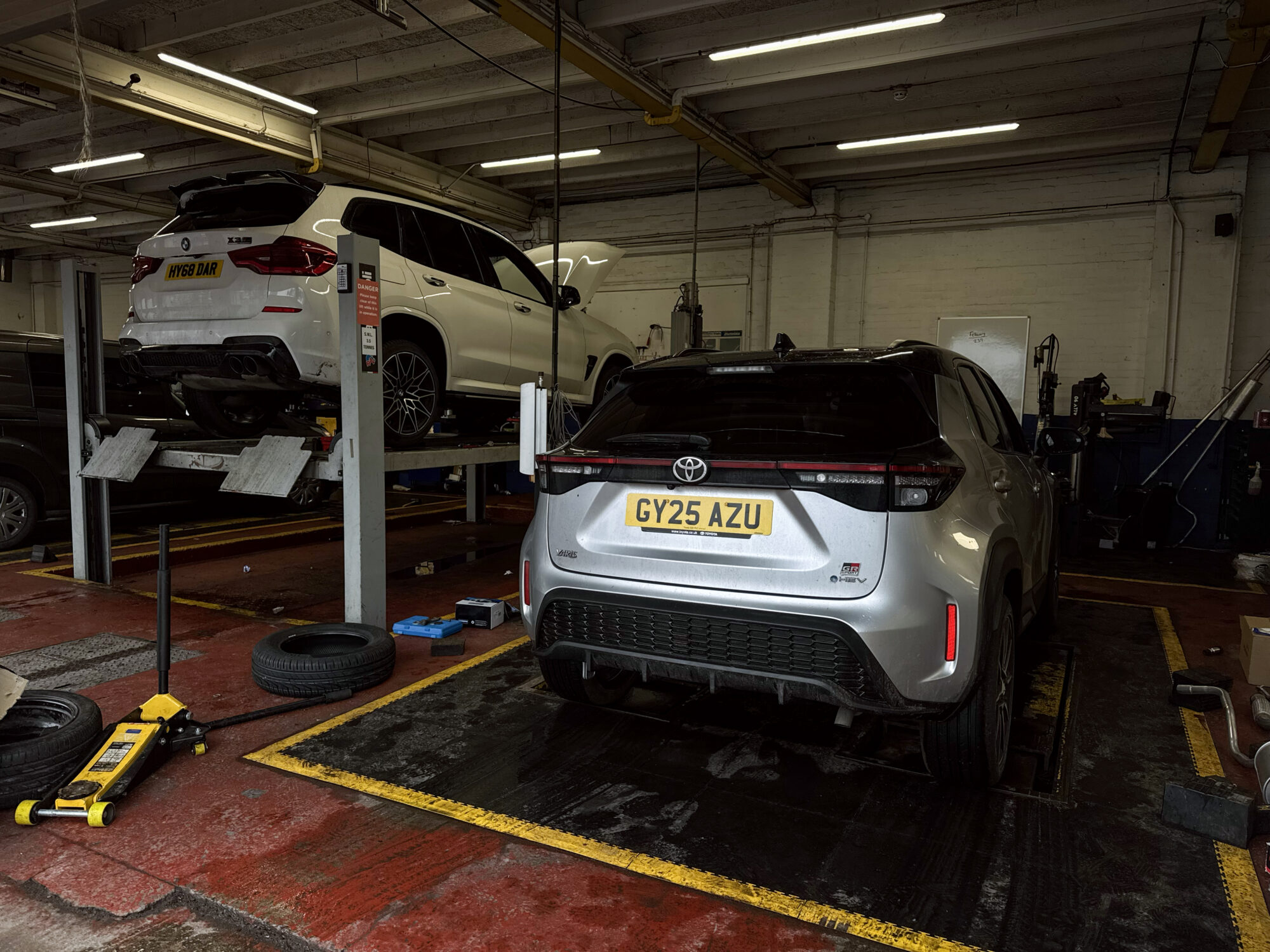
Now for chapter two of this Welsh adventure. Wrapping up the photoshoot at 17:00, 30 minutes into the six-hour homeward journey I missed a turn. After a Google Maps detour, I eventually turned left onto a road I recognised, the B4391, which goes from Bala up and over a small mountain to Llangynog. Twenty seconds later: BANG. The darkness and an ever-increasing amount of snow meant I hadn’t had time to react to a wheel-swallowing pothole. Mentally crossing my fingers, I scanned the instrument cluster with wide eyes as the message ‘Immediately Check Tyre when Safe’ appeared, and the pressure at the front left corner dropped in real time from 2.2 bar to zero. Damn!
I carefully turned around to head back towards to the pothole with hazard lights ablaze. Having taken a photo of the offending crater, I sat back inside, belted up and had to think fast. I had no phone signal and visibility was poor, a point proven when a car flew up behind me, whaled on the horn and overtook, despite me being on a straight, flat section of the road that’s well sighted in daylight. I needed to move.
Crawling along at 15mph, hazards beaming like the beacons of Gondor, a forestry gate afforded me the opportunity to stop off the road and check the boot for a spare tyre. Disappointingly there was only a tyre repair kit, and the tyre was too far gone for it to work. Committing to move on to Bala, seven miles back the way I’d come, I set off once more at walking pace and soon realised even Bala was too far away. By chance I spotted a sign for a hotel and thought it would be safest to wait for help near people, and hoped there would be phone signal. Little did I know the hotel in question was a 200-year-old, five-star establishment called the Palé Hall Hotel. You couldn’t make this up.
Pulling into the carpark alongside a new 992.2 hybrid 911, I managed to call the lovely team at Toyota (who facilitate these car loans) to let them know what was going on.Then, at around 18:30, I followed Toyota Assistance protocol and phoned the AA, the result of which was an ETA of just under an hour for help, but possible delays of up to two hours. As I was still nearly 300 miles away from home, and multiple recovery trucks would have been necessary to effectively pass the parcel the Toyota all the way home, the plan was for a regular AA van to take my wheel and tyre off, fetch a replacement tyre from an out-of-hours tyre shop, then return to me to fit it all.
At this point I thought it best to let the people at Palé Hall know why there was a stressed-looking person sat in his car just by the front door. Thankfully they were all very kind, even offering me a seat inside
if I wanted. I politely declined, because I wouldn’t be waiting for very long, would I? An hour passed, then another. Looking once more at the AA web page link I’d been sent that gives an approximate ETA, I noticed the word ‘Wednesday’ in brackets next to the recovery time. Given it was Tuesday evening, this didn’t bode well. A second phone call to the AA was altogether less positive. Mentioning the ETA and the fact it appeared I wouldn’t be helped until the following day, I was told that there weren’t many crews in the area, it was very busy, and that it was snowing. I was also told I had requested only AA crews for assistance, rather than third-party crews who partner with the AA, which I hadn’t. Soon enough a third- party crew was assigned to me and a new ETA set of around 22:00.
Not wanting to sit in the car any longer I also made my way back into the hotel, at which point the lovely staff offered to make me some coffee before sitting me down in a big, comfy sofa next to
a roaring fire. As 22:00 approached, I’d both thanked every member of the Palé Hall team for their hospitality and apologised for cluttering up their Grade II listed property several times. Looking again at the ETA on the AA’s webpage, however, made me wonder if I’d make it home before the sun rose on Wednesday morning, as the times slipped from 22:00 to 22:15, 22:30, 22:45 and then 23:00.
After a third phone call to the AA, bad news: the third-party crew had cancelled the job as they didn’t think they could help, and they hadn’t told the AA. Sub- optimal is how I would describe that information. Now there were two options. The AA could organise another third- party crew to attend, which would require yet more waiting around. Alternatively, I could ask if there was anywhere to stay at Palé Hall, the five-star accommodation I’d rocked up to on three wheels.The latter would at least allow the AA to book in a regular crew to attend at a specific time the following morning.
Speaking to my generous hosts, initially it seemed as though there was no room at the inn, as the rooms were full of models, photographers and florists, with a mock-wedding arranged at the hotel for the following day. I waited for a few minutes before receiving the news: there was one room free. I nearly leapt for joy. Speaking to the AA again and confirming I’d found somewhere to stay, an apology came with the confirmation an 08:00 to 10:00 assistance slot was booked for the following morning. I thanked my new-found friends at Palé Hall as they gave me a midnight snack of sandwiches and showed me to my room.The AA then called me again, and the most human person of the night apologised several times and said they’d cover the cost of the room and some breakfast.
At around 09:00 the following morning it was time to say goodbye to Palé Hall. My bright yellow knight in shining armour had arrived, and after taking the wheel with the wrecked tyre off and replacing it with a space-saver, the lovely mechanic escorted me to a tyre shop in Oswestry, around 40 minutes away. A like-for-like replacement Goodyear was waiting for us, and finally, 18 hours after I’d hit the pothole, I was back on the road.
It’s a tricky situation to get your head around, and these words are in no way an attack on the AA. On the one hand, I fully appreciate there may not be many crews out and about on a dark, snowy evening. On the other, I wondered what would have happened if I hadn’t been able to get to the hotel – would I have stayed at the side of the road for the night? Regardless, it was a road trip and a stay at a hotel I will never forget. I hope if I’m ever able to visit Palé Hall again, I’ll arrive on four wheels rather than three.
SEÁN WARD
WHAT’S HOT: The efficient, refined 1.5-litre hybrid powertrain.
WHAT’S NOT: The navigation telling me a place called ‘Petrol’ exists in Turkey.
FACTS & FIGURES
Our cars: Toyota Yaris Cross report 5
MODEL ON TEST: GR SPORT 1.5 VVT-i HYBRID – MILEAGE – 7,997
Last month’s report was a tumultuous tale. A front-left puncture for the Yaris Cross – in the dark, on a Welsh mountain road and at the start of a 300- mile journey – meant a new tyre and much weeping. Mercifully, this month has been much more straightforward.
With another 1,000 or so miles covered, the distinct lack of drama has led me to focus on the smaller details. The first of which is the heated windscreen, or rather the lack of. Frost has covered the car several times over the past month despite the warmer weather, and while there are heated front seats and a heated rear screen, there’s no heated windscreen. What’s more, there’s no heated steering wheel or heated mirrors either. The latter two are luxuries that cannot be expected from every car, but as GR Sport is a top-specification, top-dollar trim, the absence of a heated windscreen is noticeable.
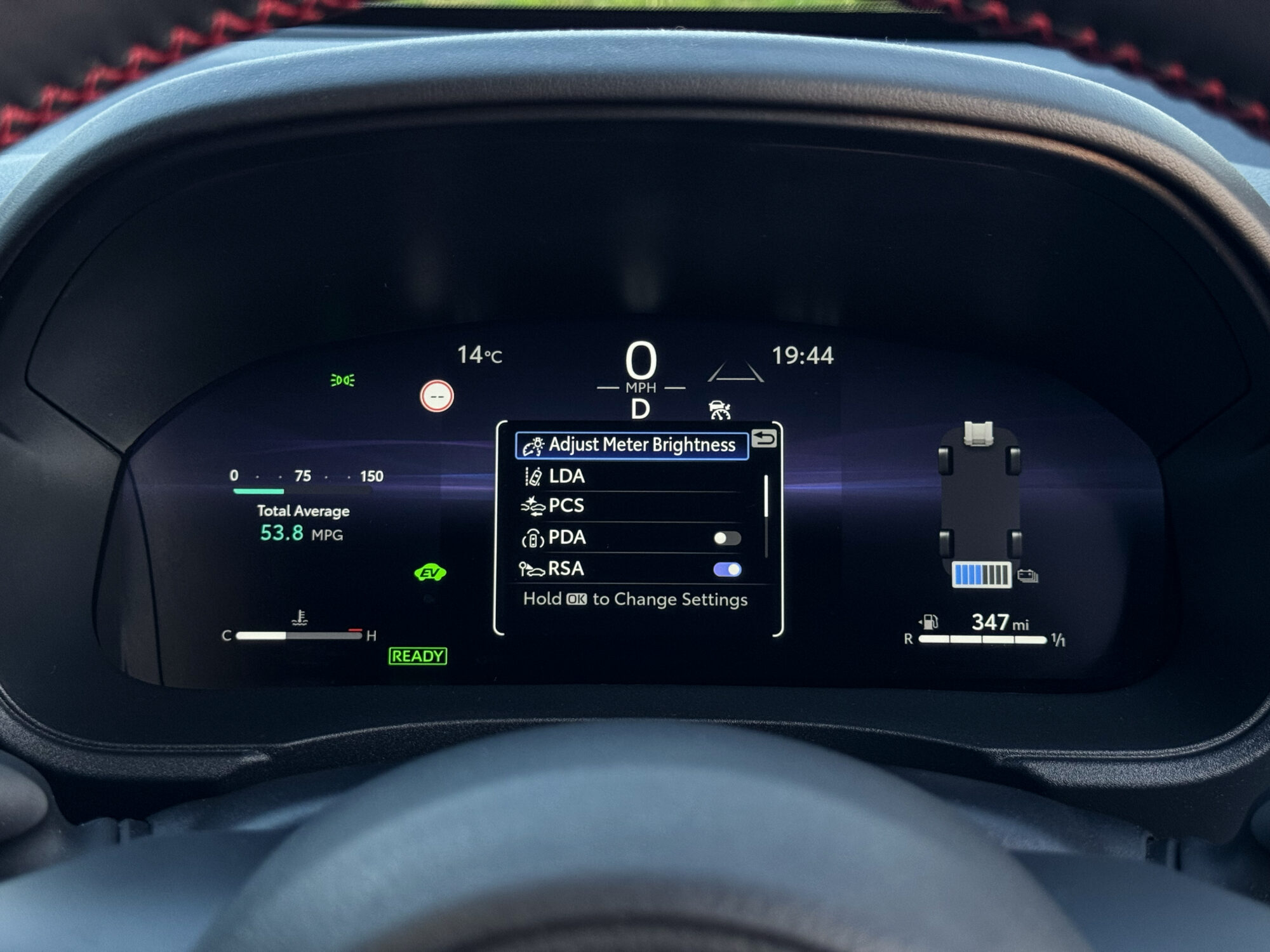
Other observations this month, the speed limit warning is a gentle little soul, trying to make a point without making a scene. As systems like this, that alert you to your digression from the law, are now mandatory, there are some horrendously intrusive beeps and bongs dotted around the industry. While the Yaris Cross bongs as you move one mile per hour above the speed limit – or so I’m told – it does so relatively quietly. Furthermore, to turn the system off takes six clicks of a physical button on the left side of the steering wheel – well, a button press, four downward direction presses and one final button press to be precise. Even if it is six clicks, to not have to traverse the central touchscreen is a very smart move from Toyota, as you can do it without taking your eyes off the road.
Another system you may wish to turn off is the lane keep assist.To do so takes just four clicks of the same button on the steering wheel, so it’s nice and simple again. But the lane keep assist itself is
a strange one. It isn’t by any means the most intrusive on the market, but the level of feedback and support feels as though it varies. Occasionally you’ll notice the wheel turning gently without your input, other times you’ll rarely feel any support.The problem, however, is that it doesn’t do a stellar job judging where the edge of the road or road markings are. Sometimes you’ll be pushed far too close to the driver’s side line, all because it wants a nice gap to the line on the passenger’s side.At other times it seems to pick up the contours of the road – perhaps the slight indent on a motorway from the flow of traffic – and take that as the line to follow.
I can’t help but wonder if having a choice between adaptive cruise control and simply setting a speed without adaptive adjustments would be a sensible addition, too.The adaptive cruise combined with the automatic gearbox means you can cover the brake, keep your hands on the steering wheel and let the car follow the vehicle in front – lovely stuff. But on the move at normal speeds, what I’d really prefer is to just set a speed and use my eyes to make decisions about when to overtake, when to brake and so on. Instead, while you can set the distance, the car slows down far more often than you might want, so you can never quite keep up momentum. You feel as though you’re always slowing down and always intervening.
In the grand scheme of things, however, these aren’t deal-breaking observations. The fact I’m having to talk about the cruise control and lane keep assist is testament to the fact that Terry the Toyota is running well. More to the point, we haven’t had a puncture this month, which is a solid win.
SEÁN WARD
WHAT’S HOT: The ease with which you can turn off speed limit warnings and lane keep assist.
WHAT’S NOT: The adaptive cruise control isn’t the sharpest tool in the box.
FACTS & FIGURES
© Motorworld Media 2023
Registered Office: 4 Capricorn Centre, Cranes Farm Road, Basildon, Essex. SS14 3JJ
Company Number: 8818356
Website designed by Steve Dawson