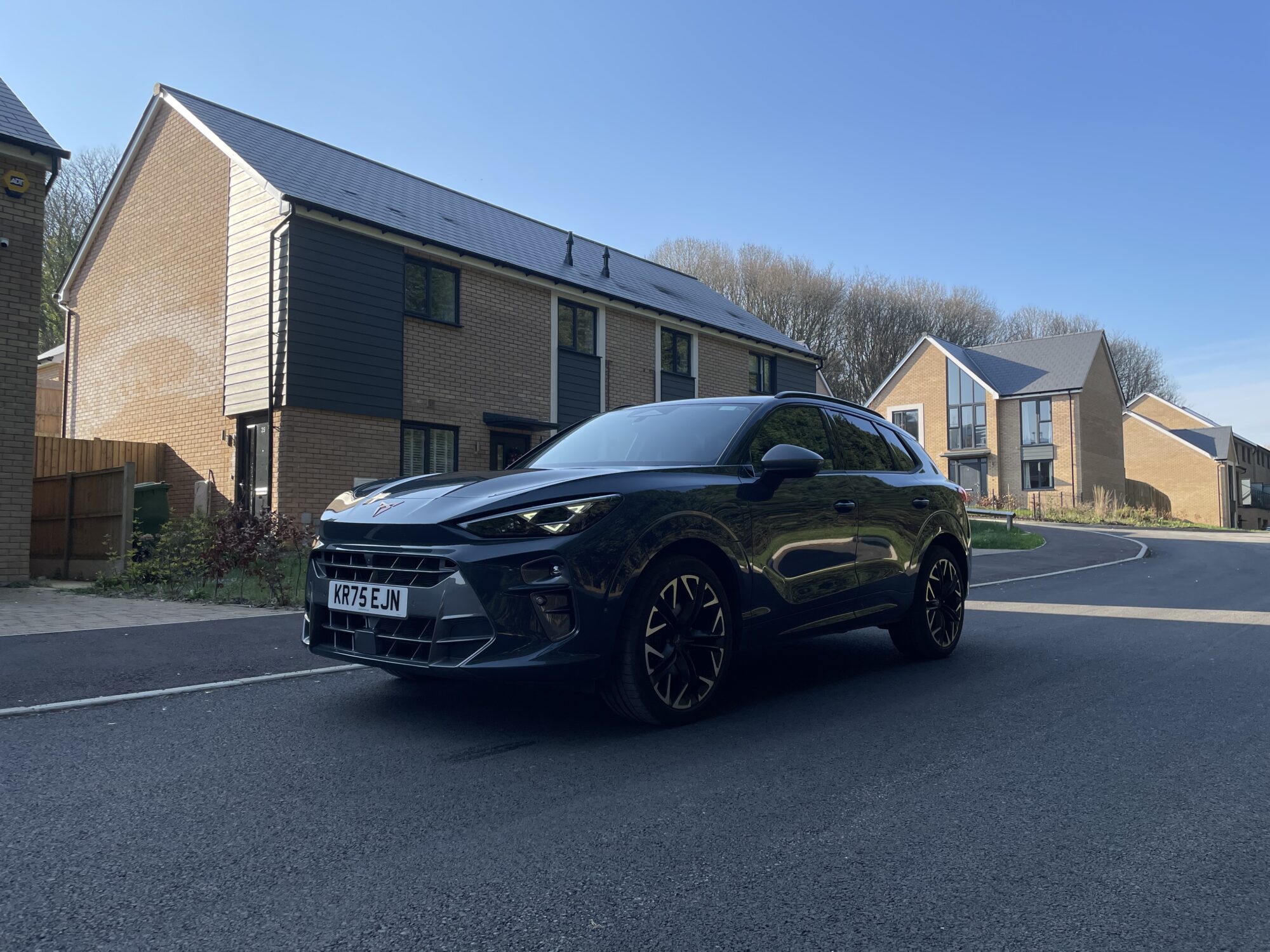
MODEL ON TEST: VZ2 1.5 e-HYBRID DSG AUTOMATIC
MILEAGE – 1,237
Starting in 1996 as a mere twinkle in SEAT’s performance eye, SEAT finally cut the umbilical cord on Cupra in 2018, but both badges are essentially Teutonic, the Volkswagen Group having begun its ownership process a decade earlier, way back in 1986.
Fast forward to now and Cupra continues to be the sexier alternative to SEAT with sportiness and charisma dialled up to the max. The timing of this model offers an interesting checkpoint on where things are heading – especially when you realise the Terramar has spent as much time in Spain as your average penguin, this iteration of the Cupra being put together in Hungary. Testifying this, when this example arrived, I found a stray production line post-it under the seat which bore an Audi logo. Not, of course, that there’s any shame in sharing workspace with Ingolstadt’s finest.
All that may be digression, but as the brochure might say, that’s exactly what you’ll yearn for in the Terramar, the very name inspiring escape o’er endless tracts of majestic land and sea. In honour of all that, my initial journey came in the form of a diagonal dash across England, starting out west and all the way up to Tyneside.
First things first, this model sits on the MQB Evo platform which is shared with VW’s Tiguan and Skoda’s Kodiaq. In the flesh, it feels a touch bigger than the Tiguan and perhaps slightly more cosy that the Kodiaq, but in SUV marketing terms, it’s slap bang in the Goldilocks zone – not so small as to provoke giggles under any banner marked “family car” but not so big as to make anyone hyperventilate when they see a sign for a multi storey. After that dash to the Angel of the North, a few weeks of shorter jaunts followed – and I’d say the car nails this dimensional bullseye, delivering capacious practicality without feeling like it needs two parking slots. But not without smallprint. Put plainly, the Terramar feels like the least Cupra-ey hardware I’ve driven since all those racy 90s iterations from the SEAT stable. Cupra, surely, trades upon a promise of thrust, backed by firm- edged dynamism. Think VW minus the tie. Yet from behind this wheel, that isn’t what the Terramar is about. Sure, it ticks the sporty box, but despite the hybrid antics of 268bhp and some familiar DSG dynamism, something isn’t quite on-brand. The killer question has to be why?
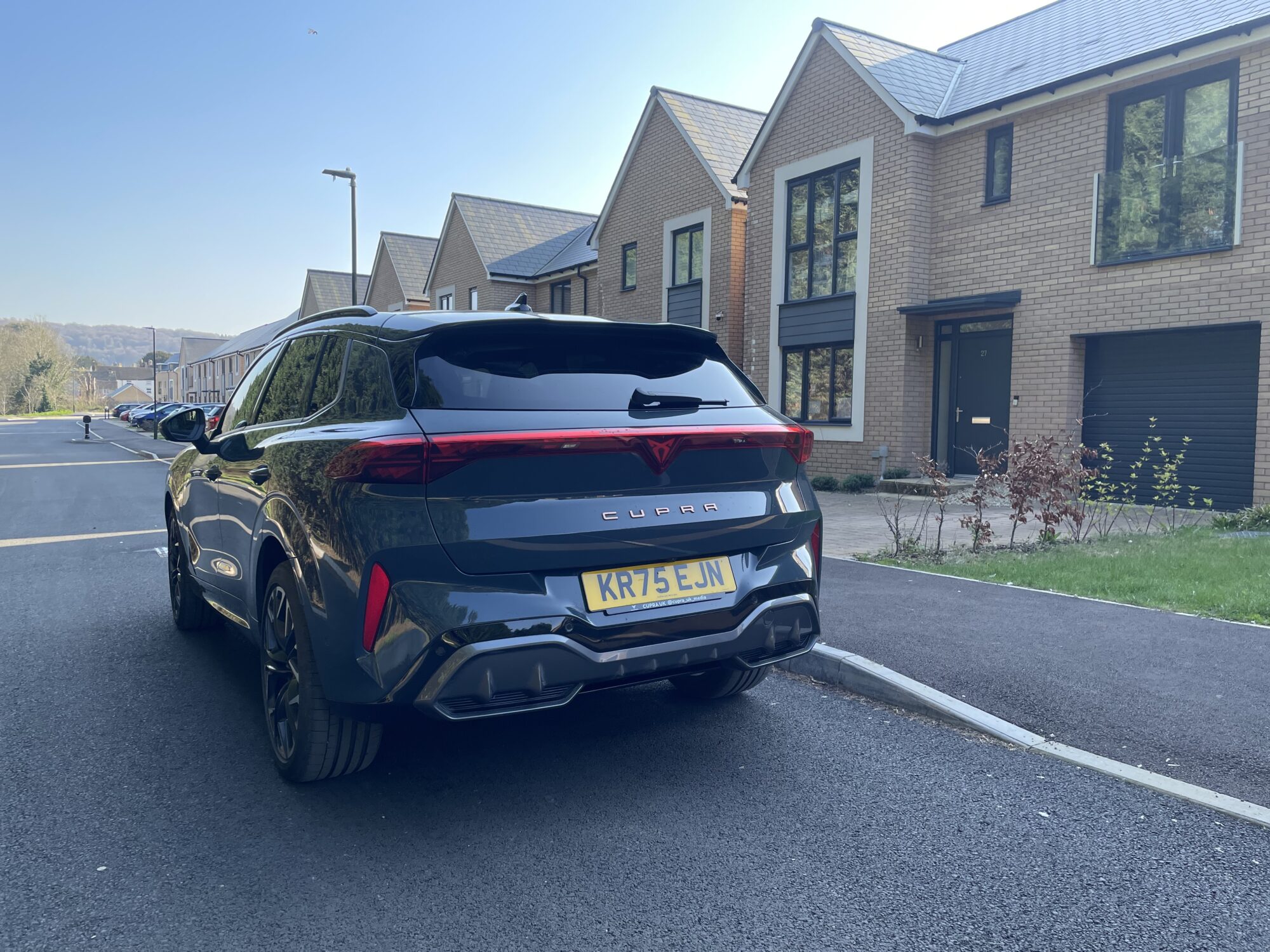
The answer lies in what you might loosely call set-up: the Terramar is no tiptoeing sprite, a quest to be firmly planted spelling a car that feels solid and heavy; it features a suspension which, bless it, works hard to iron out undulations but is ultimately thrown by the post-apocalyptic scenario we affectionately call the UK road network. On B- and C-roads, it can struggle to settle. Early verdict? It all feels a little detached.
I caveat that I’ve yet to explore all settings in the dynamic chassis control menu, but in factory settings form, given its beefy dimensions and short-ish walled Continental 255/40 R20 tyres, it can be discombobulated by broken surfaces, while a degree of suspension travel on more challenging roads might inspire maritime impressions – not quite Saving Lives at Sea, but a tad boaty, nonetheless.
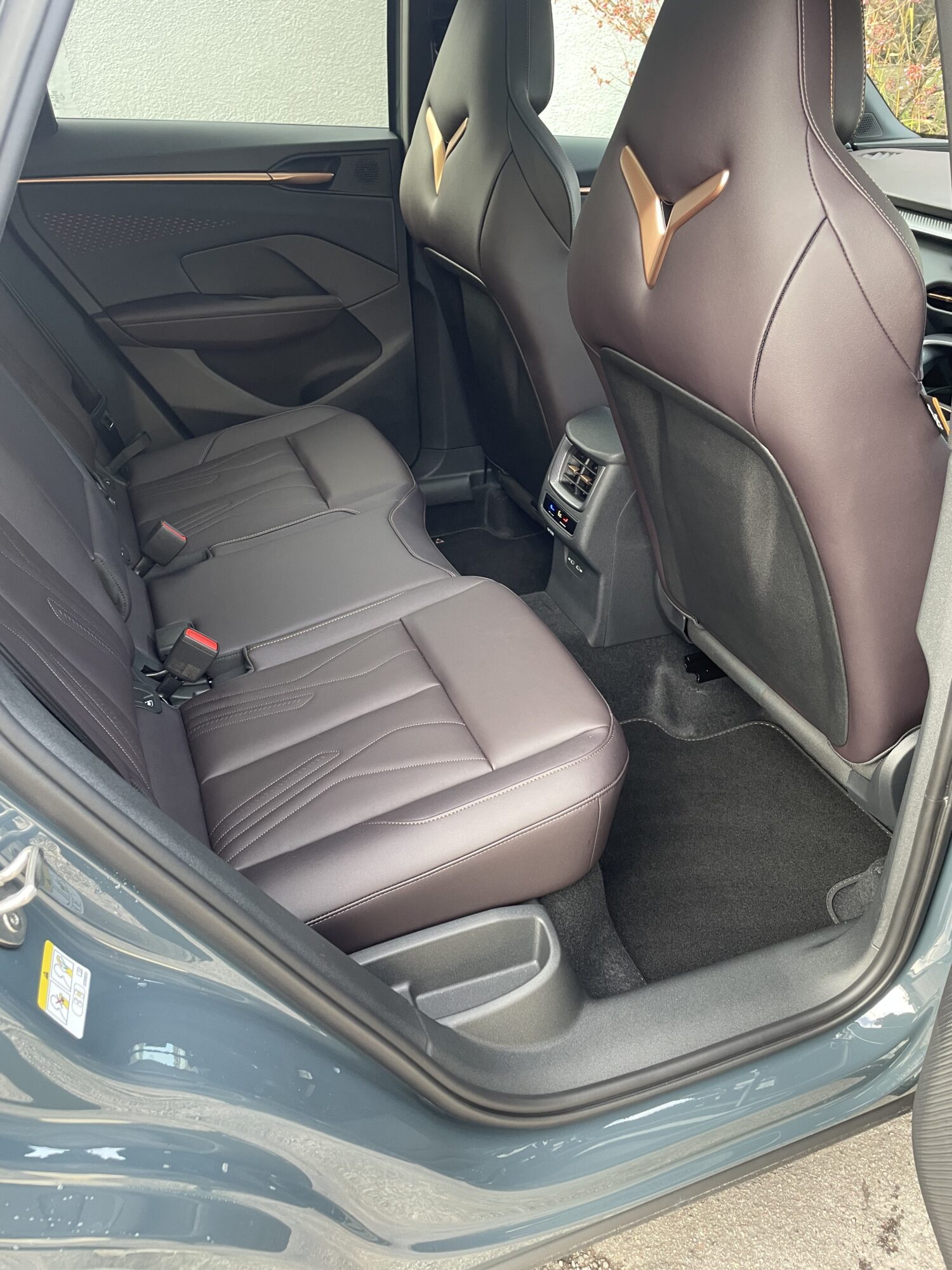
Loaded against those initial impressions, there is little to report from any of the many passengers who’ve jumped aboard.They’ve all been so comfortable, I guess, thanks to the ample room for three in the back, that they’ve barely squeaked, though an on-board music mutiny on one journey, where my preferences were sidelined in favour of dark, lo-fi phonk, suggested the audio system easily makes the cut if you’re in the presumably small Venn diagram overlap of Diesel&EcoCar reader and narcotics retailer.
Pluses and minuses aside, the Terramar offers a banquet of food for thought, most of it tasty. Aside from
a late shout out for its plug-in hybrid system, which lays on a pragmatic 50 miles a day for general use before you need to touch the petrol reserves (take that, Donald), I sense further hidden talents await in next month’s helping.
SIMON HACKER
WHAT’S HOT: Who doesn’t love a panoramic sunroof? It costs £995 but adds something sublime to the cabin.
WHAT’S NOT: My chiropractic carping continues: is it time we put low-profile tyres (especially on 20-inch rollers) in room 101?
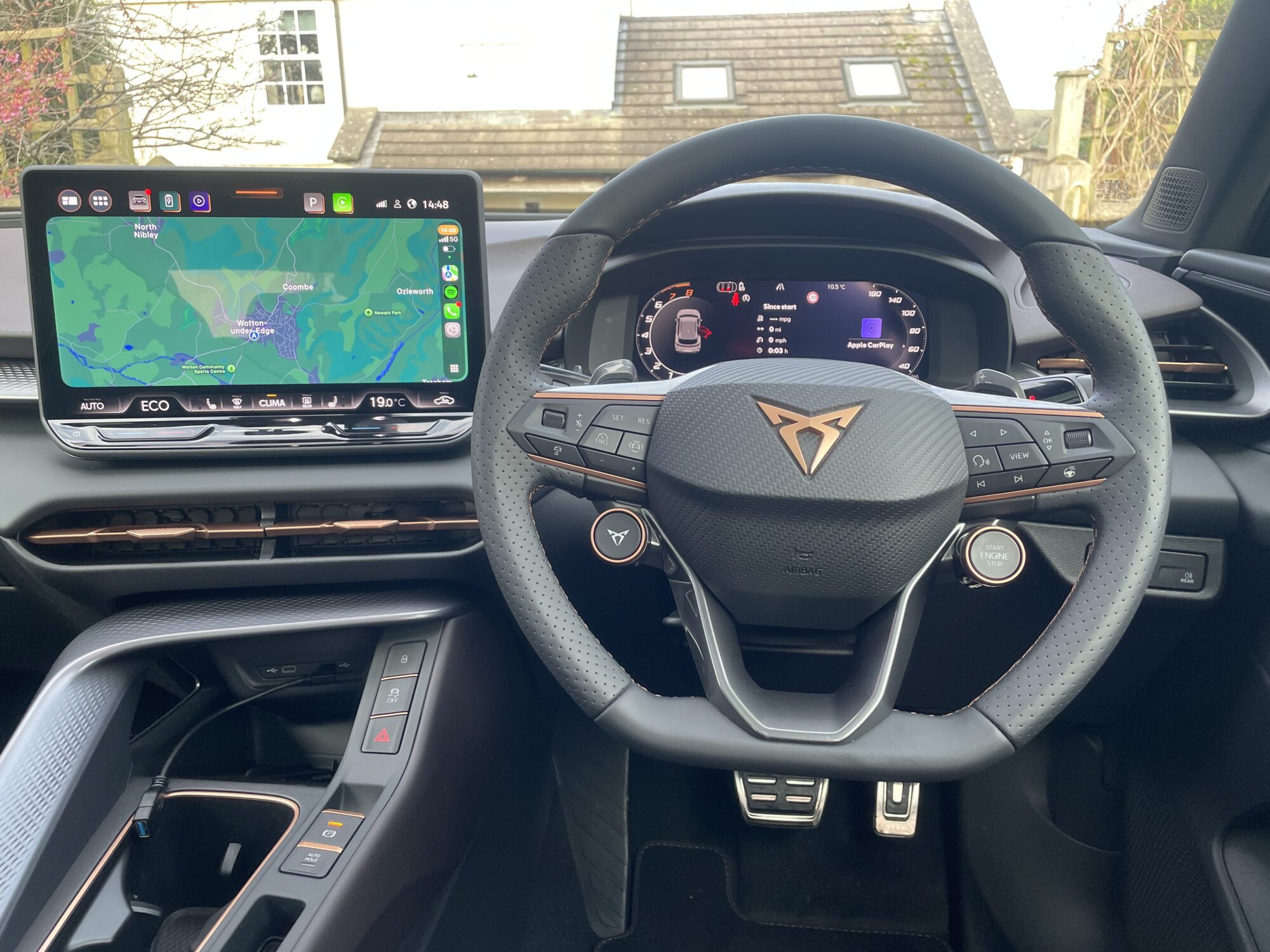
STANDARD EQUIPMENT: 10.25-inch digital instruments, 20-inch alloy wheels with Continental Sport Contact 6 255/40 R20 tyres and tyre tool kit, 60/40 split/folding rear seats, Adaptive cruise control with traffic jam assist, Adaptive suspension, Alarm system, Anti-lock brakes with electronic brake force distribution and brake assist, Auto-dimming rear-view mirror, Automated park assist, Automatic headlights, Autonomous emergency braking system, Blind spot monitoring, DAB radio, with 12.9-inch touchscreen, navigation, 9-speakers, USB-C sockets, voice control and steering wheel controls, Drive mode selector, Driver drowsiness detection, Driver, passenger, side and head airbags with passenger side de-activation, Electric and heated mirrors with power folding and memory, Electric front seats with memory functionality on the driver’s side, Electric park brake, Electric hands-free tailgate, Electric windows front and rear, Electronic stability programme with traction control, Emergency e-call system Exit assist, Front fog lights with cornering functionality, Hands-free electric tailgate, Head-up display, Heated front seats, Heated steering wheel, ISOFIX child seat, safety fasteners for rear outer seats, Keyless entry and start, Lane centring, Leather bucket seats with copper stitching, LED daytime running lights, LED headlights with automatic high beam, Parking sensors front and rear, Rain sensing windscreen wipers, Rear privacy glass, Reversing camera, Roof rails, Sports pedals, Traffic sign recognition, Tri-zone climate control, Tyre pressure monitors, Wireless Android Auto, Apple CarPlay and Bluetooth smartphone compatibility and a Wireless smartphone charger
OPTIONAL EQUIPMENT: Panoramic sunroof (£995)
FACTS & FIGURES
© Motorworld Media 2023
Registered Office: 4 Capricorn Centre, Cranes Farm Road, Basildon, Essex. SS14 3JJ
Company Number: 8818356
Website designed by Steve Dawson