MODEL ON TEST: HYBRID 1.5 HOMURA AUTOMATIC
MILEAGE – 1,273
When the Mazda2 Hybrid first joined the Japanese firm’s lineup in the UK in 2022, it’s fair to say the lightly rejigged and rebadged Toyota Yaris clone caused a bit of confusion. It sat alongside the petrol 2
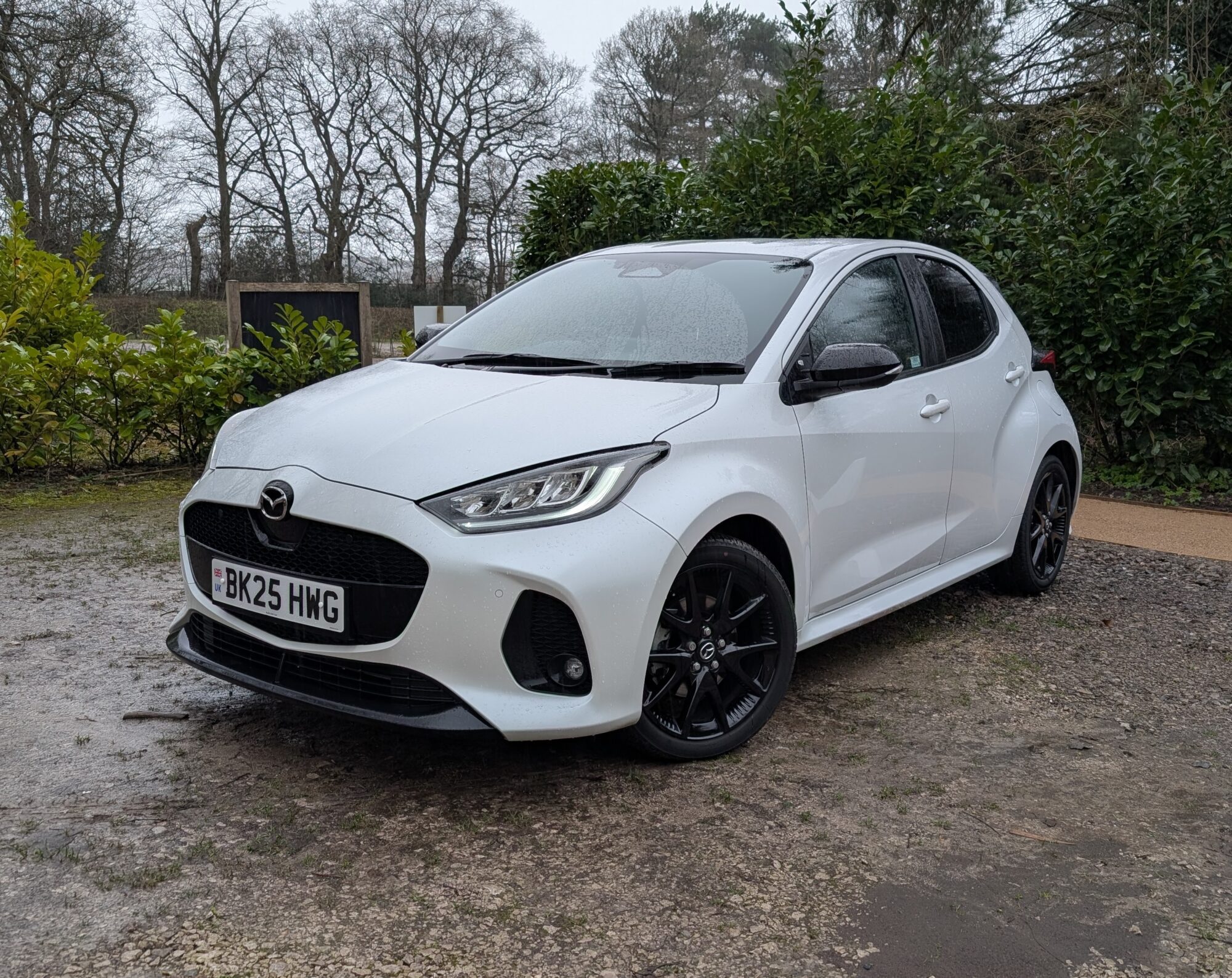
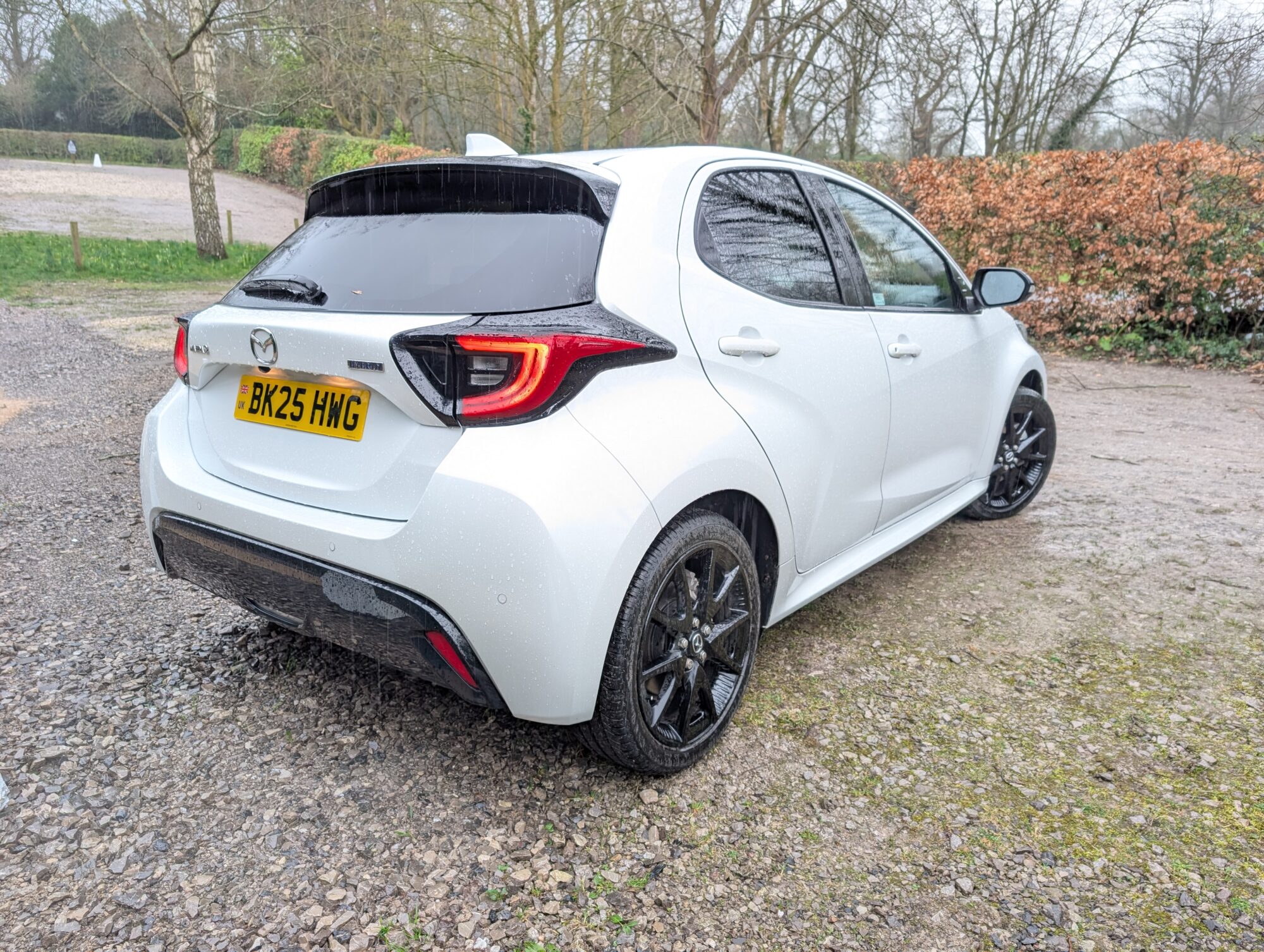
in the lineup, presumably to bring down Mazda’s fleet average CO2 figure, while also offering customers a clean, easy-to- drive automatic city car. Fast-forward to 2024 and beyond and the Mazda2 Hybrid is now the sole city car the Japanese brand offers in the UK, and it has also become quite a bit more distinctive. For its mid-life facelift, Mazda’s European Design Studio in Germany got to work and gave the hybrid a racy front grille and bumper, along with a unique treatment for its rear lights and tailgate to distance it from its Toyota twin.The result is impressively sporty, embracing the car’s naturally squat stance and flared wheel arches but adding extra pzazz to convince you this supermini could be related to the MX-5.
That’s especially the case in the Homura specification of our car, or the range-topping Homura Plus, thanks to a set of natty 17-inch gloss black alloy wheels. I think these look fantastic, giving the smallest Mazda a warm-hatch attitude – even if fuel efficiency and CO2 emissions take a hit compared with the 15- and 16-inch alloys of the Centre-Line and Exclusive-Line trim levels. Figures alter from 74.3mpg to 67.3mpg and 87g/km to 98g/km for the CO2 on top- specification cars.
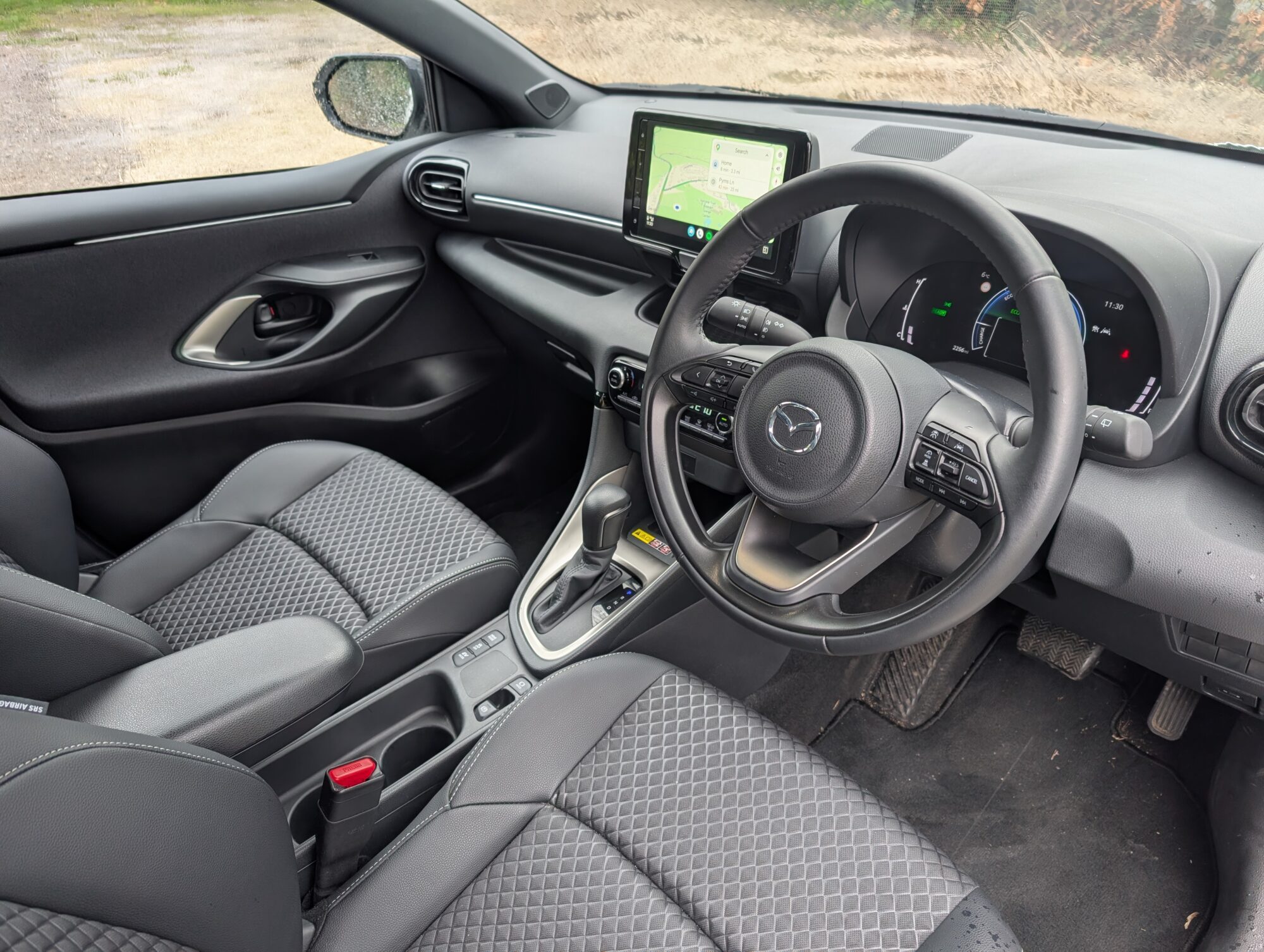
Pop open a front door – every version is a five-door as standard – and the front cabin is pretty much as you’d expect for a modern Japanese supermini.There are black fabric seats with synthetic leather trim in Homura cars, a horizontal dashboard with some extra storage, splashes of metallic trim and a small steering wheel with physical controls. Fans of using knobs and buttons for the climate controls will be happy and the Centre-Line, Exclusive-Line and Homura all share the same nine-inch central display. The Homura also adds a seven- inch digital instrument display, while the plushest Homura Plus has a 10.5-inch central display, 12.3-inch instrument monitor and widescreen head-up display.
Start the car and slide the weighty automatic gear lever into drive and the Mazda2 Hybrid feels zesty and agile from the moment you set off. Its total power figure of 114bhp certainly isn’t bad for
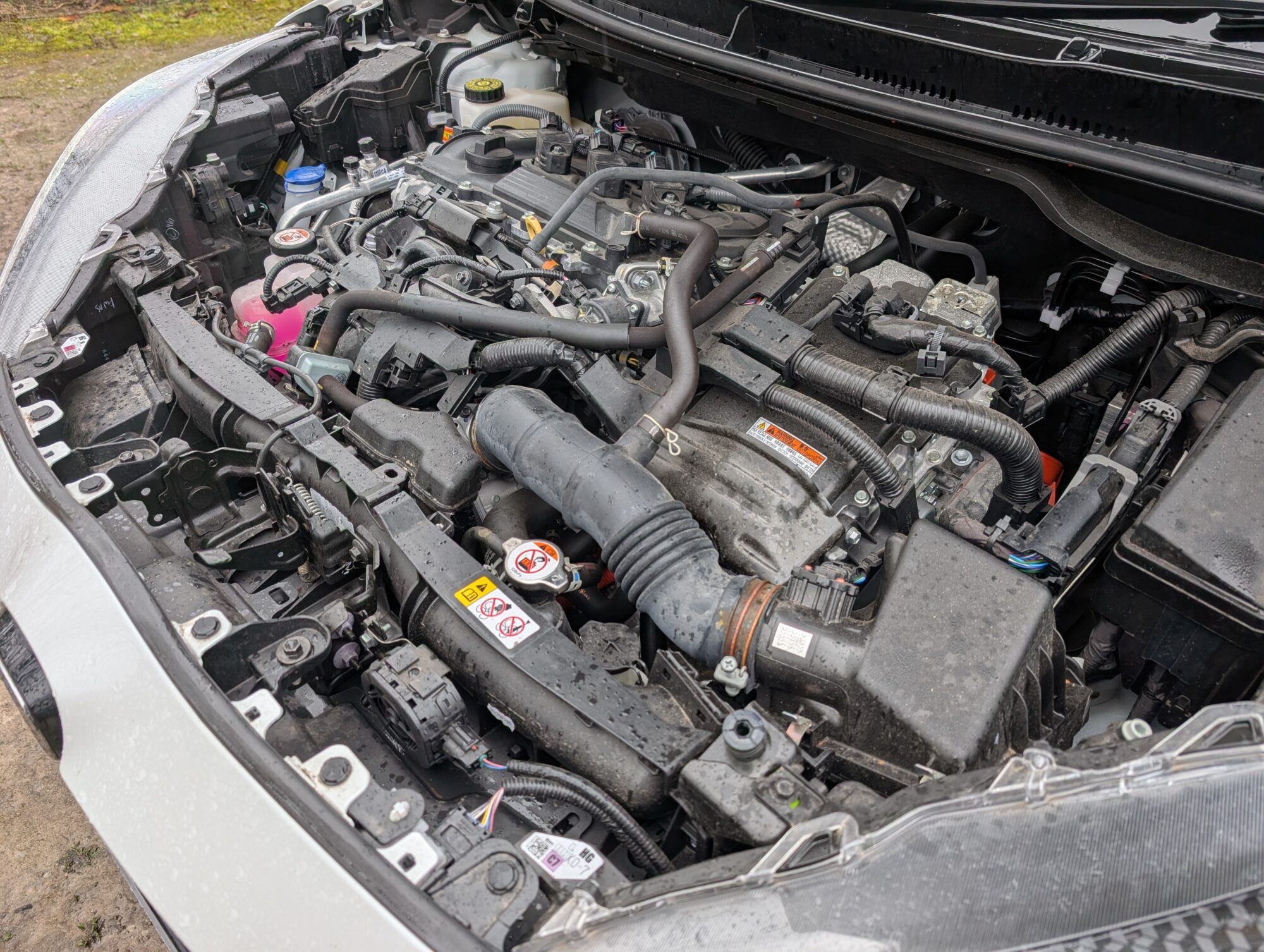
a supermini, but it doesn’t really tell the whole story either. It’s the 79bhp electric motor that always kicks in first to help you pull away, with the 91bhp 1.5-litre petrol engine only taking over as your speed increases or if you accelerate hard.The result is a 0-62mph dash of 9.7 seconds, and because you never need to shift gears, acceleration is usually on tap as soon as you flex your right foot. I’d assumed the Mazda2 Hybrid used a form of belt-driven continuously variable gearbox, but it is described as a “power split device” that uses a planetary gear set to smoothly juggle power from the engine, electric motor and generator. Allied with a high-performance lithium-ion battery under the rear passenger seat, the powertrain regularly sees the Mazda2 Hybrid running using electricity alone around town and when stationary.There’s also an ‘EV-only’ mode that can prioritise the electric motor for around 0.6 miles when there’s enough charge, making it ideal for zero emissions driving around car parks or town centres.
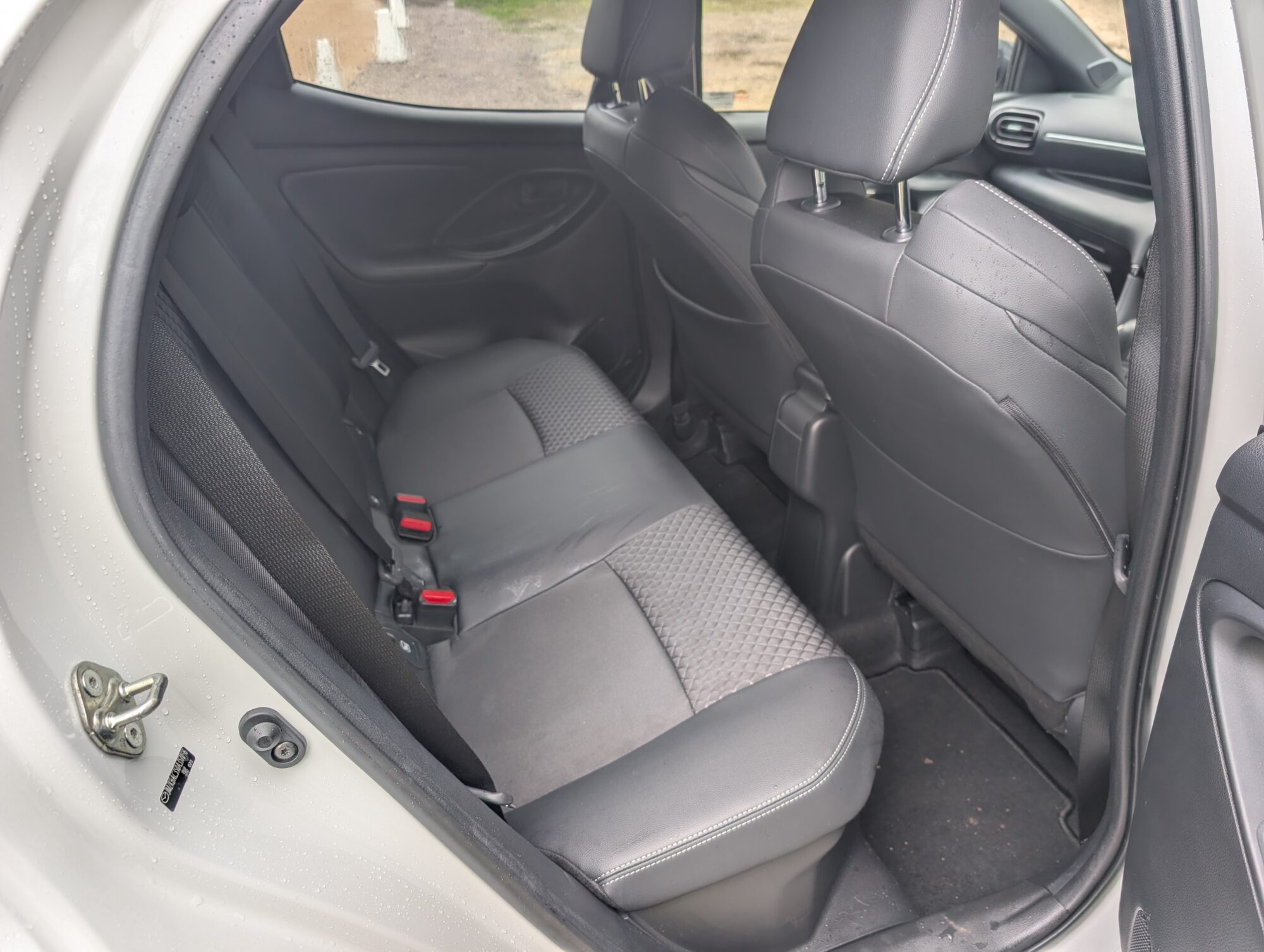
Even by supermini standards the Mazda2 Hybrid is pretty dinky, measuring just 3,940mm long, but its decent 2,020mm width including the door mirrors and 2,560mm wheelbase means there’s just enough room for four occupants. Boot space is decent rather than class-leading, with 286 litres on offer, growing to 935 litres with the 60:40 split rear seats folded forwards. In layman’s terms, on a recent airport run I just about managed to fit two ski bags diagonally, a large suitcase, two cabin suitcases and a pair of rucksacks behind the front seats.
Costing £28,725 in Homura trim with the optional Northern White Pearl paintwork (£950), the 2 Hybrid certainly isn’t a cheap car, but at the time of writing Mazda is offering it for just over £250 a month on a 0% APR finance deal, which seems like a great offer in these price-squeezed times.
ANDY GOODWIN
WHAT’S HOT: Mazda has given its supermini more distinctive looks.
WHAT’S NOT: Measuring under four metres, the Mazda2 Hybrid is agile but tight on space.
STANDARD EQUIPMENT: 7-inch digital instruments, 17-inch alloy wheels with Bridgestone Ecopia 205/45 R17 tyres and tyre repair kit, 60/40 split/fold seats, Adaptive cruise control, Alarm system, Ambient lighting, Anti-lock brakes with electronic brake force distribution and brake assist, Auto-dimming rear-view mirror, Automatic headlights, Autonomous emergency braking with pedestrian and cyclist detection, Blind spot detection, Cloth and faux leather upholstery, DAB radio with 9-inch touchscreen with 6-speakers, USB-C sockets and steering wheel controls, Drive mode selector, Driver drowsiness detection Driver, passenger, central, side and head airbags with passenger side de-activation, Dual-zone climate control, Electric and heated mirrors with power folding, Electric park brake with auto hold, Electric windows front and rear, Electronic stability programme with traction control, Emergency e-call system, Hill start assist, ISOFIX child seat, safety fasteners for rear outer seats, Keyless entry and start, Lane keeping assist, Leather steering wheel and gear lever, LED daytime running lights, LED front fog lights, LED headlights with automatic high beam, LED rear lights, Parking sensors front and rear, Rain sensing windscreen wipers, Rear cross traffic alert, Rear privacy glass, Reversing camera, Safe exit assist, Traffic sign recognition, Tyre pressure monitors, Wireless Android Auto,Apple CarPlay and Bluetooth smartphone compatibility and Wireless smartphone charging
OPTIONAL EQUIPMENT: North white pearl paint (£950)
FACTS & FIGURES
Our cars: Mazda2 Hybrid Report 2
MODEL ON TEST: 1.5 HOMURA AUTOMATIC – MILEAGE – 2,256
In the first report, I mentioned that the Mazda2 Hybrid looks and feels pretty zesty, and I’ve found it’s certainly good fun to drive as the weather improves.The chassis is quite sporty in its tuning for an eco-supermini, so there’s not too much body lean in corners and the tyres cling on gamefully. In a world that seems to be increasingly dominated by two-metre- wide SUVs, pickups and vans, it’s also refreshing to drive a car small enough to jink around potholes without straying out of its own lane.
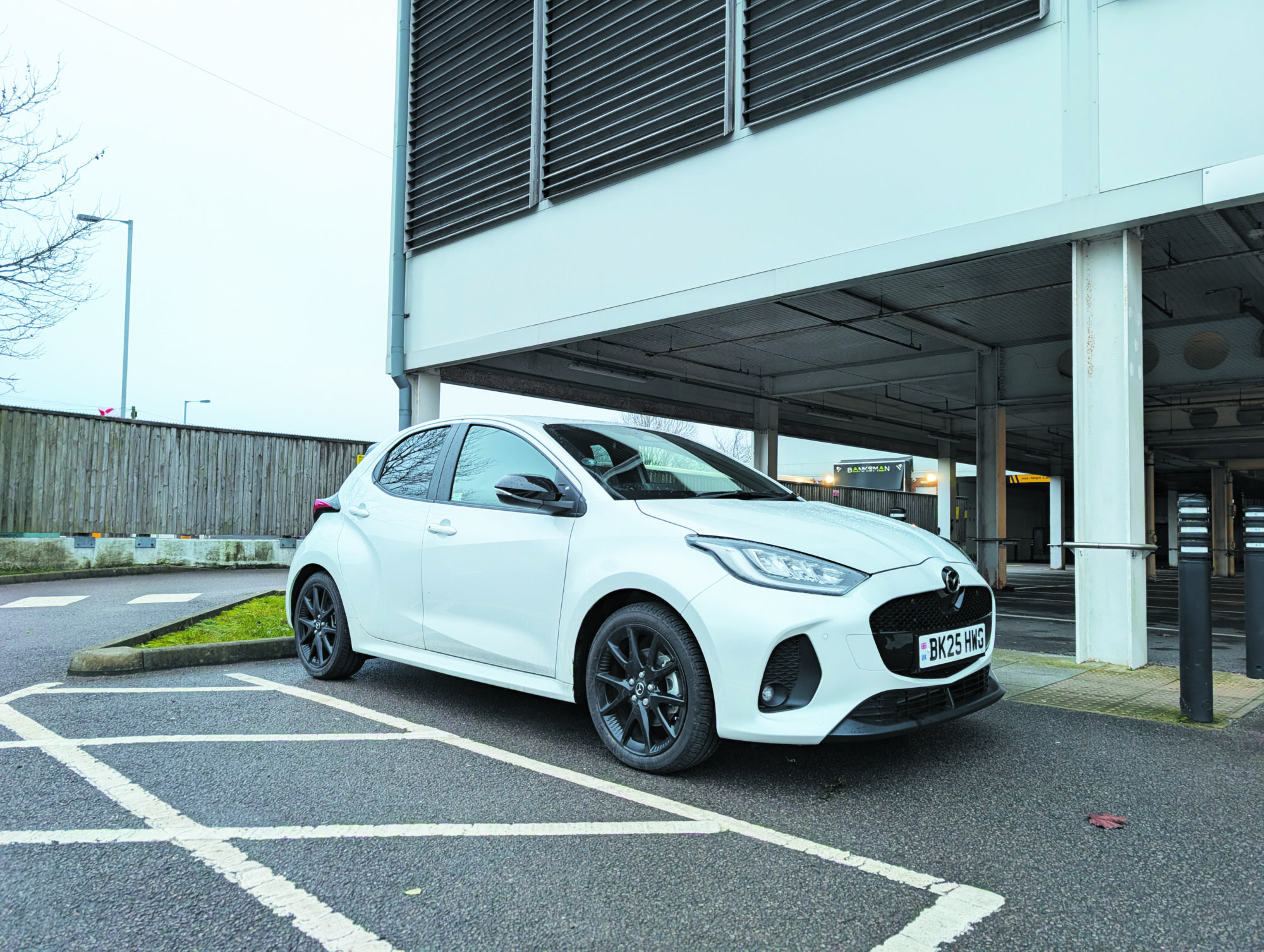
The downside to this agility is a relatively firm ride, which is no doubt improved if you opt for smaller wheels than the 17-inch items fitted to our Homura specification car. The Mazda is actually nicely compliant over speed bumps, but can feel fidgety and struggle to settle as you drive over rough stretches of tarmac and ripples in the road. That’s not too much of an issue for the short hops it’s designed for, but could become a bit grating during a long trip on our crumbling motorway network.
While the spring might finally have sprung, there have still been plenty of frosty mornings, and I’ve found the interior can take what feels like an age to warm up. In truth, I’ve been rather spoiled by running a few long-termers with cabin pre-heating and heated seats, but after 10 or 15 minutes of waiting for warm air to trickle out of the vents,I was curious enough to do a few online searches to see if any other owners had mentioned it. One suggested using the ‘Auto’ setting on the climate control instead of relying on manual settings, so I gave it a whirl. Set the target temperature to something like 23 degrees and this doesn’t blast out air straight away, but instead seems to allow the engine to warm up a bit first before slowly ramping up the warm air stream from the vents. In a hybrid with impressive thermal efficiency, I guess one trade-off is less waste heat from the engine, so I’ll stick to this strategy until the nights get warmer.
The Hybrid’s interior is mostly very well thought out, and I’m a big fan of the comprehensive suite of physical controls on the steering wheel.You can view a surprising amount of information and tweak a few settings using just these and the instrument display, encompassing everything from how much of your journey has been driven with the engine off, to checking tyre pressures and even turning off the somewhat annoying bleeps for speed limit signs. One slightly odd button, however, is the one that activates the automatic high and low headlight beam. This is located near your right knee, so takes a bit of concentration to find and push in the dark when you need it.
Speaking of illumination, this brings me on to the only fault with the car so far. Setting off to the local shops I indicated for a left turn and was met with the sort of rapid indicator clicking noise that normally indicates a bulb is dead. While possible, that would certainly be odd in a car with less than 2,000 miles
on the clock. Hopping out, I found it was the indicator in the rear left taillight that was only working intermittently. After a quick check for anything obvious like loose connectors or the boot not being properly closed, I headed home and the fault remained all day. Happily though, after locking the car overnight the indicator was back to normal, so I suspect a software glitch was the culprit.
ANDY GOODWIN
WHAT’S HOT: It feels agile enough to back up its sporty looks.
WHAT’S NOT: Can be a little slow to warm up in the morning, and there are no heated seats.
FACTS & FIGURES
© Motorworld Media 2023
Registered Office: 4 Capricorn Centre, Cranes Farm Road, Basildon, Essex. SS14 3JJ
Company Number: 8818356
Website designed by Steve Dawson