MODEL ON TEST: 4Xe THE NORTH FACE 1.2 eHYBRID – MILEAGE – 3,032
Increasingly, Jeep seems to feel like a cult hero of the motoring world, beloved by some but now largely glossed over by many. Yet in the shape of the Avenger, the brand could be forgiven for having a bit more optimism about it. Not only did the electric version win European Car of the Year, but the basic petrol options have also been roundly praised in the media, and customer interest has increased as a result. However, for all this good news, the Avenger has offered nothing for fans of the brand who want a proper compact off-roader.
Until now, that is. In the 4xe, Jeep finally has an all-wheel-drive Avenger that promises some all-
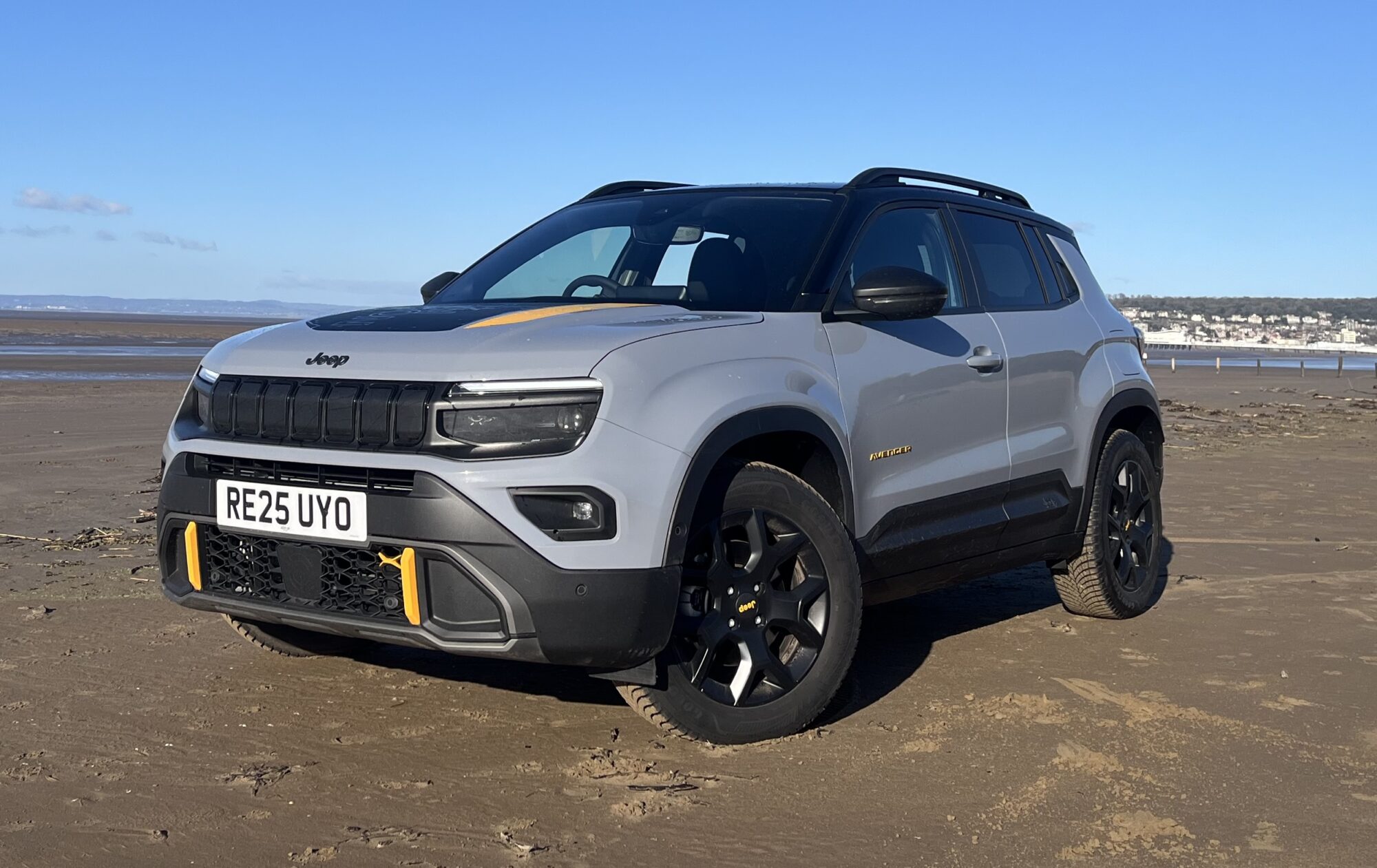
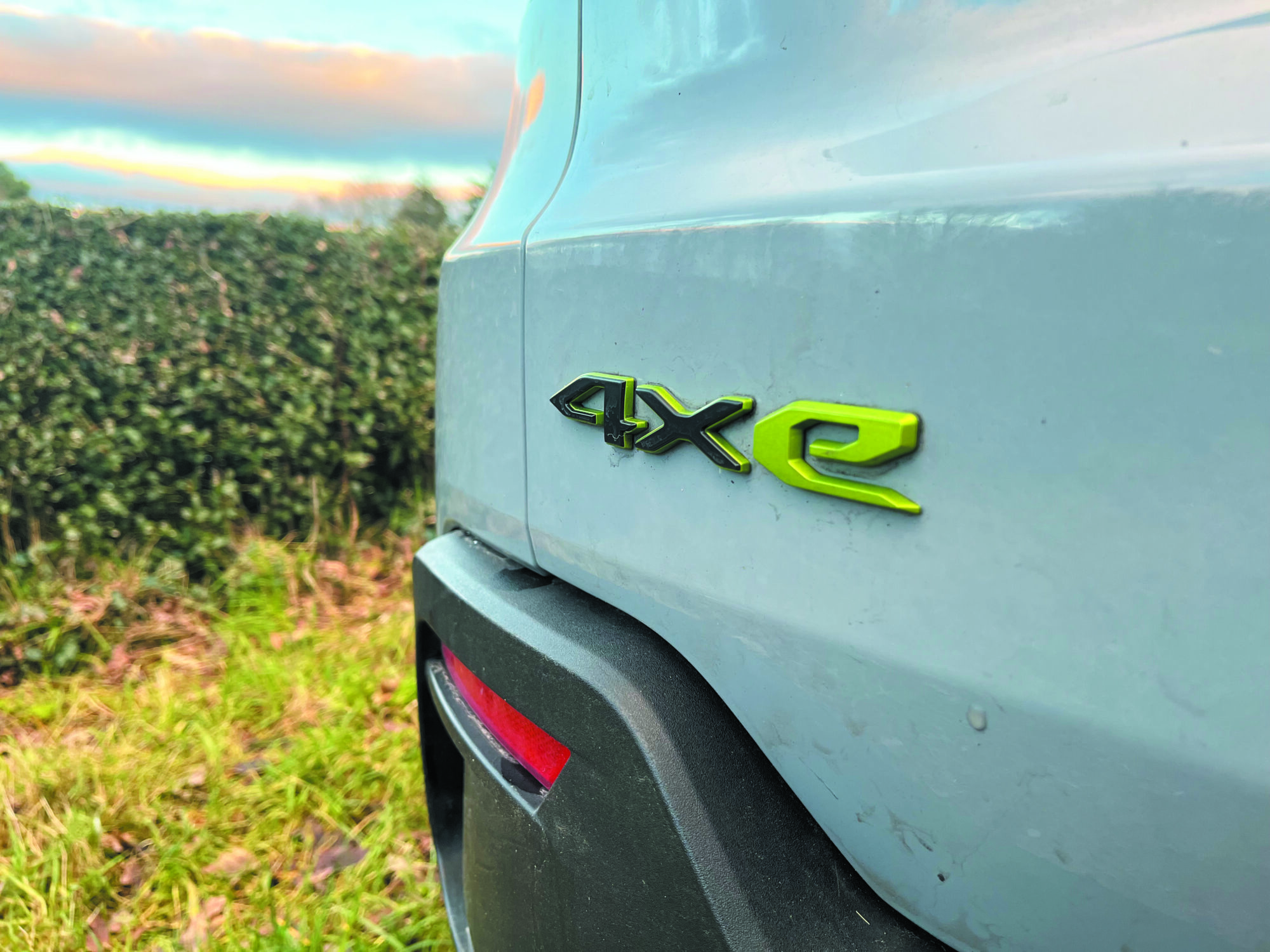
terrain capability, and this The North Face Edition is supposedly the most adventurous of the lot. Not only does it get the 1.2-litre part-time all-wheel-drive hybrid system of the ‘standard’ 4xe, but it adds all-season tyres and some rugged styling to the equation, not to mention a fleet of North Face logos.
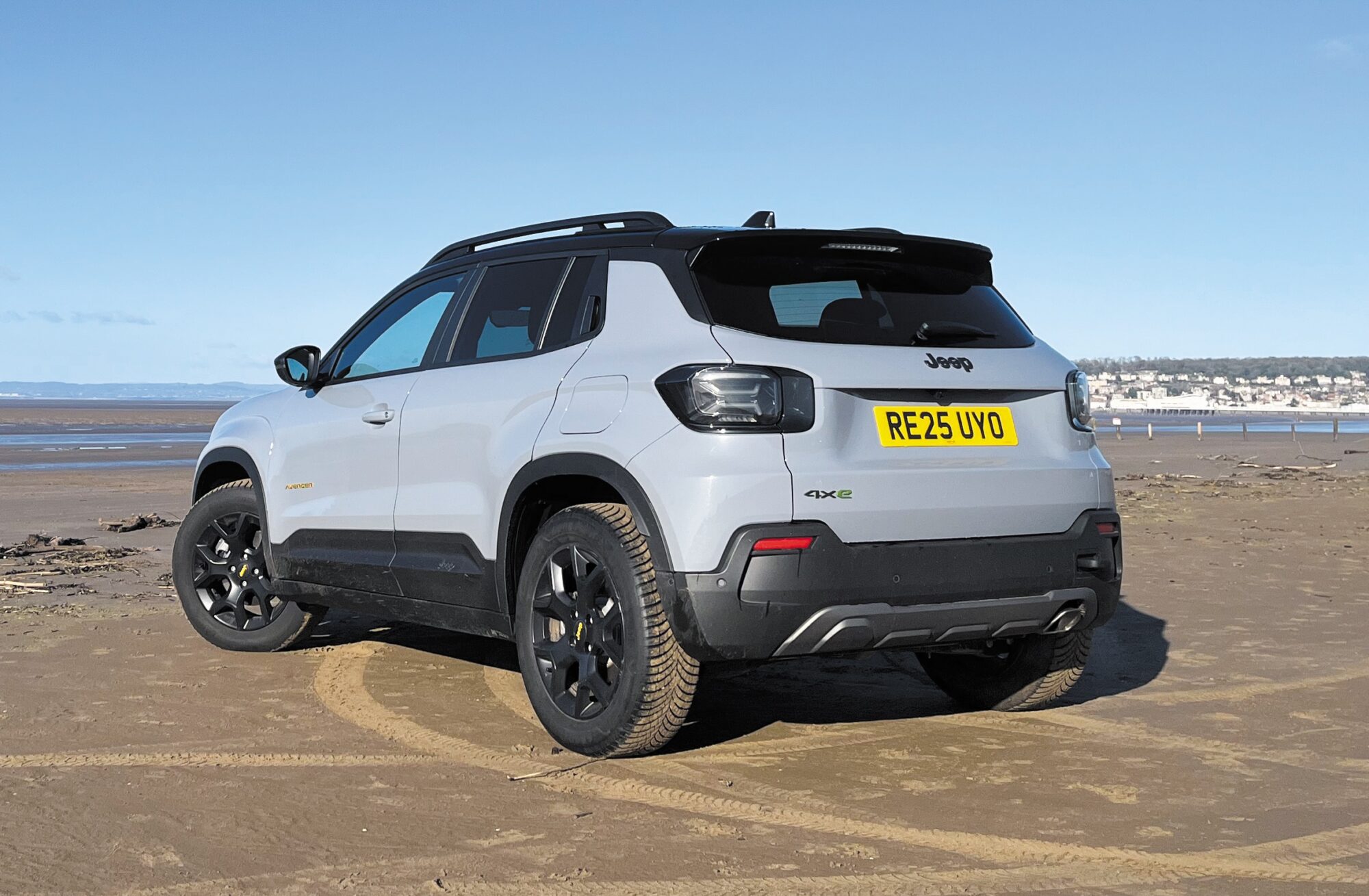
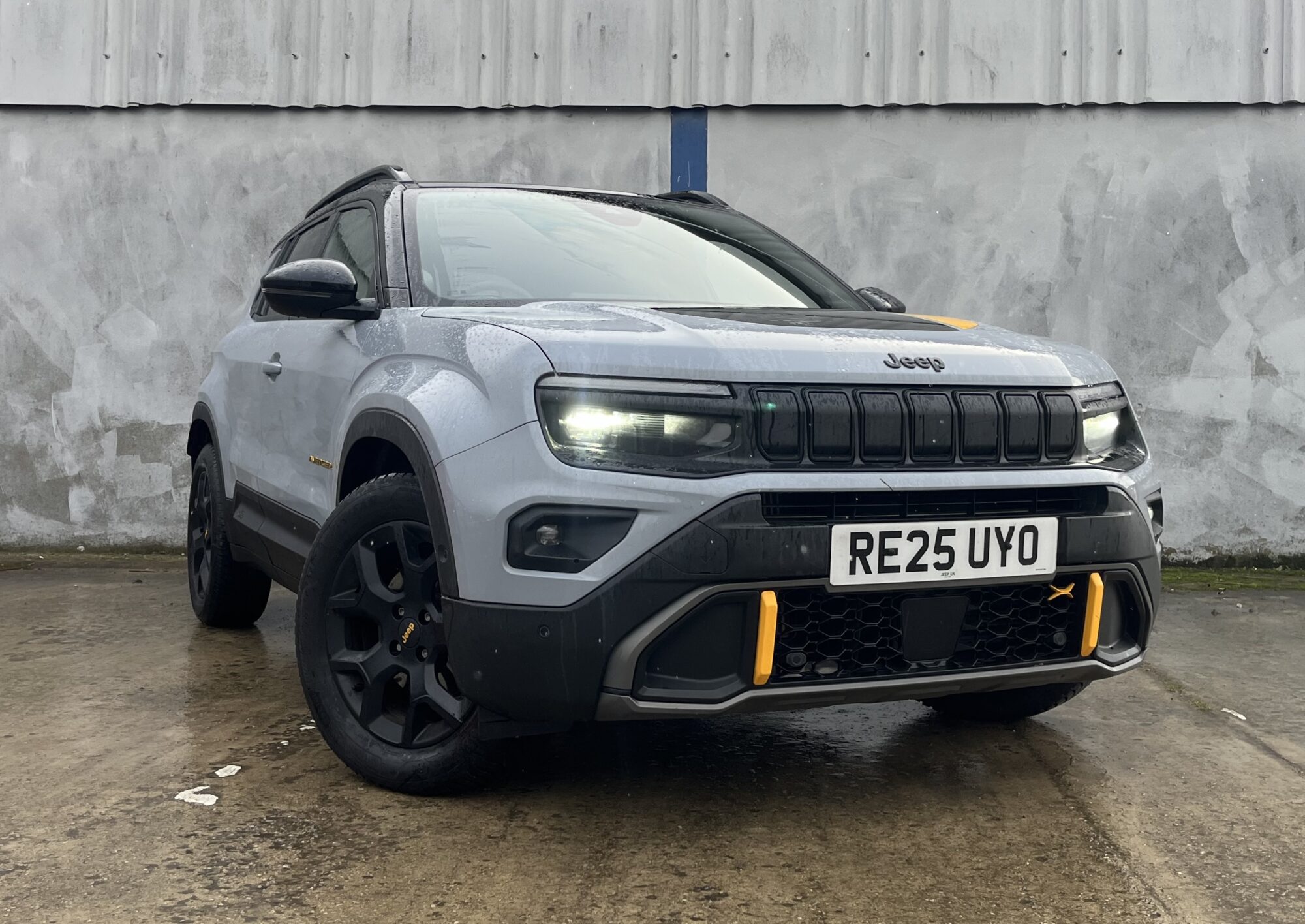
Already, I’ve noticed mixed reviews of the styling from friends and family. Some quite like the stickers on the bonnet, the contrast of the Storm paintwork and the black-and-yellow body cladding, and the massive towing eye sticking out of the rear bumper, while others think the North Face badges make the little Jeep look like an advert for puffer jackets. It may not be for everyone, but I must admit
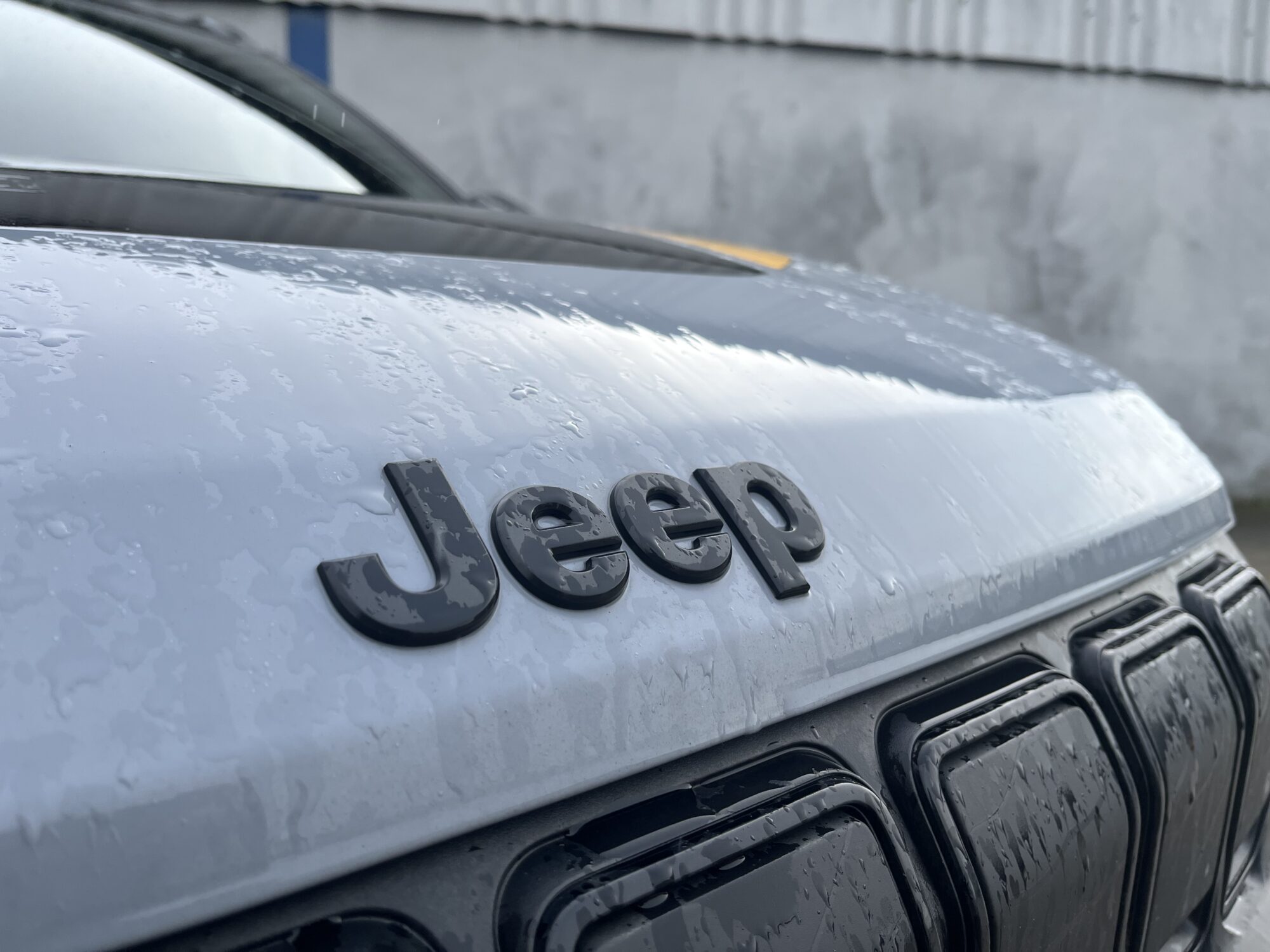
I quite like it. Okay, I could happily live without the massive ‘The North Face’ lettering on the bonnet, but otherwise I think it’s more interesting and exciting than a standard Avenger, which is already a fairly handsome thing. I like the way I keep spotting new aspects to the design, such as the little mountain motif near the rear wiper spindle, and the ladybirds under the roof rails. I don’t know why they are there, but I like it. It adds some character, somehow.
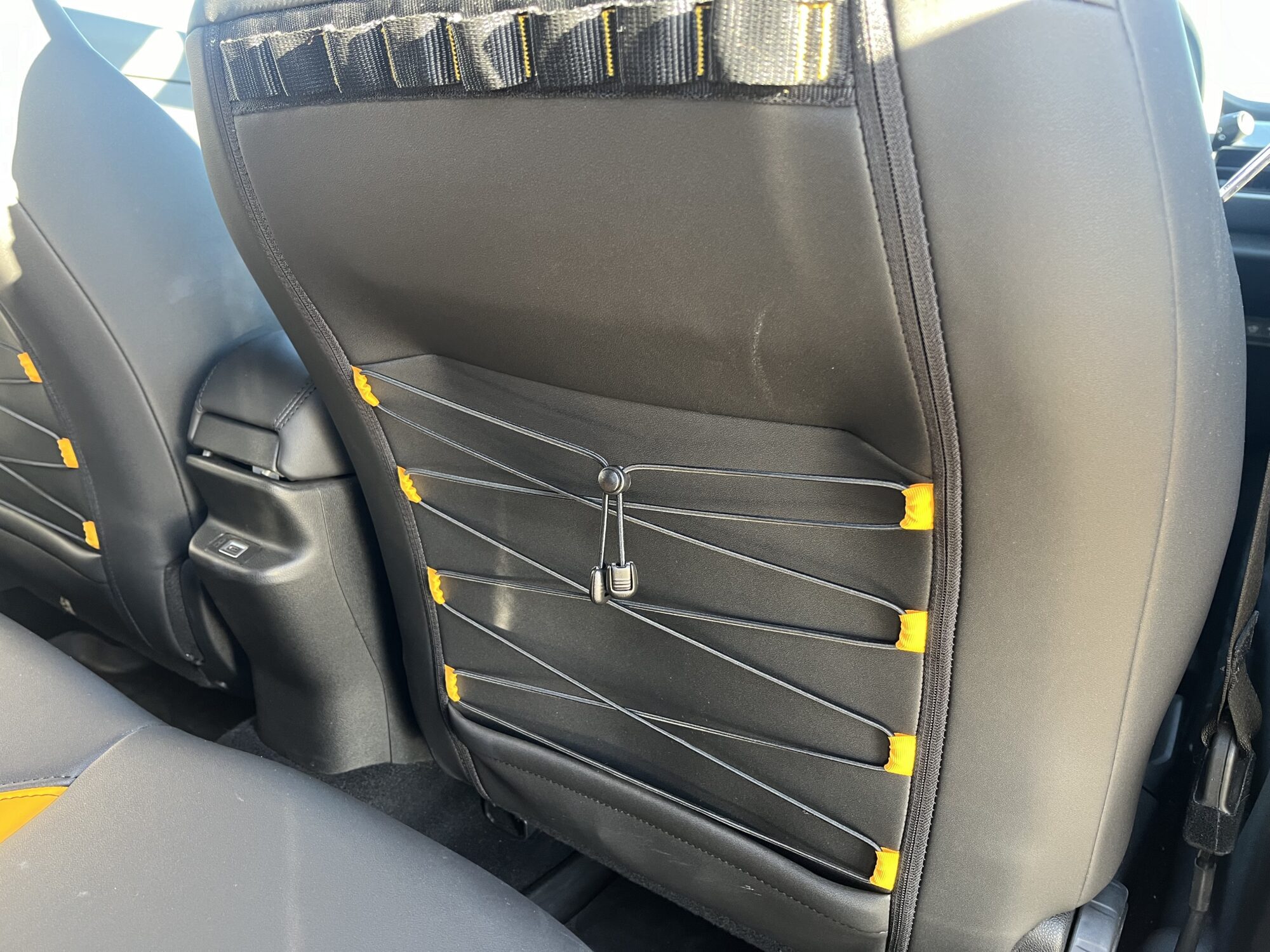
I like the interior, too, although I am confused by some aspects. The seats, for example, are really rather natty, and the heating elements inside them are pretty effective, but I can’t quite work out the strange drawstring arrangement on the seat backs. Apparently it’s all to do with the North Face’s outdoor nature and the system works as a kind of seat pocket, but it isn’t as useful as a conventional pocket, and I haven’t found much use for it as yet.
More useful is the little yellow two- person tent that comes with the North Face Edition as standard, and the little folding carry box that comes with it. The box allows you to stow wet items, such as walking boots or wet coats, in the boot without spoiling the carpeted load bay floor. As there isn’t much space under the boot floor, that’s a handy addition.
Speaking of useful, as the winter months draw in, I’m expecting to make some use of the Avenger 4xe’s all-wheel-drive system. Combining the ubiquitous 1.2-litre turbocharged petrol engine that seems to power everything Stellantis makes these days with a pair of electric motors, the system is both more powerful than the standard Avenger Hybrid, and offers more traction.The system can drive all four wheels at low speeds, then disconnect the electric motor from the rear wheels at higher speeds, saving fuel. The official economy of 52.3mpg bodes well, and I’ve already managed more than 50mpg on a long run.
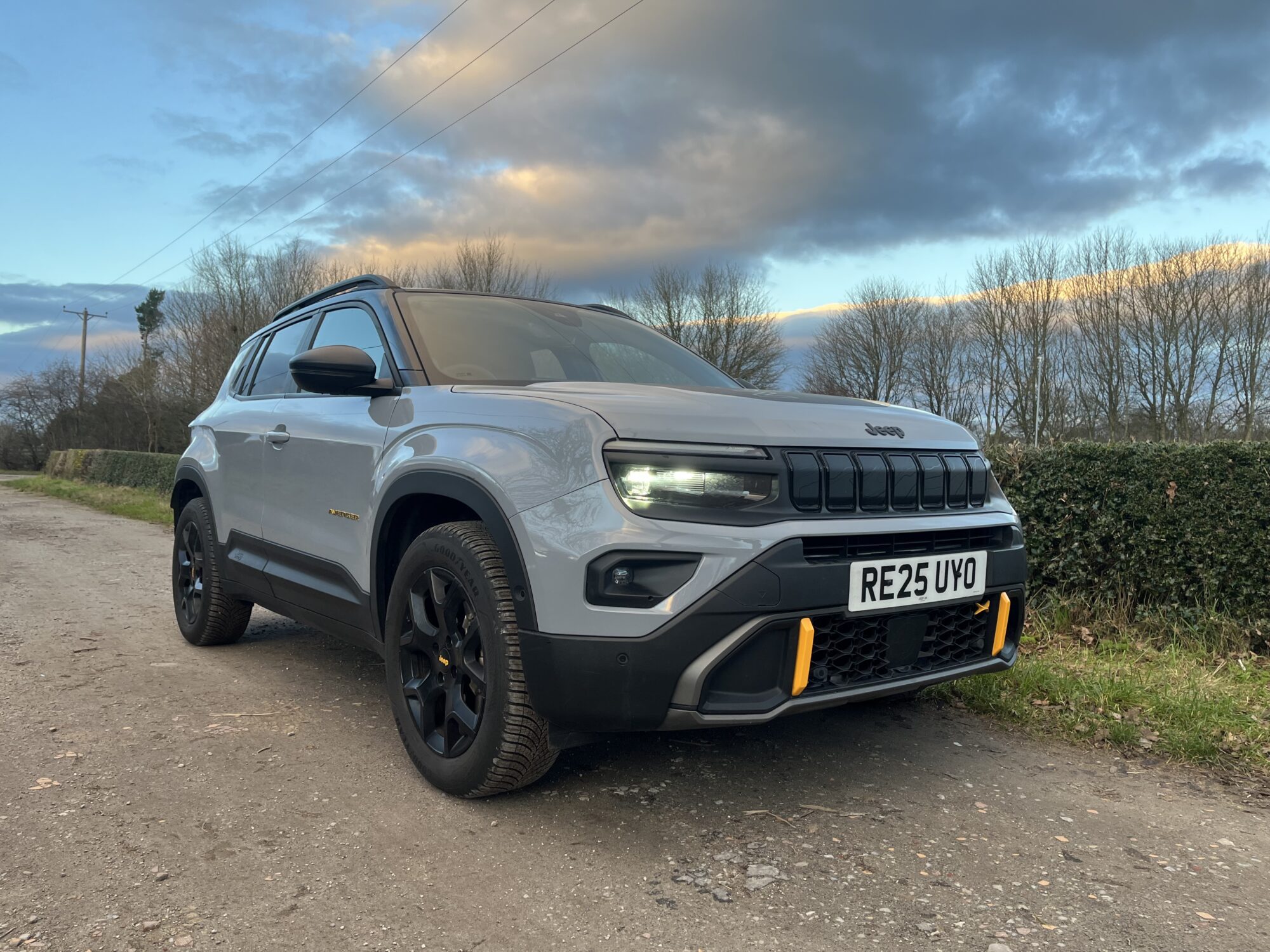
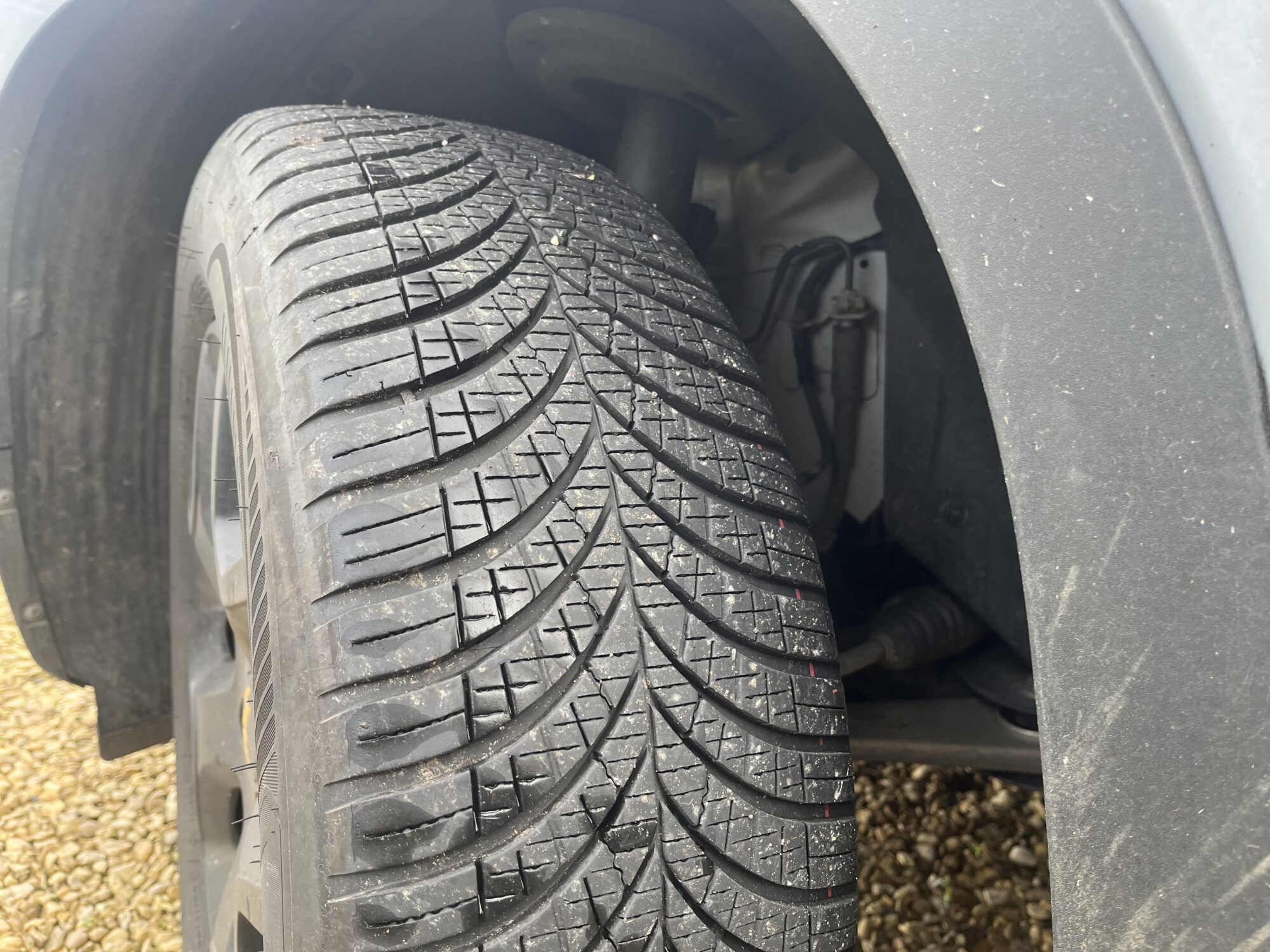
Anyway, I digress. This is supposed to be an all-terrain Avenger, and to that end, the 4xe models have a fraction more ground clearance than conventional Avengers, and we’ve got a set of all-season rubber wrapped around those 17-inch black alloys. That should come in handy if the snow starts falling on the hills down the road, and I’m looking forward to seeing what it can do. If the oily bits can cash the cheques the body is writing, then this should be a pretty capable 4×4 for just over £35,000.
It’s early days, then, but the Avenger 4xe The North Face is already showing some promise, and I’m looking forward to seeing what the next six months might bring.
JAMES FOSSDYKE
WHAT’S HOT: This is the first Avenger to promise true off-road capability.
WHAT’S NOT: Despite the capability, the hybrid system is proving really economical.
STANDARD EQUIPMENT: 10.25-inch digital instruments, 17-inch alloy wheels with Goodyear Vector 4 Seasons Gen3 215/60 R17 tyres and tyre repair kit, 60/40 split/ folding rear seats with height adjustable boot floor, 360-degree parking sensors, Adaptive cruise control with traffic jam assist, Alarm system, Anti-lock brakes with electronic brake force distribution and brake assist, Auto-dimming rear view mirror, Automatic headlights, Autonomous emergency braking system, Blind spot monitoring, Climate control, DAB radio with 10.25-inch touchscreen, navigation, 6-speakers, USB-C sockets, voice control and steering wheel controls, Drive mode selector, Driver drowsiness detection, Driver, passenger, side and head airbags with passenger side de-activation, Electric and heated mirrors with power folding, Electric park brake, Electric hands-free tailgate, Electric windows front and rear, Electronic stability programme with traction control, Emergency e-call system, Faux leather steering wheel, Hands-free electric tailgate, Heated front seats, Heated front windscreen, Hill descent control, ISOFIX child seat, safety fasteners for rear outer seats, Keyless entry and start, Lane centering, Lane keep assist, LED daytime running lights, LED front fog lights with cornering functionality, LED headlights with automatic high beam, LED taillights, Rain sensing windscreen wipers, Rear privacy glass, Reversing camera, Roof rails, Silver skid plates, Traffic sign recognition, Tyre pressure monitors, Washable seats, Wireless Android Auto, Apple CarPlay and Bluetooth smartphone compatibility and Wireless smartphone charger
FACTS & FIGURES
Our cars: Jeep Avenger Report 2
MODEL ON TEST: 4Xe THE NORTH FACE 1.2 eHYBRID – MILEAGE – 5,575
As regular readers will no doubt be aware, official fuel economy figures were once calculated using the New European Driving Cycle, or NEDC.And it was frankly useless.For any number of reasons, the test produced wildly exaggerated figures that left us with absolutely no idea exactly how far a car would really go on a gallon of fuel without a large amount of trial and error.
Then, a few years ago, the NEDC figures were discarded in favour of the new Worldwide Light Vehicle Test Procedure, or WLTP system, which is allegedly better, but still not perfect. So while I have noticed more realistic figures – especially for petrol- and diesel-powered cars on longer drives – from the more modern test, I’ve always calculated my fuel economy the old-fashioned way: with the odometer and the numbers on the pump.
You might ask why I don’t just use the trip computer like everyone else, and that’s a fair question, but the truth is I still don’t trust it. In all my time chewing a pen, poring over receipts and tapping numbers into a calculator, I don’t think I’ve ever come up with the same numbers as the trip computer. Admittedly, maths was never my strongest subject at school, but I have a nagging suspicion that trip computers are more interested in telling me what I want to hear, rather than the truth. My old Jag, for example, is currently claiming 29.9mpg.Yeah, right… The real number, I fear, is about 26 or 27mpg.
Anyway, the point is that I largely ignore the figures on the dashboard, but the sight of almost 55mpg on the digital instrument display piqued my interest – especially when the WLTP numbers suggest it ‘should’ be doing about 52mpg. So I checked it using my back- of-a-fuel-receipt mathematics, and while those numbers suggest the Avenger 4xe is telling porkies, they’re only slightly out. On some journeys – including but not limited to the kind of motorway shleps I do quite regularly – the Avenger is doing a little more than 50mpg.
That’s surprising for a couple of reasons – the fact a petrol-powered Jeep is managing 50mpg is remarkable enough – but also because the Avenger is regularly getting close to its official figures and sometimes exceeding them. And though the hybrid system should theoretically be more economical around town, it’s proving mighty on a long run too. Admittedly, though, it performs better with lower average speeds, especially if average speed cameras or traffic keeps slowing things down. Now I’ve lived with it for a while, though, I’m not so surprised. The Avenger’s hybrid powertrain uses a 48-volt system, which would normally indicate a mild hybrid, but the Jeep leans on its electric motors more than you might expect, using battery power whenever the engine isn’t under load. The giveaway? The numbers in the speedometer go blue.
From an efficiency point of view, that’s good news, but it does mean the Avenger does a lot of juggling and swapping between electric and petrol power, particularly around town. And with a six-speed twin-clutch automatic gearbox to contend with, that is quite a complicated process, so it doesn’t always do things as smoothly as it could do. At times, the engine, motors and gearbox trip over each other, leaving you with a jerky, inconsistent power delivery that’s unpleasant and a bit irritating. It’s a shame, because that little 1.2-litre engine is generally smooth, but the hybrid system spoils the smoothness it’s supposed to supplement when you pull away. That complaint aside, though, the Avenger has so far been
a joy. Efficient, stable and reasonably proportioned, it’s a decent little SUV, but I’m worried that hybrid system’s jerkiness might spoil it slightly.
JAMES FOSSDYKE
WHAT’S HOT: Real-world economy is almost as good as advertised, particularly on long motorway drives.
WHAT’S NOT: But the hybrid system is a bit jerky around town.
FACTS & FIGURES
Our cars: Jeep Avenger Report 3
MODEL ON TEST: 4Xe THE NORTH FACE 1.2 eHYBRID – MILEAGE – 6,999
So-called petrol-heads get quite sniffy about the average customer’s attitude to vehicle
paint colours. Not in a snooty, pseudo- scientific “no, Rufus, I remain convinced Mazda’s Soul Red Crystal reflects more light than Jaguar’s Firesand” kind of way, but a condescending, bullying, Nelson Muntz (Simpsons reference for the kids, there) “ha-ha” kind of way.
Now, I admit, choosing a car purely because you like the colour can be a one-way ticket to automotive misery, but the fact is that colours are a massive part of vehicle design, and that is an important factor in the car-buying process. Hands up all of those who have lusted after a car they know to be terrible, purely because it looks good. Speaking personally, I freely admit I’ve been doing that with almost every Maserati for decades. Now, how much are Ghiblis going for these days?
Anyway, my point is that colour matters more than some enthusiasts might like to admit.Volvo’s colour palette is disappointingly greige, and I know at least two people who have walked away from the dealership as a result. Equally, I wouldn’t mind betting Mazda’s paint jobs have attracted quite a few customers who might otherwise have bought a Ford or a Volkswagen.
When the Avenger 4xe was inbound to DC Towers, I took the liberty of perusing the brochure for some interesting titbits that I could (hopefully) use at a later date. As it happened, all I learned was the height of Mont Blanc, which appears remarkably regularly in various parts of this The North Face model’s design, and the colour options available. Presumably because of the black-and-yellow stickers, Jeep has elected to keep the palette simple, with just black, white and grey options available. Although, being a car manufacturer, Jeep can’t simply call them black, white and grey, so they’re Volcano, Snow and Storm, respectively.
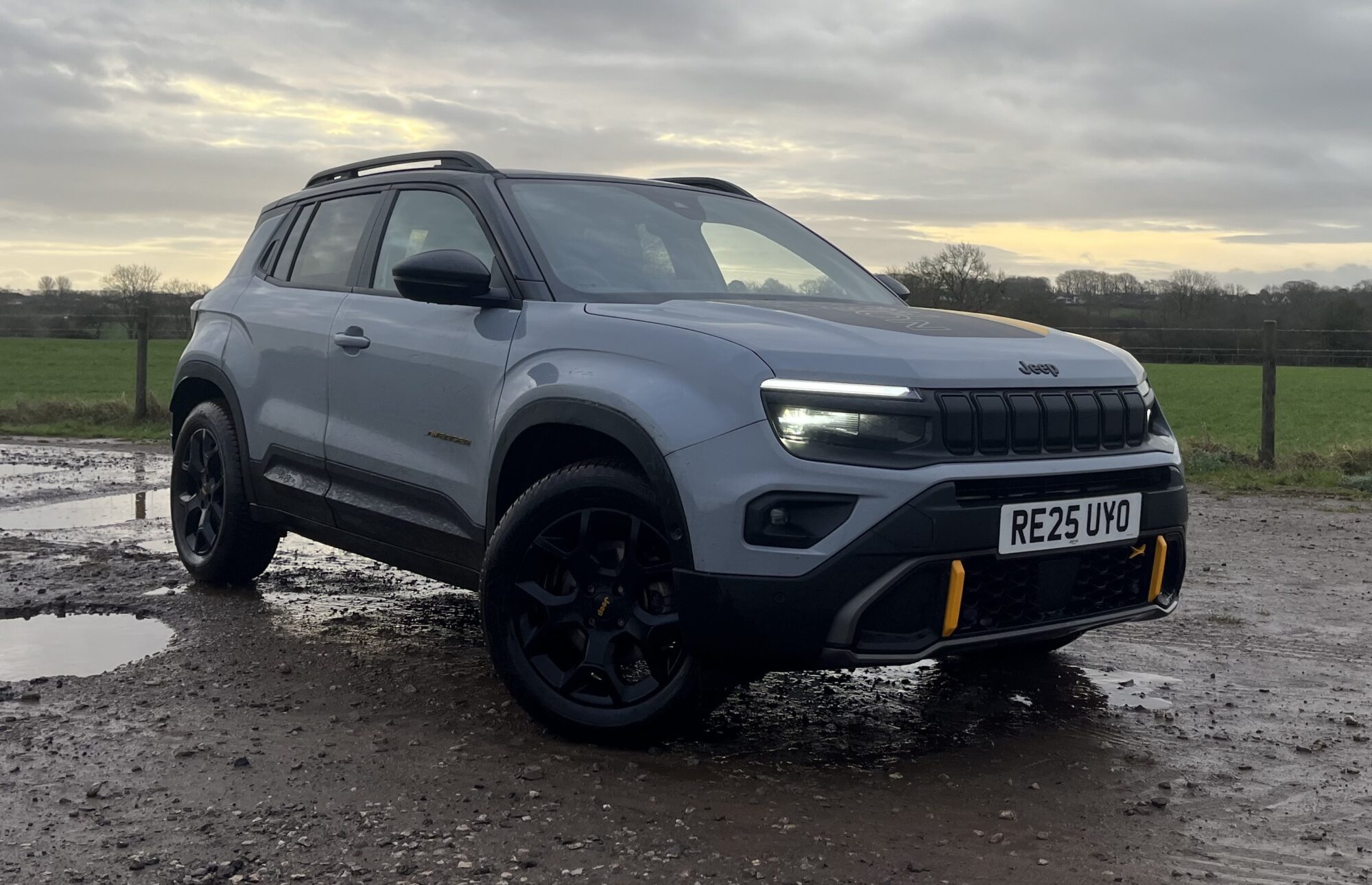
Our test car comes in Storm with a contrasting Volcano roof, and I must admit, it’s my favourite combination for this version. I don’t normally like ‘primer’ greys, such as Porsche’s Crayon or Audi’s Nardo Grey, but this one works. And with the onset of winter and the resultant film of grime that instantly covers any car the moment it leaves the safety of a driveway; the Storm paintwork hides the muck remarkably well. Yes, the airflow around the car means you get some grubby marks in places, but for the most part, you only realise how dirty it is because the black alloys are showing the grime.
But while winter has given me some reasons to be cheerful about the Avenger’s paintwork, the colder weather has revealed some less impressive aspects to the car’s specifications. Chief among these is the heated windscreen, which has proven really disappointing.
I love a heated windscreen – I said as much in a recent question of the month – but this one is a pathetic affair. With a Ford, the windscreen would be clear by the time you’ve scraped the side windows, no matter how thick the frost, but the Jeep’s screen only seems to heat the area around the wipers, leaving the rest of the windscreen crusted with ice. It’s hardly worth having.
And then there are the heated seats. Now, I like the Jeep’s washable upholstery, which sounds like a great idea, but it does get quite cold, and the heating elements inside the seats seem to provide the power of a glow worm in a snowstorm. When I want my rump to be seared like a fillet steak, I find I’d get more heating potential from a piece of roadkill.
JAMES FOSSDYKE
WHAT’S HOT: Storm paintwork is hiding the winter grime quite well.
WHAT’S NOT: Heated seats and windscreen could do with a bit more oomph.
FACTS & FIGURES
Our cars: Jeep Avenger Report 4
MODEL ON TEST: 4Xe THE NORTH FACE 1.2 eHYBRID – MILEAGE – 8,447
Having given the Avenger a bit of a kicking last month, mainly for some less-than-exemplary seat- heating and a barely heated windscreen, I decided it was time to change the narrative. Chiefly because, overall, I’m loving life with the little Jeep. Not only have I been pleasantly surprised by how well it drives, but it hasn’t missed a beat in miserable winter weather or narrow country lanes.The compact dimensions help in the countryside and in the corners, of course, but credit should also go to the all-season tyres wrapped around those 17-inch alloys. In the dry, you’d never notice the difference between those and full summer tyres, and they move moisture prodigiously, even in the deluge we experienced at the start of the year. I’d be sorely tempted to fit them to pretty much any car when the time comes to change.
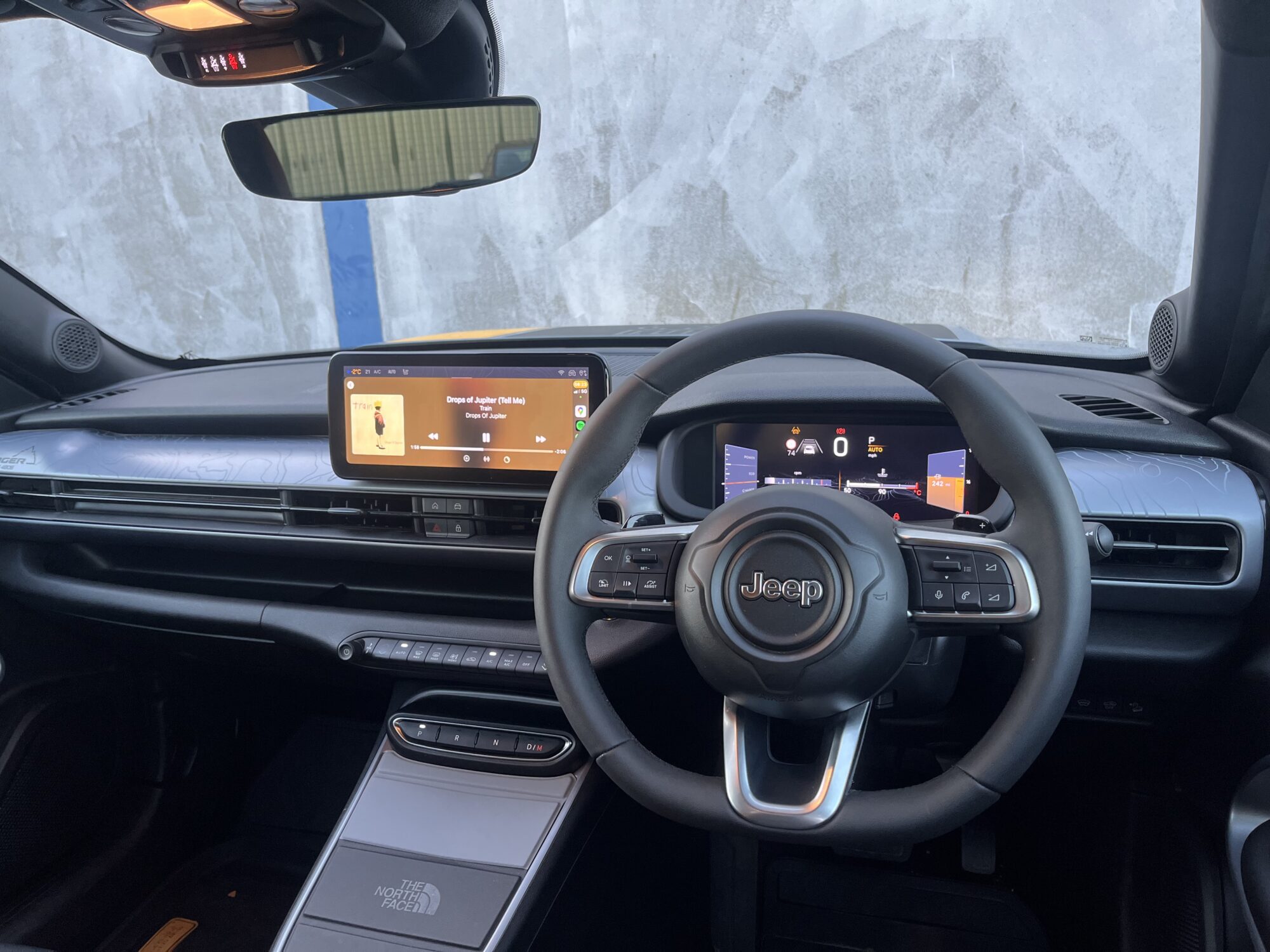
Then there’s the technology. Jeep’s parent company, Stellantis, hasn’t always been lauded for its in-car technology, but at risk of jinxing something, the Jeep has performed flawlessly. Cue something going wrong on my way home tonight. Anyway, the touchscreen may not be blessed with too many bells and whistles, but it does its thing brilliantly, especially when it’s working with Apple CarPlay. Admittedly, the menus take a little getting used to, but it’s fine once you’re accustomed to the choices, and there are some good shortcuts. Swipe down to check the heated seat really is switched on, for example.
Speaking of shortcuts, Jeep has also played a blinder with its little cluster of four buttons under the touchscreen. I’m hoping I won’t need the hazard light switch too often, but having the ability to switch the speed limit warning technology and lane-keeping assistance off quickly is quite useful. On the narrow lanes where I live, neither system is particularly helpful, but turning them off has become quick and automatic.
Technological kudos should also go to the digital instrument cluster behind the steering wheel. Fancy it is not, but it’s crystal clear and immediately easy to decipher. Fuel level, speed, and engine revs are all displayed in a way that’s simple to understand, while the trip computer works simply and logically.
It makes a nice change from some
Obviously, not everything about the Avenger’s technology is perfect. The automatic headlights are slow to dip the beam when there’s another car ahead, and the car’s ‘keyless’ push-button start system has an annoying habit of struggling to identify the key. Every so often you’ll hop in, press the start switch and nothing will happen. Sometimes a little message will pop up telling you the key hasn’t been detected, but at the second try, when nothing has changed, it’ll start straight away. Yet perhaps the most divisive technological feature of the Avenger is its indicators. From the outside, there’s nothing remarkable about them, but things are different inside. You see, instead of the traditional clicking noise most indicators make, the Avenger makes a kind of drumbeat noise that sounds a bit like a bored schoolchild in a music lesson, fiddling with the settings on an electric keyboard. Some love it, while some hate it. Strangely, I find myself unmoved by it either way, but I’ve separately been told that it’s great and terrible by an equal numbers of passengers.
JAMES FOSSDYKE
WHAT’S HOT: The Avenger’s technology isn’t fancy, but it works.
WHAT’S NOT: The keyless start is occasionally slow to recognise the key.
FACTS & FIGURES
Our cars: Jeep Avenger Report 5
MODEL ON TEST: 4Xe THE NORTH FACE 1.2 eHYBRID – MILEAGE – 11,864
Last time, I mentioned the Avenger’s rather intriguing indicator sound, which has divided the opinion of everyone except me. But while I might not find the Jeep’s left-field indicator sounds annoying or enthralling, the Avenger has recently been making another sound that definitely does irritate. At almost any speed, a buzzing sound now occasionally emanates from somewhere deep in the air vent on the driver’s side. It comes and goes, and on some journeys it barely registers, but on others it’s incessant, and that wears quite quickly.
Aside from that, though, life with the Avenger continues to be thoroughly pleasant.The wet weather of late has allowed me to indulge in spots of light off-roading, steering the Jeep down the sort of muddy tracks for which it was designed. With its compact size, and without the back-up of a Land Cruiser to tow me out if things get overwhelmingly gloopy, I haven’t yet dared to tackle anything too tough, but it has dealt with some bumpy, slippery tracks and a bit of light wading. Exactly the kind of things small 4x4s are often tasked with.
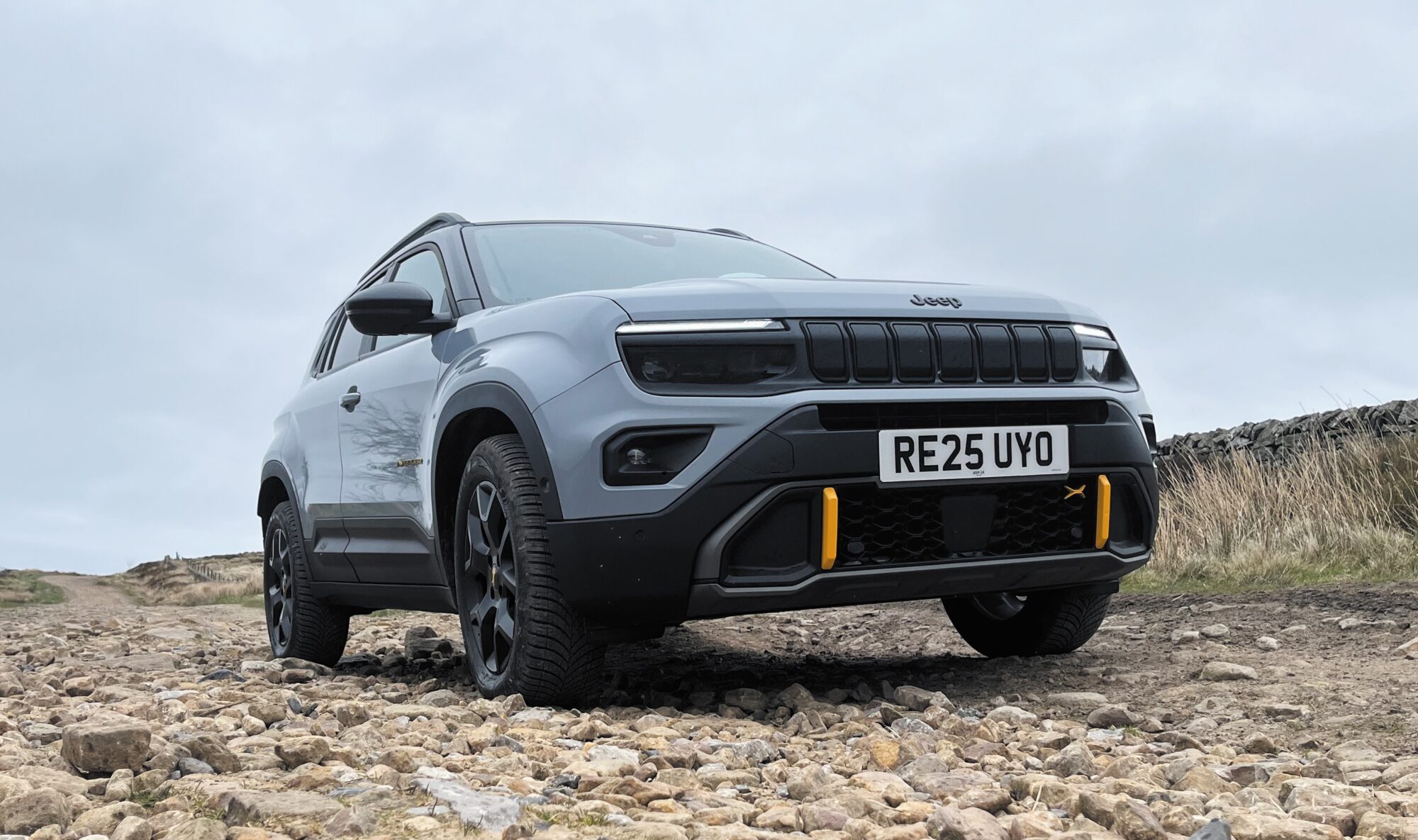
Admittedly, getting the best out of the Avenger in these situations generally involves tweaking the drive modes, because the Jeep likes to spin its front wheels in the default mode. Even with the impressive Goodyear all-season rubber wrapped around those black alloy wheels, the power mostly heads to the front, and that can leave the front wheels scrabbling for traction on slippery surfaces.That’s exacerbated by the hybrid system’s lack of refinement in the more efficiency-orientated Auto setting, but in Mud/Snow mode, the power delivery’s rough edges are suddenly smoothed off. Perhaps you don’t get as much grunt, but you don’t get it in one awkward lump, either and that makes life much easier when traction is at a premium. In Mud/Snow mode, the combination of all-wheel drive and all-season tyres makes the Jeep remarkably sure-footed.The smoother power delivery undoubtedly helps, but the traction is still very useful, and it makes the Jeep feel that bit more useful when the surface is less than exemplary.
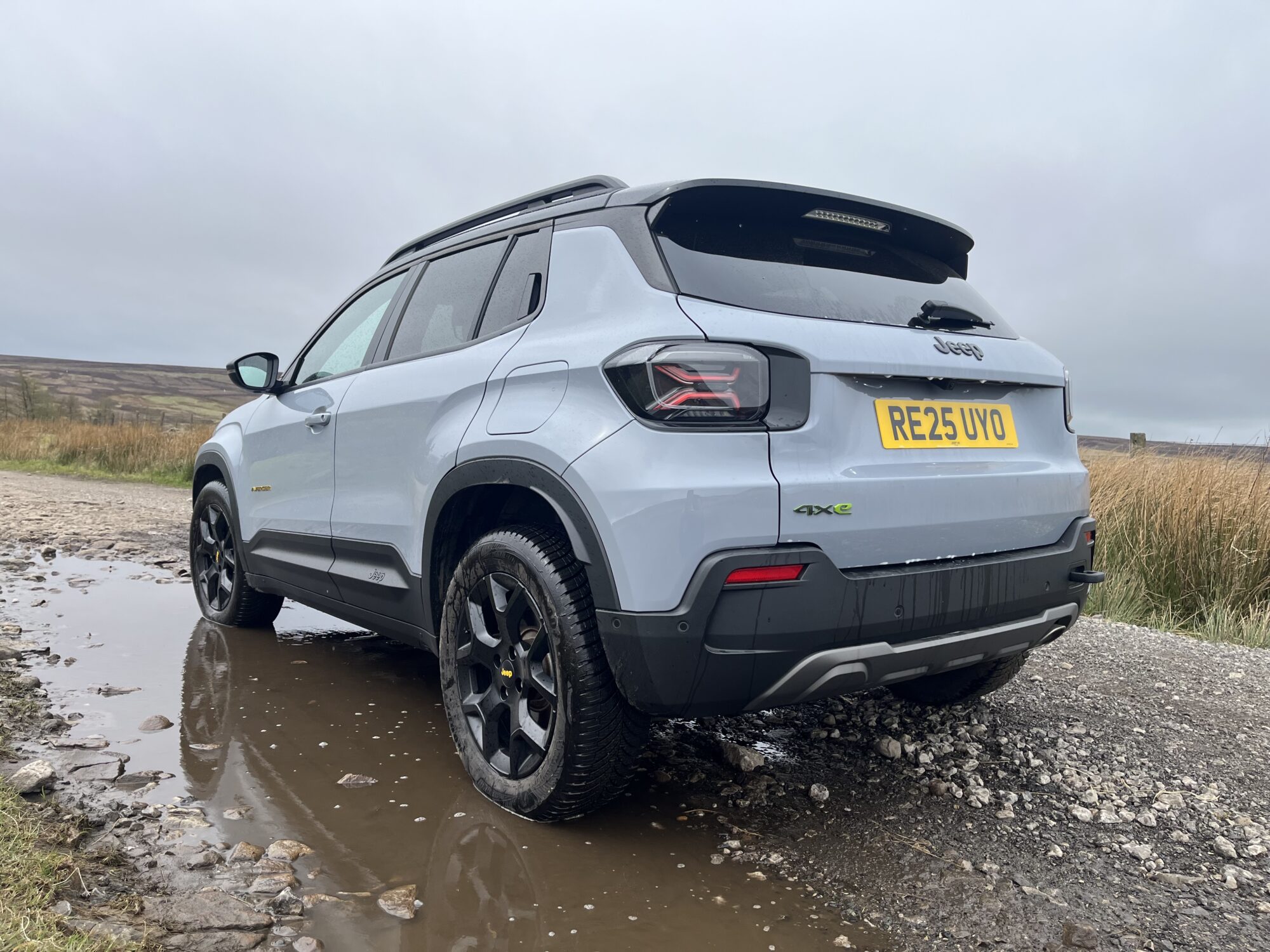
Perhaps even more impressive than that, though, is the comfort over those surfaces. I’ve done a good few miles in the Avenger of late, and while we’re all aware our roads are in a pretty poor state of repair, the Jeep has been isolating me from the jolts and jiggles remarkably well. While the suspension is undoubtedly due some credit for the suppleness, I’m convinced that the tyres are more than pulling their weight when it comes to absorbing the bumps. Even on relatively inexpensive cars, such modestly proportioned rims and generous sidewalls are becoming a bit of a rarity, but there’s definitely something to be said for bigger tyres. Particularly when the potholes aren’t being filled in.
I must admit there is a small fly in the ointment, however, because long journeys have exposed issues with the Avenger’s seats. There’s nothing wrong with the material or the padding, but the seat squab is a bit on the short side, so there isn’t quite as much support for your legs as you might like. It’s no issue at all, unless you want to travel more than about two hours in one hit, but it’s a pain – quite literally – on longer trips.
Yet despite the growing list of minor inconveniences, the Avenger has yet to put a foot wrong in any serious kind of way.Touch wood, it’s been brilliant at pretty much anything I’ve asked of it, and long may that continue.
JAMES FOSSDYKE
WHAT’S HOT: The Avenger has been proving itself in the mud.
WHAT’S NOT: An intermittent rattle in the air vent is proving decidedly annoying.
FACTS & FIGURES
© Motorworld Media 2023
Registered Office: 4 Capricorn Centre, Cranes Farm Road, Basildon, Essex. SS14 3JJ
Company Number: 8818356
Website designed by Steve Dawson