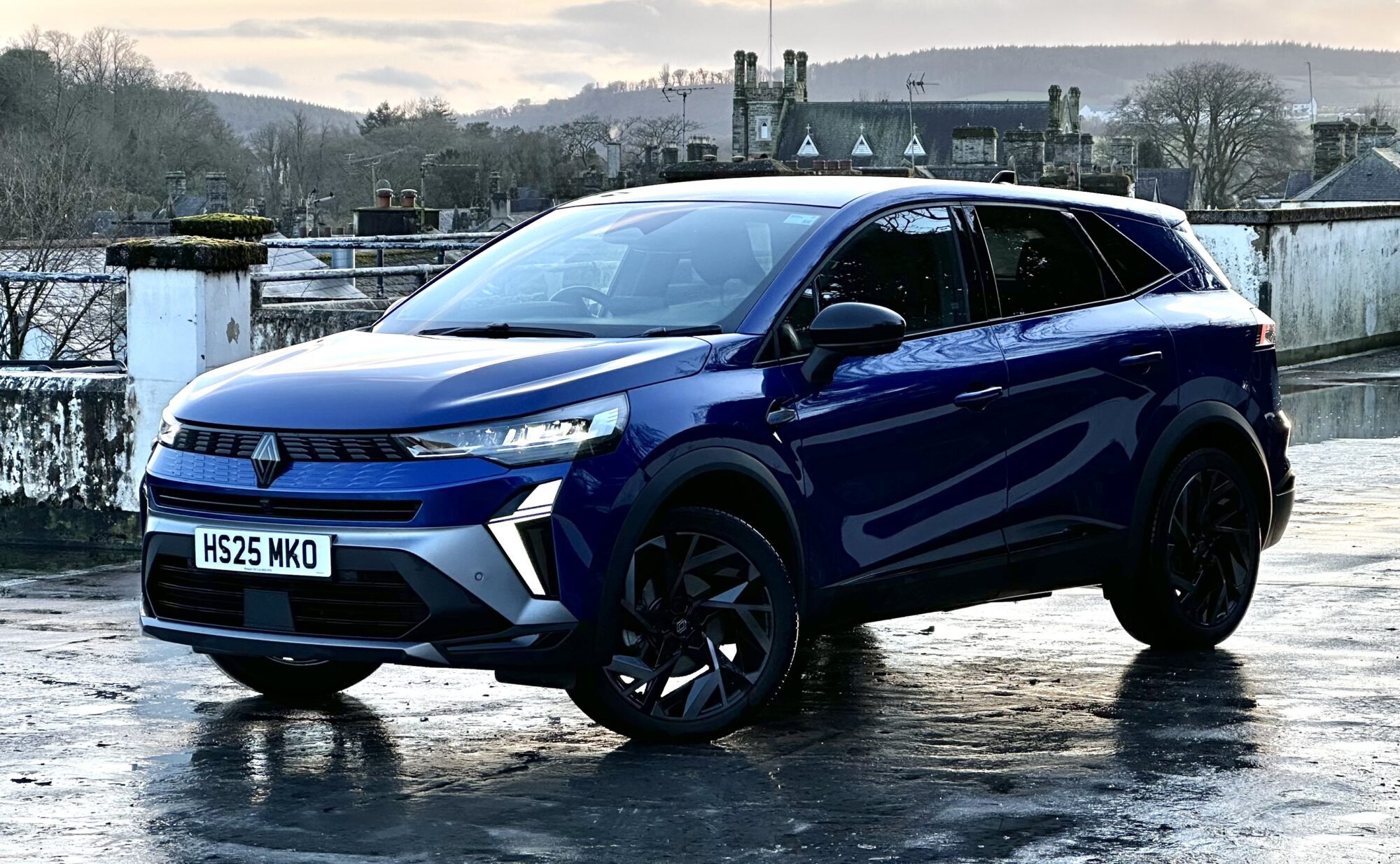
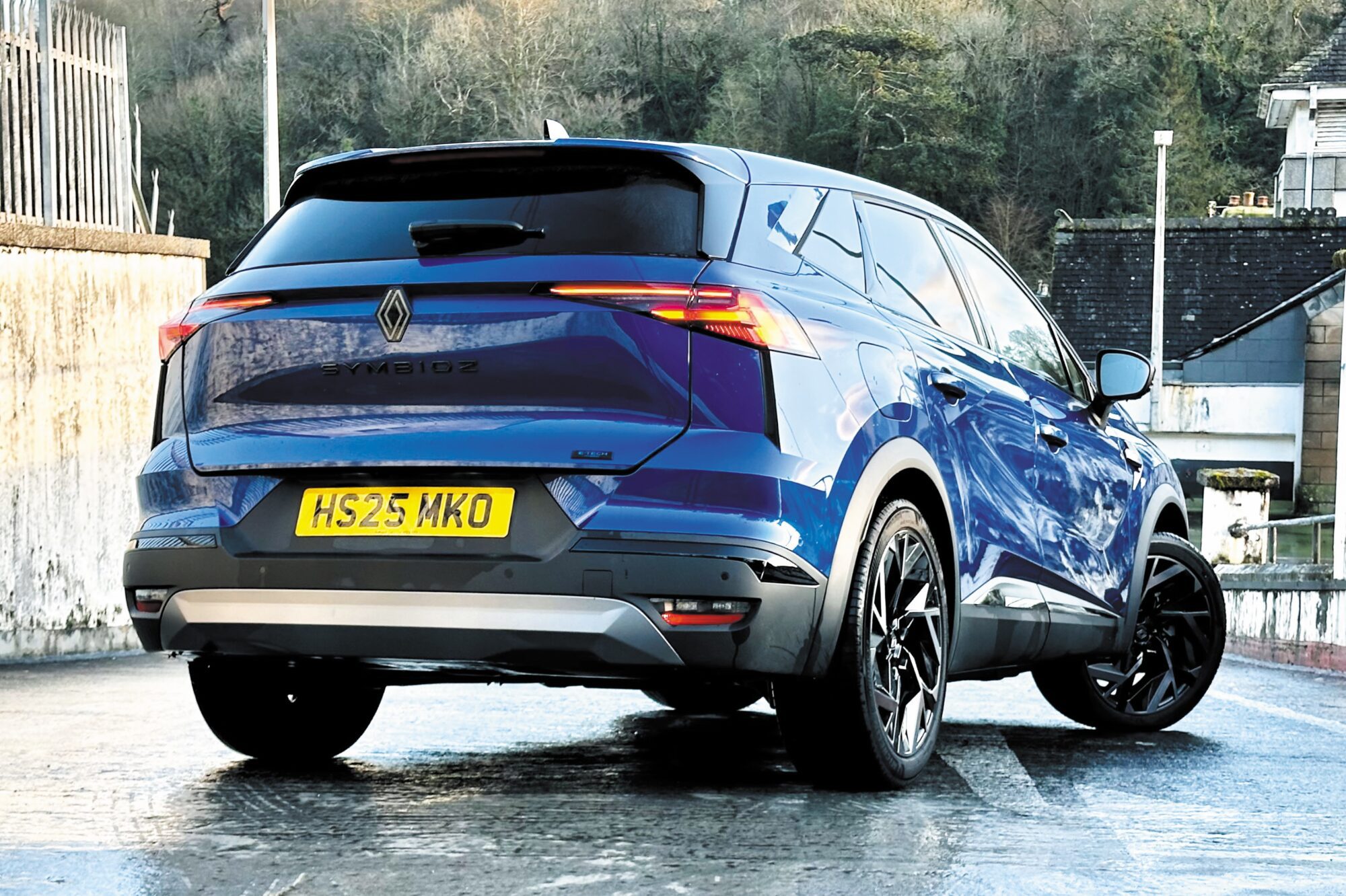
MODEL ON TEST: E-TECH ICONIC ESPRIT HYBRID 160 AUTOMATIC – MILEAGE – 4,395
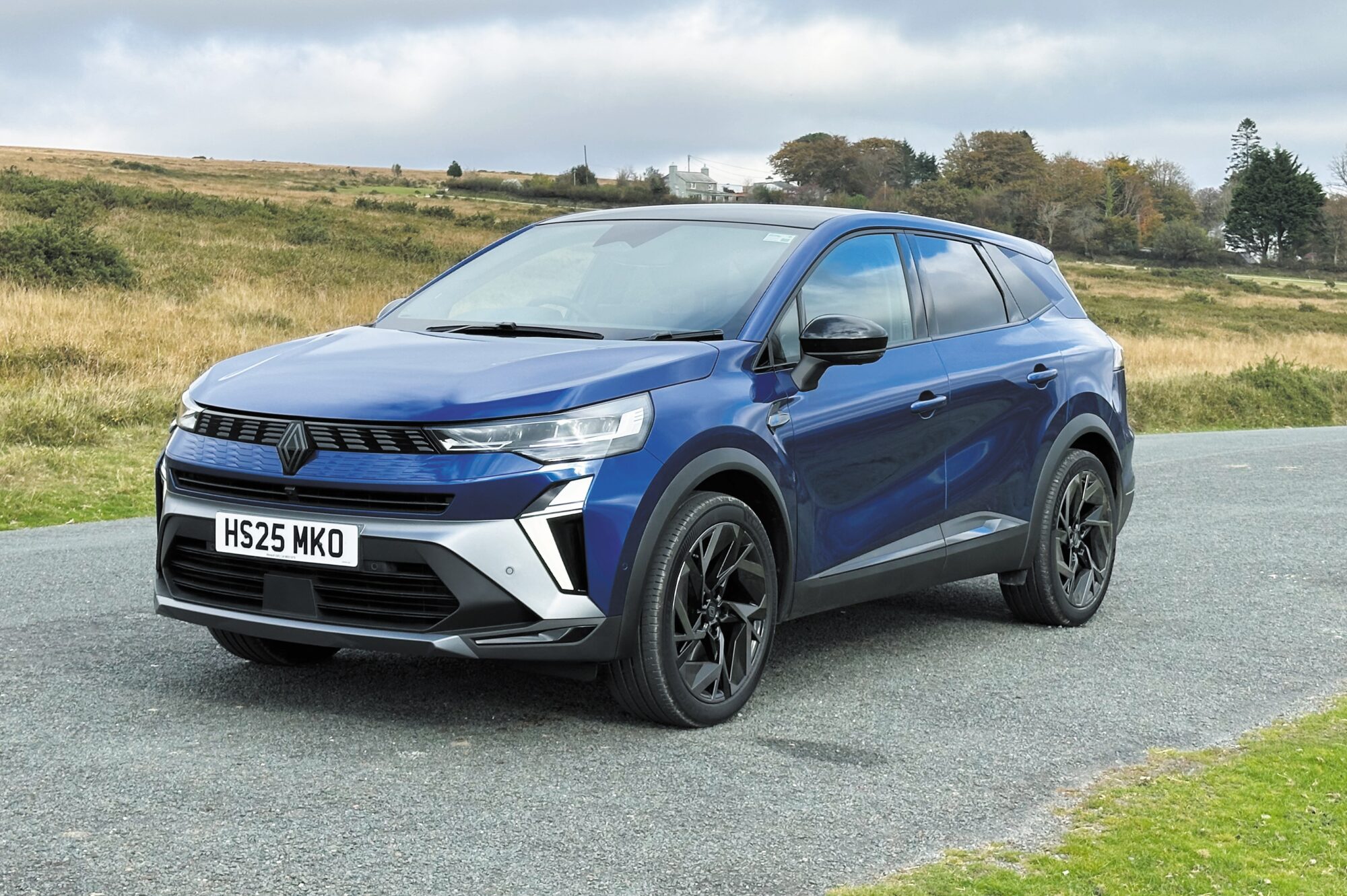
The Symbioz arrives with a big challenge: to replace ‘my’ Rafale, which left a rather sizeable, coupé- shaped hole in my life. I make no apology for admitting how much I loved the Rafale – Renault’s new-age Safrane – so the Symbioz has some large boots to fill. It’s not trying to be the marque’s range-topper, but when you follow a car you’ve grown rather attached to, comparisons are inevitable.
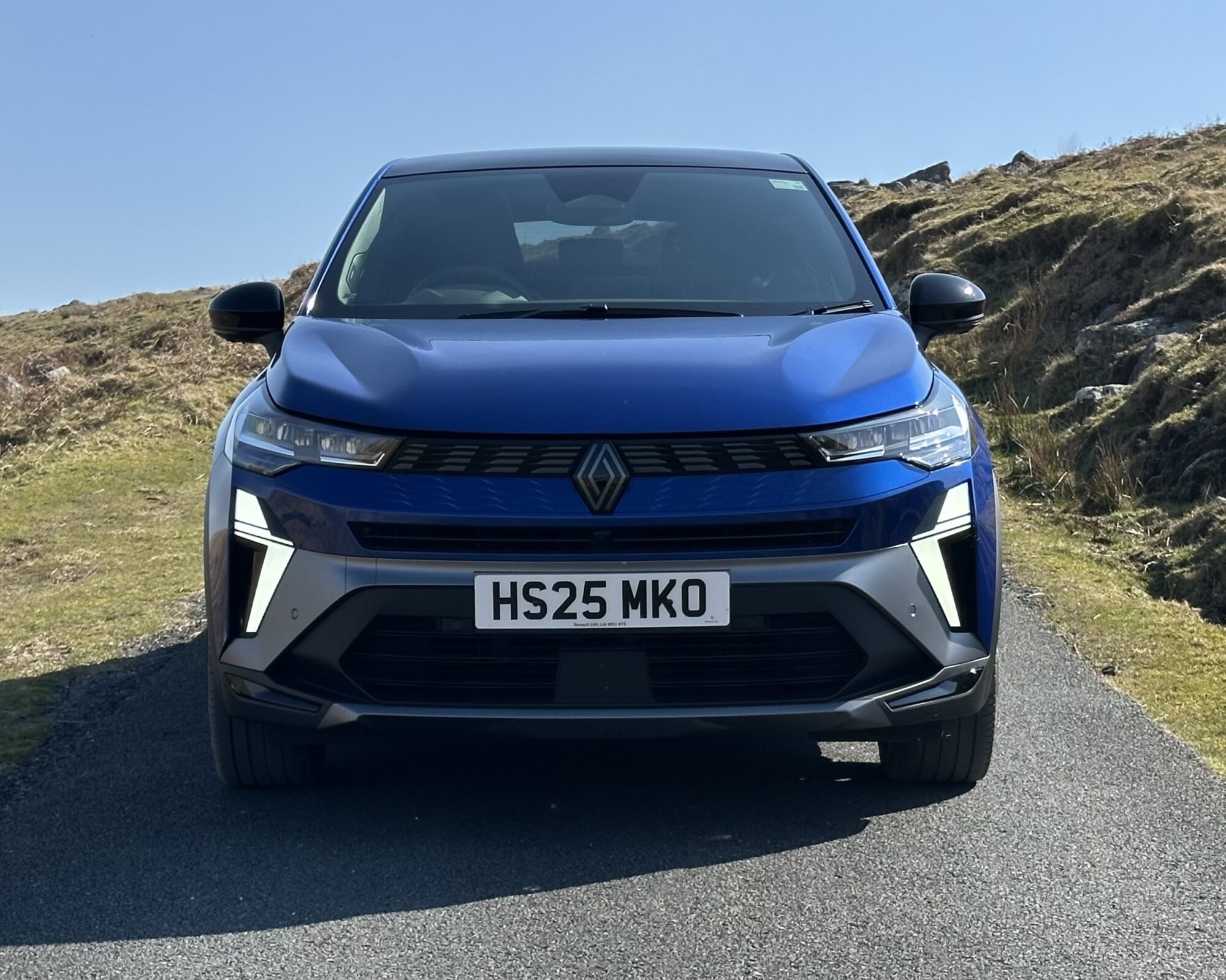
Renault certainly isn’t short of SUVs, and you could argue the range borders on being overcrowded.The Symbioz slots neatly between the Captur and the Austral, though from the front you’d be forgiven for thinking it is the Captur. The similarity is uncanny, and one journalist went as far as calling it a “Captur estate”, which feels pretty accurate. Still, Renault has form when it comes to practical, slightly left-field family cars, and the original press release leans into that heritage by referencing both the 16 and the Espace. If the aim was to get my attention, job done.
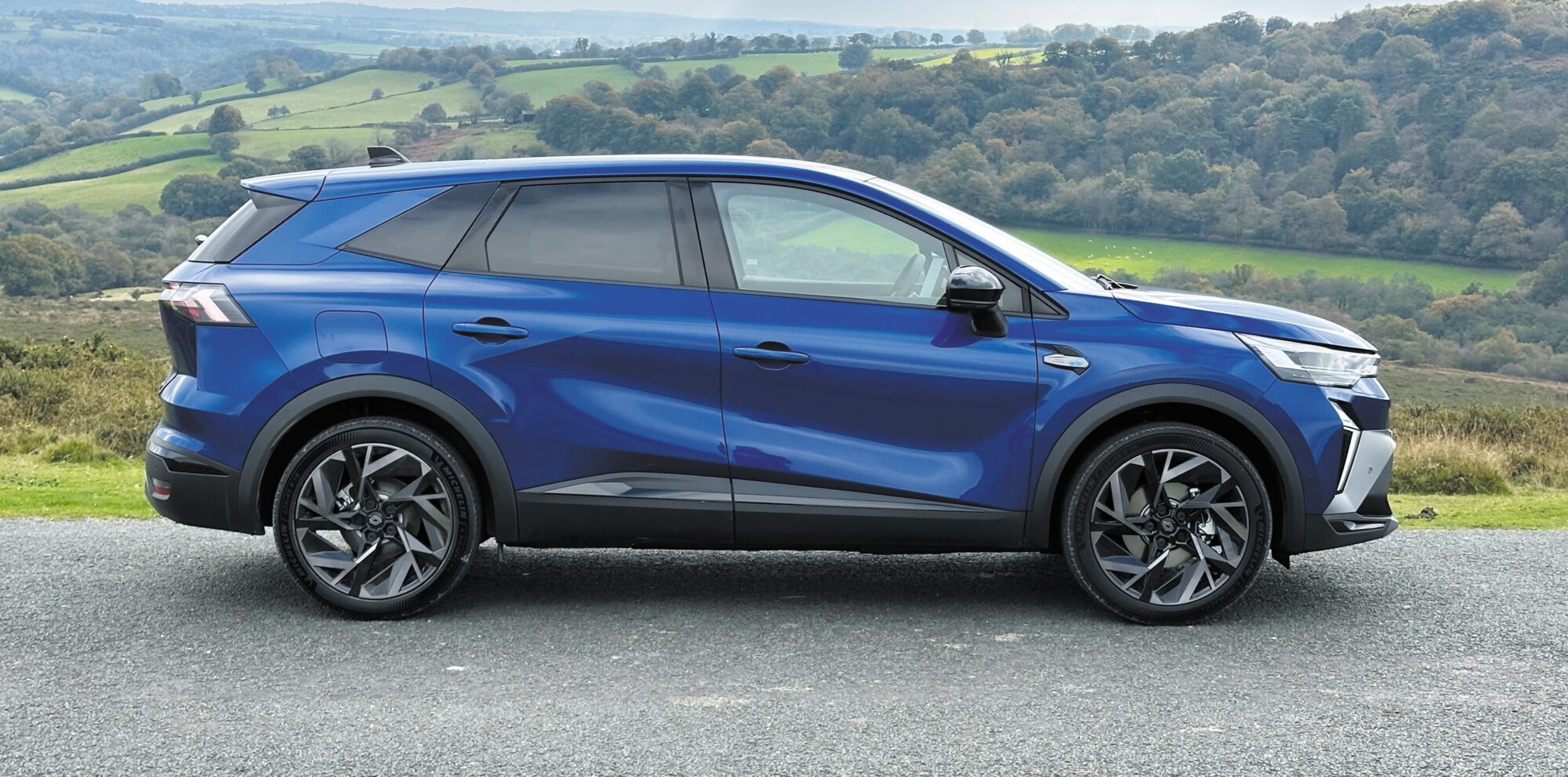
The Symbioz first appeared in 2024, but the car you see here is fresh from an update for 2026. Under the bonnet sits a new, larger 1.8-litre petrol engine producing a combined 158bhp, paired with a revised hybrid system featuring a bigger 1.4kWh battery (up from 1.26kWh). Renault has also made changes to the transmission,including a new motorway mode that promises quieter running and more responsive acceleration.There’s also a new e-shifter,but beyond that,it’s very much as you were.
‘My’ car is the flagship Iconic Esprit Alpine version, which means the equipment list is satisfyingly
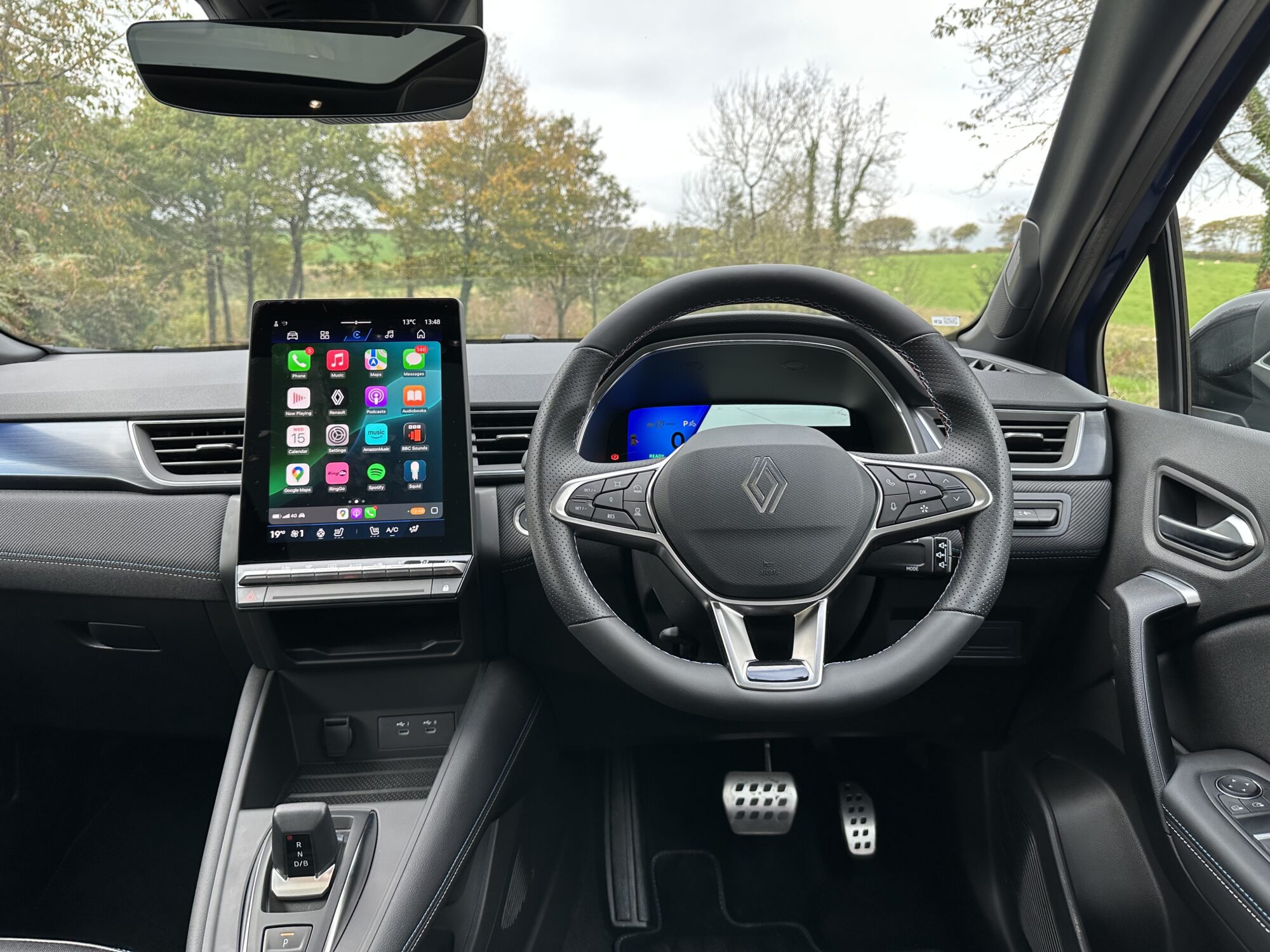
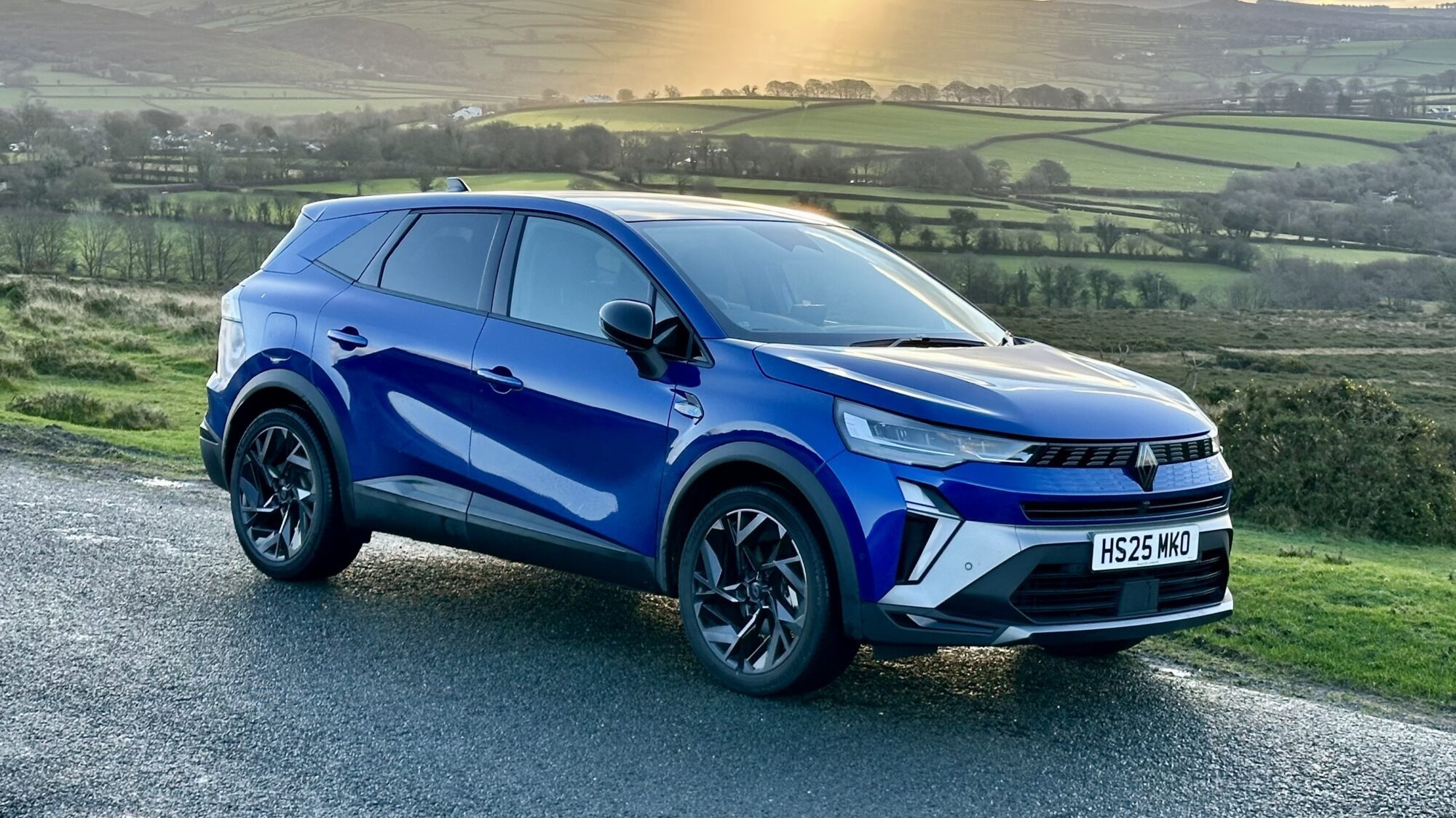
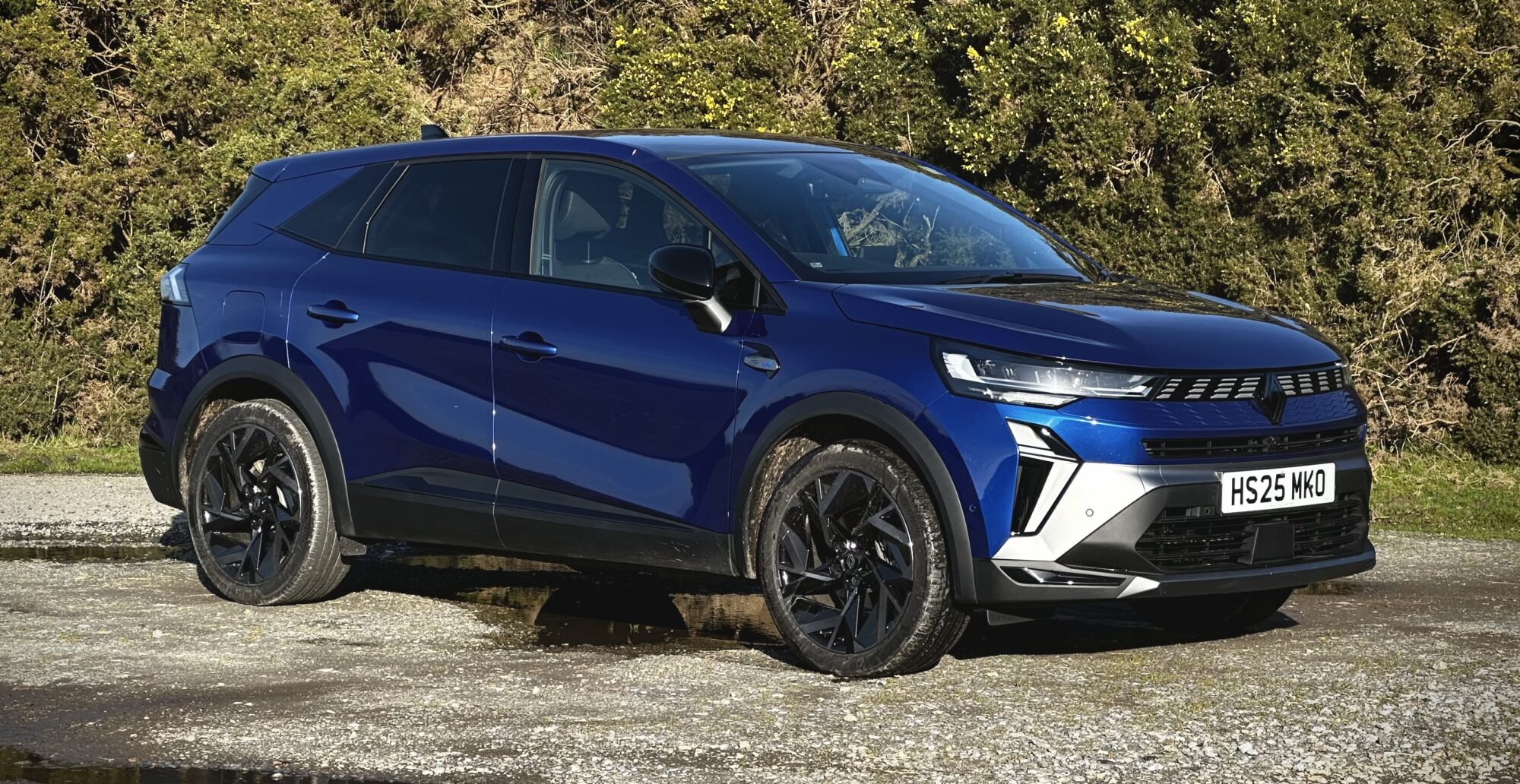
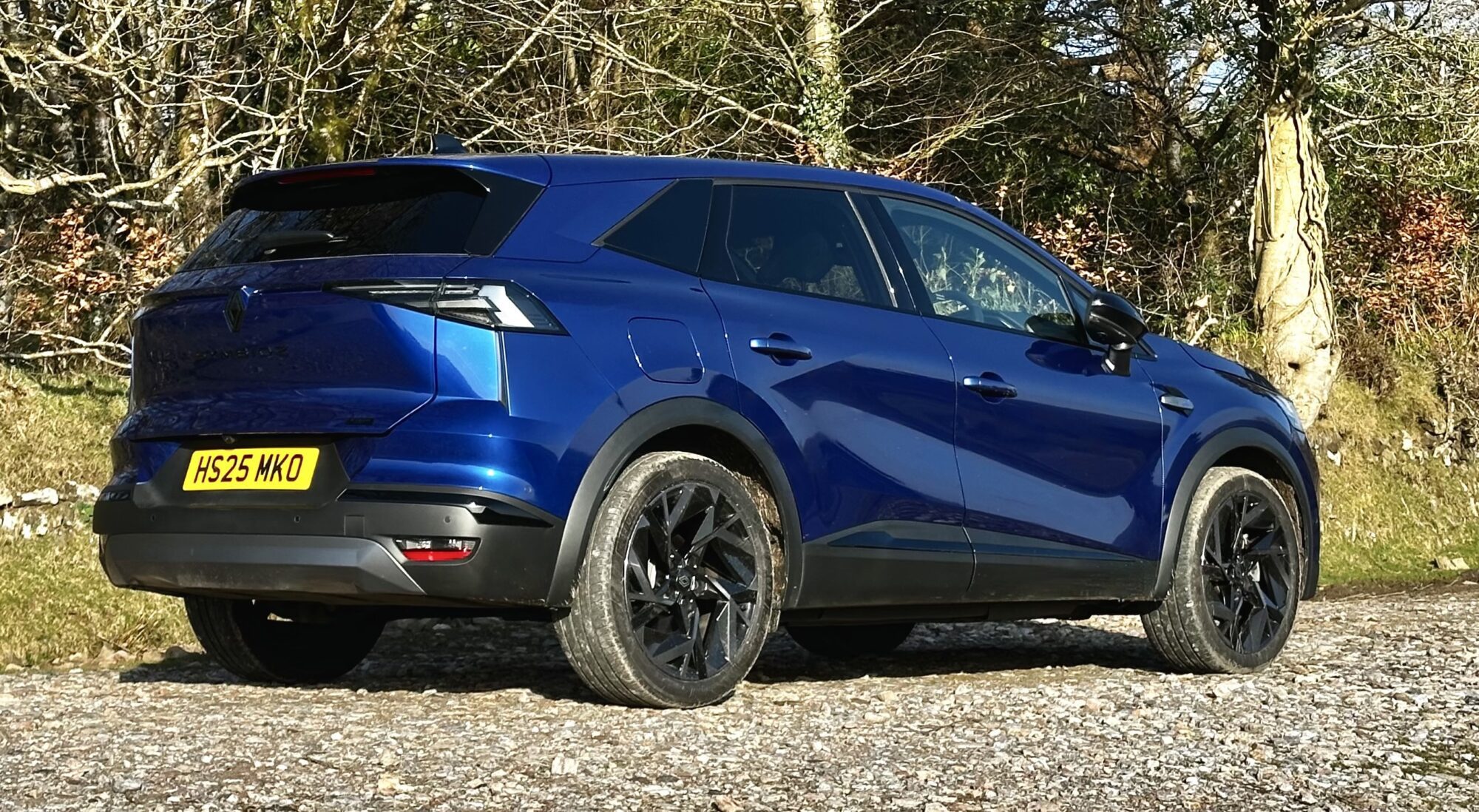
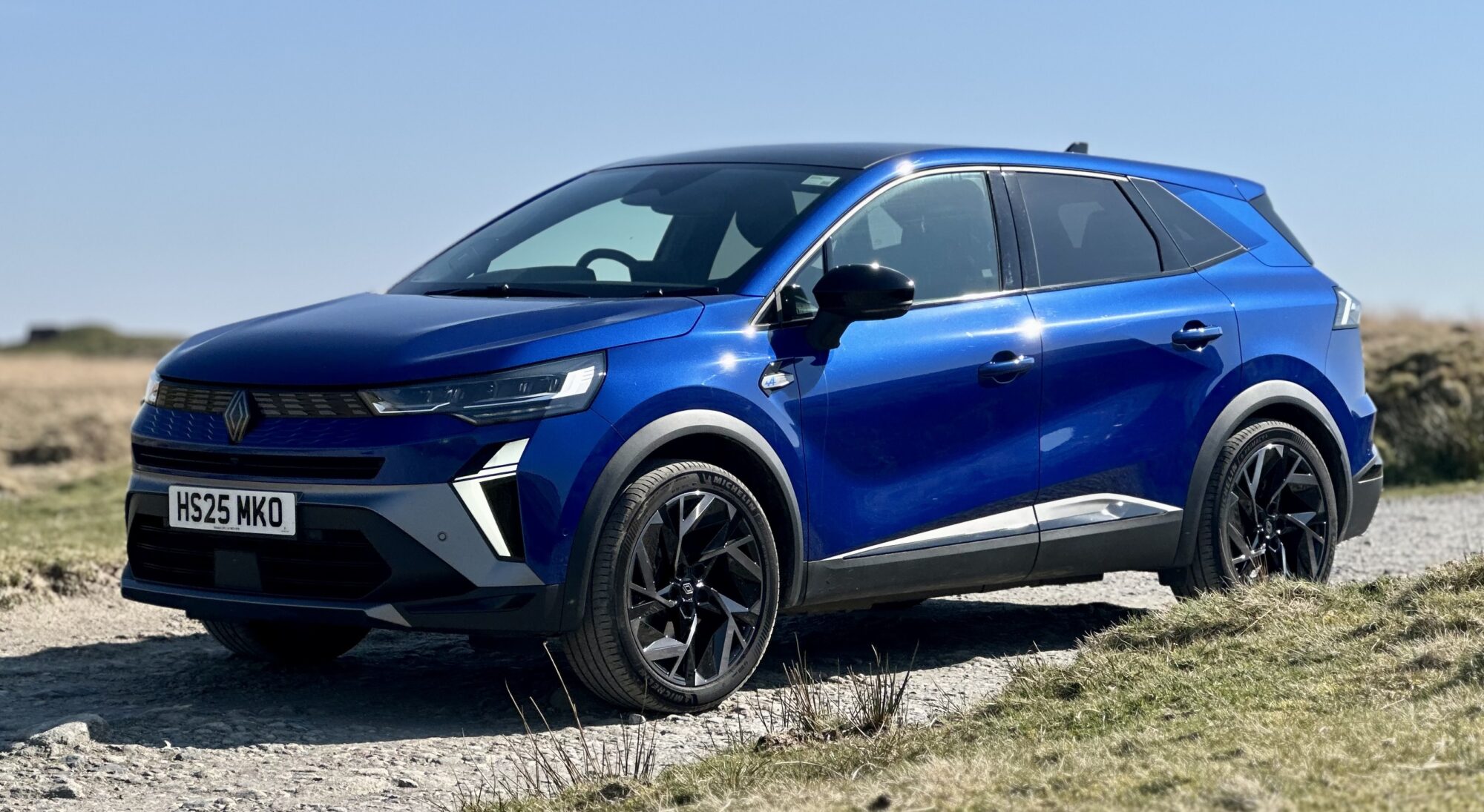
long. Highlights include a 10.25-inch digital instrument display, a 10.4-inch touchscreen with Google built-in, and a nine-speaker Harman Kardon audio system. The Solarbay opacifying glass sunroof – a clever bit of electrochromic trickery first seen on the Rafale – gives the cabin a genuinely premium touch without needing to open to the elements. Heated front seats, a heated steering wheel, wireless phone charging, an electric tailgate, hands-free keycard (very Laguna) and 48 ambient lighting colours are the other highlights of the trim level. There’s only one optional extra: that’s the Iron Blue metallic paint (£750).
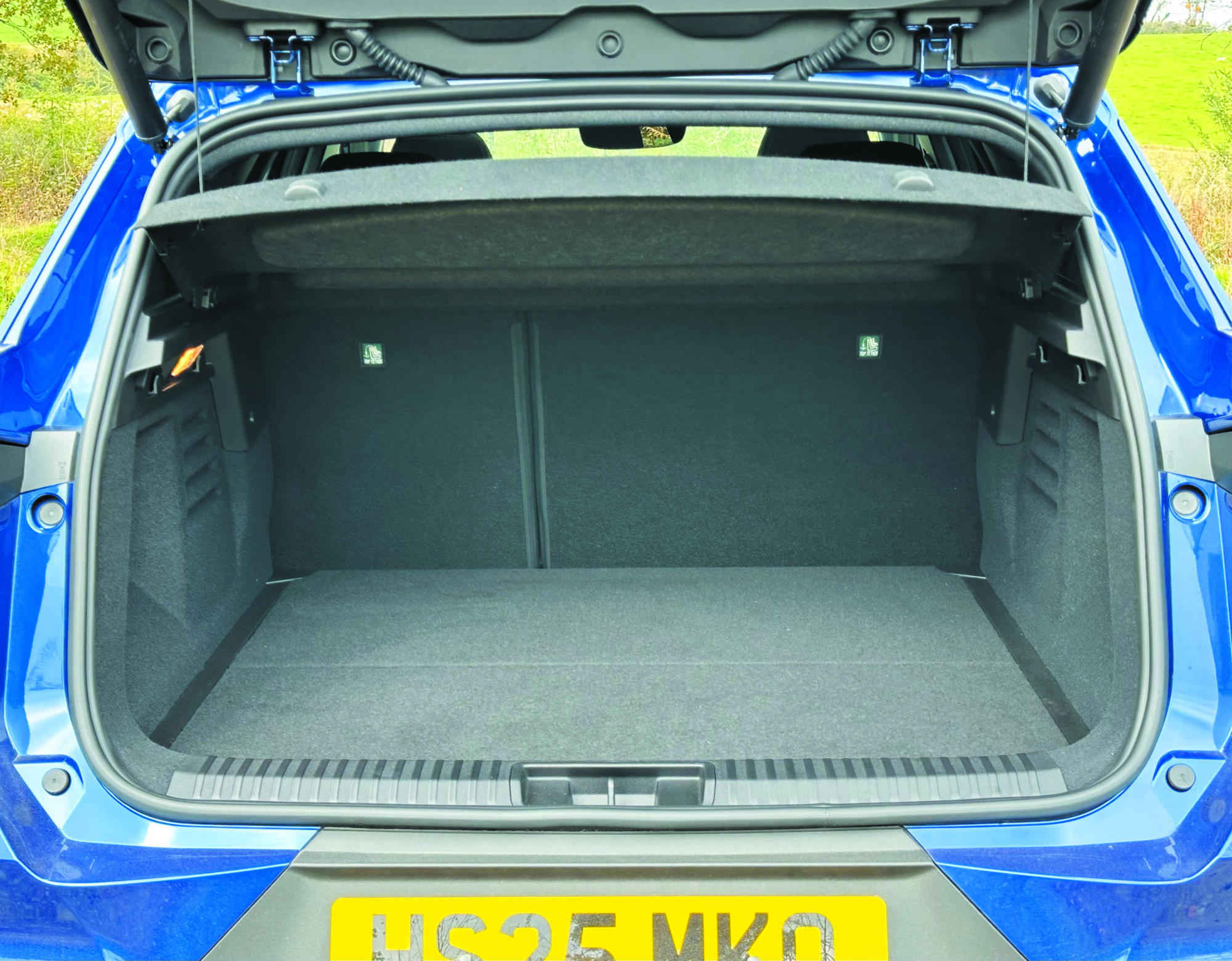
One of the reasons for choosing the Symbioz over the Captur is practicality. The sliding rear seat – a little echo of the original Twingo and Citroën ZX – transforms the interior between people-carrier spacious and small-estate useful. Slide it fully forward and the boot expands to a generous 624 litres, albeit at the cost of almost all rear legroom. Slide it back and passengers enjoy up to 221mm of knee space, while the boot drops to a still- useable 492 litres. It’s a clever and flexible setup. Less impressive is the absence of a rear centre armrest or any cupholders, which feels like an oversight in a family SUV.At least the two USB-C ports in the back should mean fewer arguments.
Its arrival coincided with a rather intense period at home, and within days the Symbioz was pressed into service as transport for repeated trips to Exeter and Bristol hospitals. That meant an accelerated introduction: A-roads, city traffic, long stretches of the M5 and many hours spent creeping through Bristol’s suburbs. In just a few weeks I clocked around 3,000 miles. Happily, the Symbioz has taken it all in its stride. The fuel economy has hovered around 55mpg, it cruises serenely at motorway speeds, and it’s allowed me to concentrate on more important matters, like avoiding Bristol’s Clean Air Zone charges.
Does it feel like a step down from the Rafale? Inevitably, yes. The Rafale is bigger, richer in feel and generally more polished, and spending time in the Symbioz only reinforces the fact that Renault did a fine job with the underrated Rafale. But the smaller SUV has its own strengths: it’s easier to park in tight hospital car parks, simpler to achieve the official fuel economy and has been completely dependable at a time when dependability is crucial. I just wish the rear-view camera display didn’t look like it was lifted from the original PlayStation. Still, first impressions are positive.The next few months will reveal whether the Symbioz is merely a Captur with ideas above its station – or something more interesting.
GAVIN BRAITHWAITE-SMITH
WHAT’S HOT: I’ve achieved 55mpg without even trying, so that bodes well for the fuel economy.
WHAT’S NOT: The output from the rear-view camera would look disappointing in a ’90s Toyota.
STANDARD EQUIPMENT: 10.25-inch digital instruments, 19-inch alloy wheels with Michelin e-Primacy 2 225/45 R19 tyres and tyre repair kit, 40/20/40 split/fold/sliding rear seats with modular floor, 360-degree camera system, Adaptive cruise control with speed limiter, Alarm system, Aluminium sports pedals, Ambient lighting with 48 colours, Anti-lock brakes with electronic brake force distribution and brake
assist, Auto-dimming rear view mirror, Automated parking system, Automatic headlights, Autonomous emergency braking with pedestrian, cyclist and junction turning functionality, Blind spot recognition, Climate control, DAB radio with 10.4-inch touchscreen, navigation, 9-speakers, Harman Kardon audio system, USB-C sockets, voice control and steering wheel controls, Drive mode selector, Driver drowsiness detection, Driver, passenger, side and head airbags with passenger side de-activation, Electric and heated mirrors with power folding, Electric front seats, Electric park brake with auto hold, Electric hands-free tailgate, Electric windows front and rear, Electronic stability programme with traction control, Emergency e-call system, Faux leather steering wheel, Hands-free electric tailgate, Heated front seats, Heated steering wheel, Hill start assist, ISOFIX child, safety seat fasteners for rear outer seats, Keyless entry and start with key card, Lane centering, Lane change warning, Lane departure warning, Lane keep assist, LED daytime running lights, LED headlights with automatic high beam, LED taillights, Parking sensors front, side and rear, Rain sensing windscreen wipers, Rear privacy glass, Rear cross traffic alert system, Safe exit alert system, Solarbay opacifying panoramic sunroof, Traffic sign recognition, Tyre pressure monitors, Wireless Android Auto, Apple CarPlay and
Bluetooth smartphone compatibility and Wireless smartphone charger
OPTIONAL EQUIPMENT: Iron Blue metallic paint (£750)
FACTS & FIGURES
Our cars: Renault Symbioz Report 2
MODEL ON TEST: E-TECH ICONIC ESPRIT ALPINE HYBRID 160 – MILEAGE – 6,012
There was always a danger that the Symbioz would feel like a step down after seven months in the company of a Rafale. A mid-range SUV is always going to be a little disappointing after experiencing Renault’s flagship. And while I promise this will be the last time I mention the Rafale in these pages, it’s worth running through the things I miss in a quick-fire, Generation Game conveyor- belt fashion.
From the small things – rear cupholders, a rear centre armrest, interior grab handles, a sunglasses holder, the overall quality of the cabin materials, the absence of a fuel filler cap, and the steering column-mounted gear selector – to the big things, such as four-wheel steering, the amount of time it spent in electric mode, and the general sense of occasion. All of this has to be viewed in the context of the difference in size, price and battery capacity, but in my company the Symbioz will always face the ‘difficult second album’ syndrome.
That’s not to say I don’t like the Symbioz. On the contrary, I’m enjoying the improvement in fuel economy, the fact that it’s surprisingly more fun to drive on a B-road, and the ease of parking that comes with its smaller footprint. One such occasion was a recent trip into central London for an awards do, involving parking in Mayfair and navigating the chaos of the capital’s shopping district. Why anyone would choose to drive a new Land Rover Defender or Range Rover into the maelstrom of buses, taxis, delivery scooters and influencers on Regent Street is anyone’s guess, but I was grateful to be in something relatively compact.
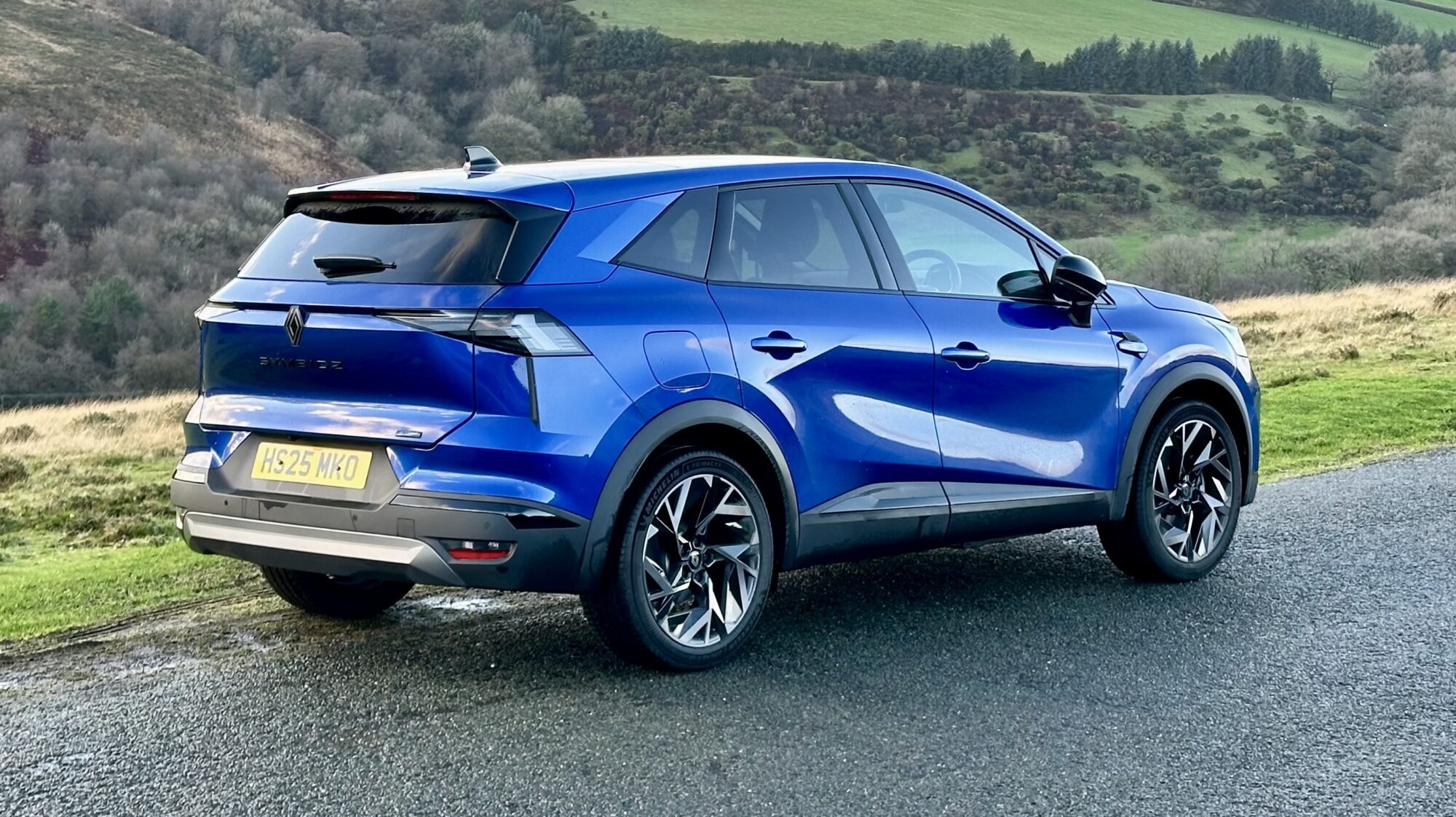
That said, the Symbioz hasn’t escaped unscathed.After 15,000 miles and seven months in the Rafale, the car returned to Renault HQ with barely a stone chip to its name. Being careful where I parked undoubtedly helped, but during a recent period of repeated hospital visits I was forced to take whatever spaces were available.That almost certainly explains the irritating scrapes and scratches near the fuel filler cap; I’m fairly sure they were inflicted by the pick-up I parked next to in the tight confines of Exeter hospital car park, annoyingly on my penultimate visit. It’s not my fault, but that doesn’t make it any less frustrating.
Speaking of irritations, electrical gremlins have made an appearance earlier than they did in the Rafale. The issues are familiar: the alarm sounding without reason, a ‘service required’ warning that appears and disappears, sections of the digital instrument display freezing, occasional loss of audio from the infotainment system, and persistent misinterpretation of speed limits (no, I don’t think 80mph along Old Bond Street or 20mph on the M5 is correct). The windows also mist up more often than expected, requiring the blowers to be set to maximum to clear the view; something I’d accept in one of my less distinguished ’90s cars,but not in a brand-new Renault.
On the plus side, the boot continues to impress. Capacity is 492 litres as standard, expanding to 624 litres with the rear seats slid forward. I’m also making good use of the height- adjustable floor, which proves handy for muddy wellies and wet coats, or for keeping shopping bags upright on the drive home from Waitrose.
While the Symbioz may lack the sense of occasion of Renault’s flagship, it’s proving its worth as a practical, economical and easy-to-live-with SUV – even if it’s still finding its feet.
GAVIN BRAITHWAITE-SMITH
WHAT’S HOT: The maximum 624-litre boot is great for a car of this size…
WHAT’S NOT: …but your rear-seat passengers won’t thank you if you use it all.
FACTS & FIGURES
Our cars: Renault Symbioz Report 3
MODEL ON TEST: E-TECH ICONIC ESPRIT ALPINE HYBRID 160 – MILEAGE – 6,875
I was surprised to discover that when it was tested by Euro NCAP in 2024, the Symbioz was awarded a four-star rather than the maximum five-star rating. I was even more surprised to note that Renault has not achieved the top score across its mainstream range since 2022, with the Captur, 4 E-Tech and 5 E-Tech, followed most recently by the new Clio, all falling just short of the showroom-boasting benchmark. This feels a far cry from the days when a top rating was almost a given: when the Laguna II (2001) became the first car ever to achieve a five-star result, followed shortly afterwards by the Mégane II (2002), the first family hatchback to claim class honours.
That said, the Symbioz doesn’t fail Euro NCAP so much as miss the excellence Renault once defined. Structural integrity is good, active safety systems are competent, and child protection is reassuring, but repeated marginal chest-protection scores, missing far-side mitigation and the absence of some now-expected safety technologies collectively explain why this Renault stops at four stars. I should stress that I don’t worship at the altar of Euro NCAP; I strongly believe that punters should look beyond the headline-grabbing rating, rather than make a big financial decision on the strength of five yellow stars. In the case of the Symbioz, it is simply lacking a few of the safety nets designed to keep you out of trouble, rather than protecting you should the worst happen. I switch off many of the driver assistance functions as soon as I get in the car anyway…
That’s thanks to the ‘My Safety’ button on the right-hand side of the dashboard, which is the first thing I press before I set off. In fact, I press it twice in quick succession for the ‘My Safety Perso’ setting, which activates a personalised mode for the driver assistance systems. In other words, no annoying beeps and bongs if you dare to stray too close to a white line or exceed the speed limit by one mile per hour. I’m not condoning speeding; it’s just that the system is forever getting the limit wrong.The one remaining annoyance is that the system reverts to the default setting whenever you switch off the ignition.
Speaking of buttons, you might remember that I commented on the screen’s reluctance to allow you to activate the heated steering wheel in the Rafale. Well, it’s clearly a Renault trait, because the same is true in the Symbioz. Four presses is the norm, as though it wants you to be really sure you want to warm your hands on the way to Waitrose. Interestingly, the heated steering wheel light will often remain illuminated if you have only switched off the engine briefly.The heated seat equivalent, however, does not.
After the frantic nature of the first couple of months, the Symbioz has settled into a more localised and urban routine, involving shorter journeys and less time in top gear.This may help explain the drop in fuel economy, although this could also be down to the increased use of accessories and time spent with passengers in the back and luggage in the boot.The Christmas period highlighted two things: three young adults don’t like being squeezed into the back seat, and the boot is large enough for eight large bags of goat feed – though not at the same time.
GAVIN BRAITHWAITE-SMITH
WHAT’S HOT: Good underlying safety – and a button that lets you switch the nagging off.
WHAT’S NOT: A heated steering wheel that takes four attempts to activate.
FACTS & FIGURES
Our cars: Renault Symbioz Report 4
MODEL ON TEST: E-TECH ICONIC ESPRIT ALPINE HYBRID 160 – MILEAGE – 8,032
I think the Renault Symbioz likes the sound of its own voice. Or rather, it likes the sound of its 1.8-litre four-cylinder petrol engine, which, when combined with a 48bhp electric motor and an integrated starter-generator, produces a total of 158bhp. At times, the powertrain seems reluctant to settle down, holding on to one of its four gear ratios longer than expected and resisting an upshift even when conditions – most notably the engine note – suggest it should. On other occasions, it will change down a gear when travelling downhill, whereas other hybrids I’ve driven would slip into EV mode. It’s not a major issue, more a minor irritation I’ve got used to, but it would be nice to have the option to override the system and select a more suitable ratio.
Several issues ago, our esteemed editor asked us to name our favourite infotainment system. While acknowledging I might have been guilty of bias, and perhaps favouritism due to the Rafale I was running at the time, I chose Renault. Now, with several more months under my belt, this time in a different model, I’m convinced Renault’s setup ranks among the best. The 10.4-inch touchscreen display is sharp and crystal clear, responds quickly to inputs, and doesn’t require you to wade through endless menus to access key functions. Crucially, the primary heating and ventilation controls remain separate from the touchscreen (a real positive), while buttons for the heated seats and heated steering wheel are always accessible. Switching between the smartphone interface – Apple CarPlay in my case – and the native system is straightforward, which is useful as I continue to rely on the excellent Google built-in navigation. I should also give a local radio-style shout- out to the remote audio controls located behind the steering wheel, an evolution of the interface found on Renaults since the 25 – a case of ‘if it ain’t broke, don’t fix it’, even in an age of voice activation and large touchscreens.
That said, everything isn’t entirely rosy in Renault tech land. The other day, the 10-inch driver information display decided to go on strike – no information at all, just a complete blackout. That’s far from ideal when you rely on it for something as basic, yet crucial, as your current speed. Thankfully, I could use
the navigation display to gauge how fast I was travelling, but it’s hardly a proper solution, especially as you also lose the dashboard warning lights and fuel gauge. I’m increasingly looking forward to the moment when traditional instruments become retro-cool – the ‘next big thing’ in interior car design…
Keen to end this update on a positive note, I should also give a nod to Renault’s keycard. It’s now 25 years since the Laguna II became the first mainstream car to feature a hands-free keycard
and, although the technology has evolved since 2001, the fundamentals remain the same. The main advantage today is that you can simply slip the card into your pocket, with the car unlocking as you approach and locking automatically when you walk away. You can also use it to activate the headlights – a welcome touch during the winter months. The Symbioz even has a handy storage compartment for the keycard, although as it’s always in my pocket, I’ve repurposed the space for a tin of Smint mints. It’s almost the perfect size.
GAVIN BRAITHWAITE-SMITH
WHAT’S HOT: Renault’s openR link multimedia system is one of the best in the business…
WHAT’S NOT: …but it’s not helpful when the digital instrument cluster goes on strike.
FACTS & FIGURES
Our cars: Renault Symbioz Report 5
MODEL ON TEST: E-TECH ICONIC ESPRIT ALPINE HYBRID 160 – MILEAGE – 9,350
Five months into life with the Symbioz, and it’s the smaller things that are starting to stand out. Not the headline-grabbing stuff, but the sort of things you notice when parking at Waitrose or rummaging around for somewhere to stash your Wayfarers.
Starting with the parking, because the Symbioz is nothing if not attentive. The sensors are a little too keen to make themselves heard, warning of obstacles that feel further away than suggested or occasionally detecting gaps that are, in reality, perfectly adequate. Still, it’s probably better to err on the side of caution, especially in Devon, where you’re never far from a stone wall or a vehicle that wears its agricultural battle scars with pride. Less impressive is the reversing camera, which looks like it’s been borrowed from a late-1990s webcam. The resolution is comically low by modern standards, lacking the crispness you’d expect in a car at this price point. That said, the top-down 360-degree view is genuinely useful when slotting into a space and goes some way to redeeming the overall system.
Inside, there are several thoughtful touches.The wireless smartphone charger, tucked neatly beneath a shelf, is particularly well judged. Unlike in some other new cars, you don’t have to place your phone within millimetre-perfect accuracy for it to charge. It keeps your phone out of sight – and crucially, out of mind – reducing the temptation to fiddle with it on the move. In an era where distraction is a genuine concern, that’s no bad thing. There are other places to charge a phone, too. With four USB-C ports – two up front and two in the back – there’s enough connectivity to keep everyone happy, regardless of where they’re sitting.That’s good for keeping arguments to a minimum on long trips.
Storage is a bit more of a mixed bag. There’s no dedicated sunglasses holder, which feels like an odd omission in a family-focused SUV. However, Renault has at least provided a slim slot beneath the centre console that serves as a workable alternative. It’s not quite as elegant, but it does the job, and it means that I always know where I left my shades.
The Harman Kardon nine-speaker audio system, included on this flagship Iconic Esprit Alpine trim, is another highlight. The sound quality is rich and well-balanced, regardless of whether you’re listening to music, podcasts or the navigation ‘lady’ trying to reroute you around roadworks. Rear-seat passengers also benefit from the Solarbay panoramic roof – another piece of standard kit on this trim level – which helps lift an otherwise claustrophobic space. Headroom in the back is on the tight side for taller passengers – my eldest son, for one, isn’t a fan – and the combination of a relatively low roofline and heavily tinted rear windows can make things feel a little dark. The adjustable transparency of the roof does help, though, letting in some much-needed light when required.
And finally, a word on the paint. ‘My’ car’s optional Iron Blue finish – not to be confused with Iron-Bru – looks fantastic when clean. The problem is keeping it that way. Over the past five months, it’s rarely stayed pristine for more than a day or two, thanks to a combination of winter grime and rural roads. Still, with spring now making an appearance, there’s hope the Symbioz might stay shiny for a little longer.
GAVIN BRAITHWAITE-SMITH
WHAT’S HOT: The top-down view is genuinely useful when parking.
WHAT’S NOT: It’s just a shame that the camera resolution is so poor
FACTS & FIGURES
© Motorworld Media 2023
Registered Office: 4 Capricorn Centre, Cranes Farm Road, Basildon, Essex. SS14 3JJ
Company Number: 8818356
Website designed by Steve Dawson