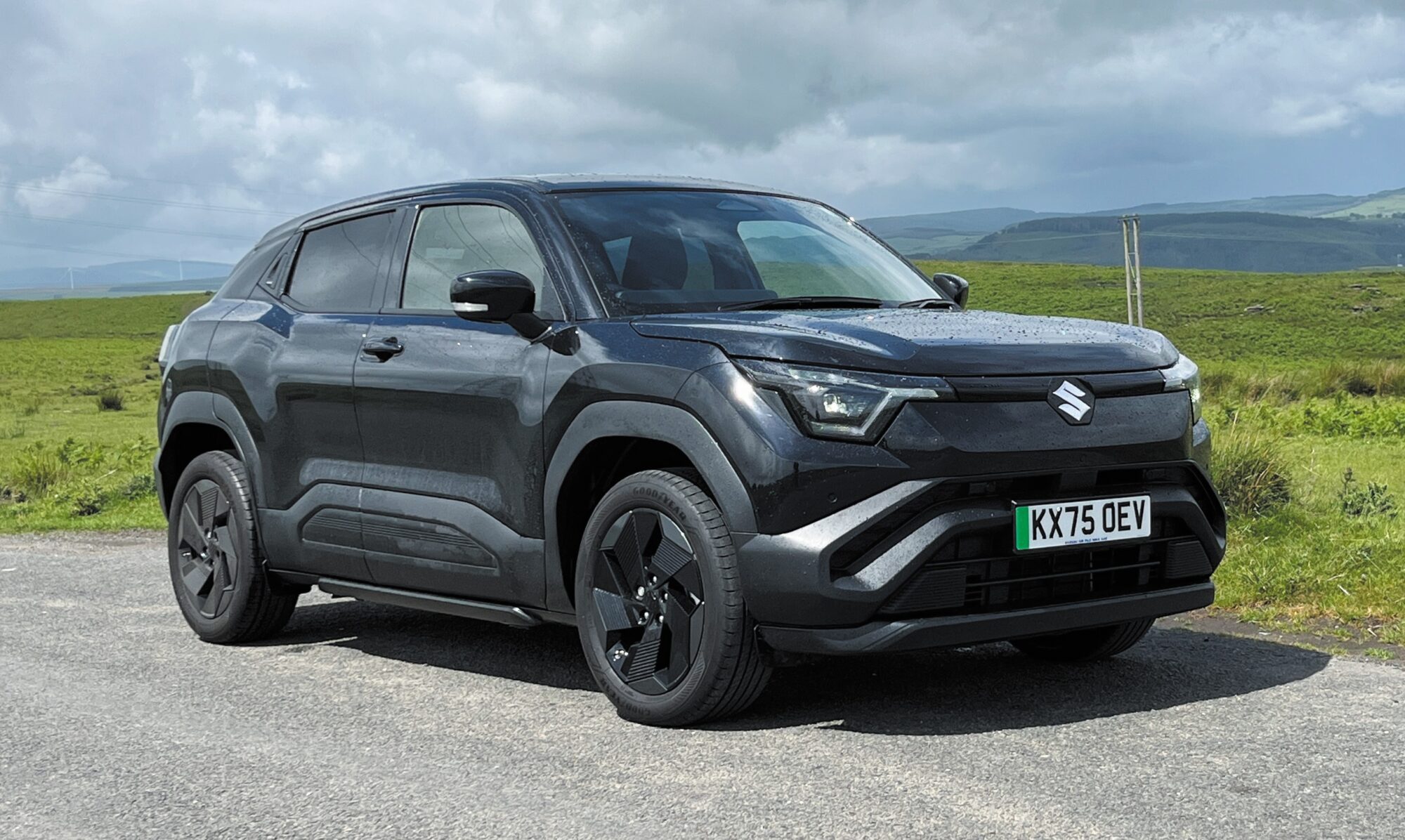
MODEL ON TEST: MOTION 61kWh – MILEAGE – 2,040
What comes to mind when you think of Suzuki? In the UK, it’s carved a small and steady niche with a few hallmarks; affordable, efficient and reliable compact cars, often capable of punching above their weight off road. However, it isn’t a brand known for its electric vehicles and this is the gap in the line-up that the new e Vitara is here to plug.
The battery electric gap is an important one to fill, especially in Europe where manufacturers are facing a heavily fined double whammy of ever-tighter CO2 targets and, in the UK, a mandatory EV share for their new registrations. It’s a blunt system that had put Suzuki in a strange position, with no real ‘gas guzzlers’ worthy of being penalised, but no zero-emission EVs to drag down its average CO2 figure either. This shows in the eVitara’s launch, with early production earmarked for Europe, instead of Suzuki’s home market of Japan, or even India, where it’s made.
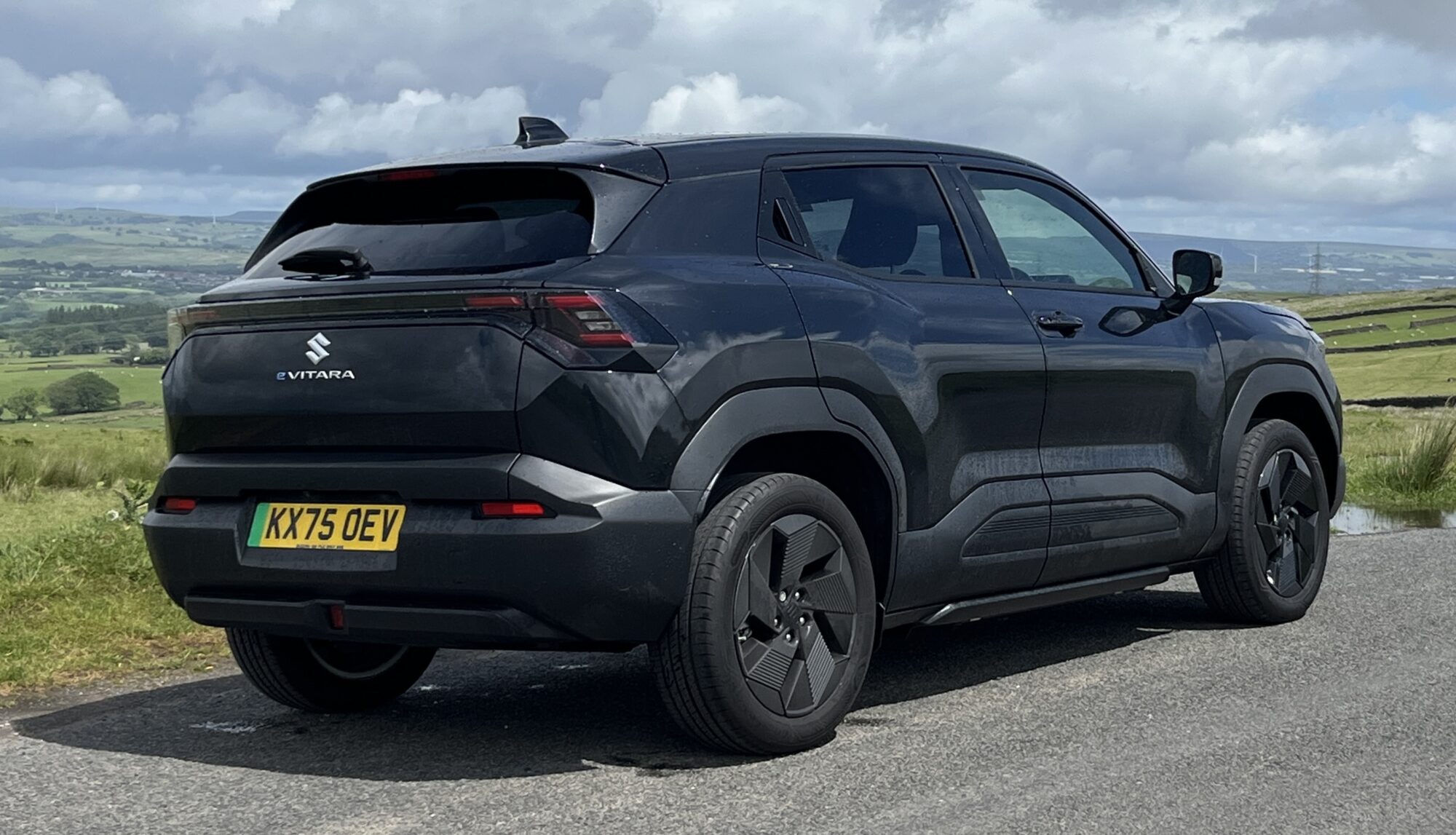
Despite the name, this isn’t related to the mild hybrid Vitara, which will continue to be sold in the UK for the near future. The e Vitara uses a dedicated EV platform developed in collaboration with Toyota, and it’s almost identical to the latest-generation Urban Cruiser from the A-pillar back. Both have the same choice of 49 and 61kWh (gross) battery capacities, but the Suzuki boasts a lower entry price and optional Allgrip-e four- wheel drive for the larger capacity pack.
Our car is in the middle of that powertrain line-up. The 61kWh battery is a £3,000 price jump, but extends the range from 213 miles to a more useable 264 miles while boosting power output from 142 to 172bhp. Prior experience with Suzuki’s Allgrip four-wheel drive system suggests the electric equivalent will be excellent, but, on the road it adds a mere 9bhp while scrubbing 19 miles off the combined cycle range.
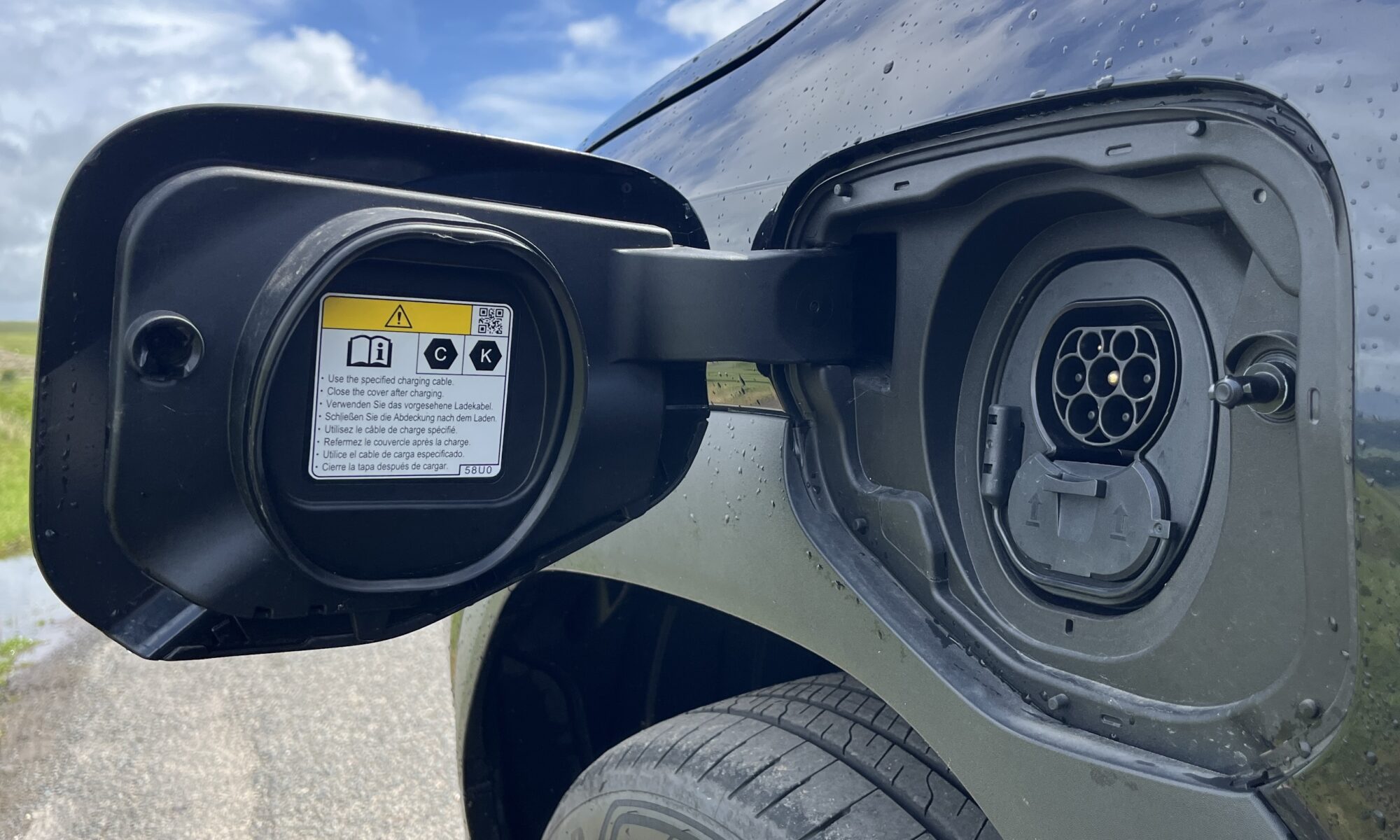
The only figure that isn’t competitive is charging – the e Vitara tops out at 70kW on a rapid charger, where most rivals are at 100kW or faster. It takes an underwhelming 45 minutes to get from 10 to 80%, which doesn’t sound much slower than the Hyundai Kona’s 41-minute dash to the same state of charge. However, based on brochure figures, the Kona is getting an extra 40 miles (223 in total) in a four-minute shorter charge.
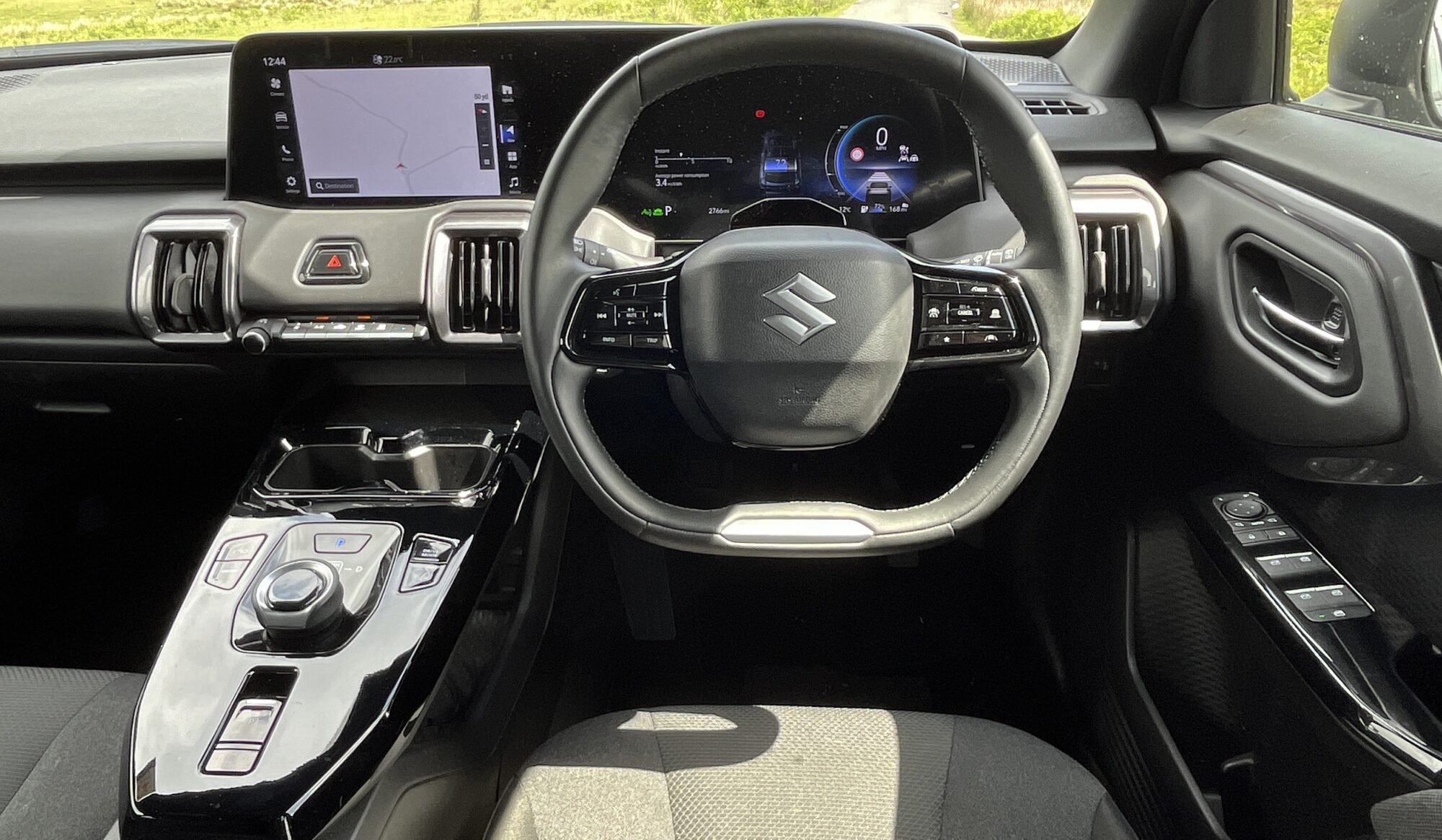
Motion (as tested here) is the lower of the two trim levels offered in the UK, but it’s respectably well-equipped. Adaptive cruise control, keyless entry and start, built-in navigation and wireless smartphone connectivity, plus front parking sensors (as well as rears, with a reversing camera) are
all fitted at the entry level. Suzuki has also included a heat pump and, if you opt for the larger battery heating on the front seats, steering wheel and under the wipers, all of which can help reduce range loss in winter.
It’s generous enough to make the Ultra trim a nice-to-have rather than an essential upgrade, adding luxuries like larger 19-inch wheels, a panoramic roof, upgraded audio and synthetic half- leather upholstery, but losing the 49kWh battery option. Both trims are good value compared to rivals, supported by Suzuki matching the UK government’s £3,750 EV grant and interest-free credit to keep retail buyers’ monthly payments down.
For the most part, this doesn’t feel like a cut-price newcomer.The cabin is a little plasticky in places, but so are rivals’ interiors, and the two high-resolution screens on the dashboard look suitably modern. However, I’ve found the volume knob laggy and, although Suzuki has retained toggle switches for most climate control settings, Auto mode and the heated seats and steering wheel are a few taps inside the touchscreen.
Within the context of Suzuki’s hallmarks, the e Vitara feels like a good fit – a relatively affordable, efficient and reliable compact EV. But is that enough to carve out its own niche in a crowded segment? I’ll be interested to find out over the coming months.
ALEX GRANT
WHAT’S HOT: Equipment levels are generous on the entry-level Motion trim, especially considering the price.
WHAT’S NOT: The 61kWh battery’s 265-mile range is competitive, but it’s let down by poor DC charging speeds.
STANDARD EQUIPMENT:
10.25-inch digital instruments, 18-inch alloy wheels with Goodyear EfficientGrip 2 SUV 225/55 R18 tyres and tyre repair kit, 40/20/40 split/fold rear seats, Adaptive cruise control with speed limiter, Alarm system, Anti-lock brakes with electronic brake force distribution and brake assist, Auto-dimming rear-view mirror, Automatic headlights, Autonomous emergency braking system, Blind spot monitoring, Climate control DAB radio with 10.1-inch touchscreen, navigation, 4-speakers, USB-C sockets, voice control and steering wheel controls, Drive mode selector, Driver monitoring system, Driver, passenger, head and driver’s knee airbags with passenger side de-activation, Electric and heated mirrors with power folding, Electric park brake, Electric windows front and rear, Electronic stability programme with traction control, Emergency e-call system, Heated front seats, Heated steering wheel, Hill hold control, ISOFIX child seat safety fasteners for rear outer seats, Keyless entry and start, Lane departure warning, Lane keep assist, LED daytime running lights, LED headlights with high beam assist, LED taillights, Parking sensors front and rear, Rain sensing windscreen wipers, Rear privacy glass, Rear cross traffic alert system, Reversing camera, Tyre pressure monitors, Wireless Android Auto, Apple CarPlay and Bluetooth smartphone compatibility
OPTIONAL EQUIPMENT FITTED TO TEST CAR:
Bluish black pearl paint (£650)
FACTS & FIGURES
PRICE: (NEW) £29,249
PRICE: (AS TESTED) £29,899
ELECTRIC CAR GRANT ELIGIBLE? No
COLOUR: Bluish black pearl
BUILT IN: Gujarat, India
CODENAME: A8I
GENERATION: 1
PLATFORM: Global C platform
BODYSTYLE: 5-door SUV, 5-seats
LAYOUT: Front-wheel drive
POWERPLANT: Single electric motor and 61kWh lithium-iron phosphate battery pack
GEARBOX: 1-speed automatic
MAX POWER: 128kW/172bhp/174ps
MAX TORQUE: 142lb ft/193Nm
TOP SPEED: 93mph
0-62MPH: 8.7secs
CO2 EMISSIONS: 0g/km
ECONOMY: (COMBINED) 4.1 miles/kWh
ECONOMY: (ON TEST) 3.4 miles/kWh
RANGE: (COMBINED) 264 miles
RECHARGE TIME:
AC 7kW (10-100%) 9 hours
AC 11kW (10-100%) 5 hours 30 mins
DC 70kW (10-80%) 45 minutes
INSURANCE GROUP: 23
BIK RATE: (2026/2027 TAX YEAR) 4%
SIZE: (LENGTH/WIDTH WITHOUT MIRRORS/HEIGHT/ WHEELBASE) 4,275/1,800/1,640/2,700mm
BOOT SPACE: (MIX/MAX) 244-310/562 litres
KERB WEIGHT: 1,799kg
TOWING WEIGHT: 750kg
EURO NCAP RATING: Four stars
SPARE WHEEL: (FULL-SIZE/SPACESAVER/RUN-FLAT/ SELF-SEALING/REPAIR KIT) No/no/no/no/yes
WARRANTY: 3 years/60,000 miles up to service activated 10 years/100,000 miles
DATE ARRIVED: 11th May 2026
COSTS: None
FAULTS: None
© Motorworld Media 2023
Registered Office: 4 Capricorn Centre, Cranes Farm Road, Basildon, Essex. SS14 3JJ
Company Number: 8818356
Website designed by Steve Dawson