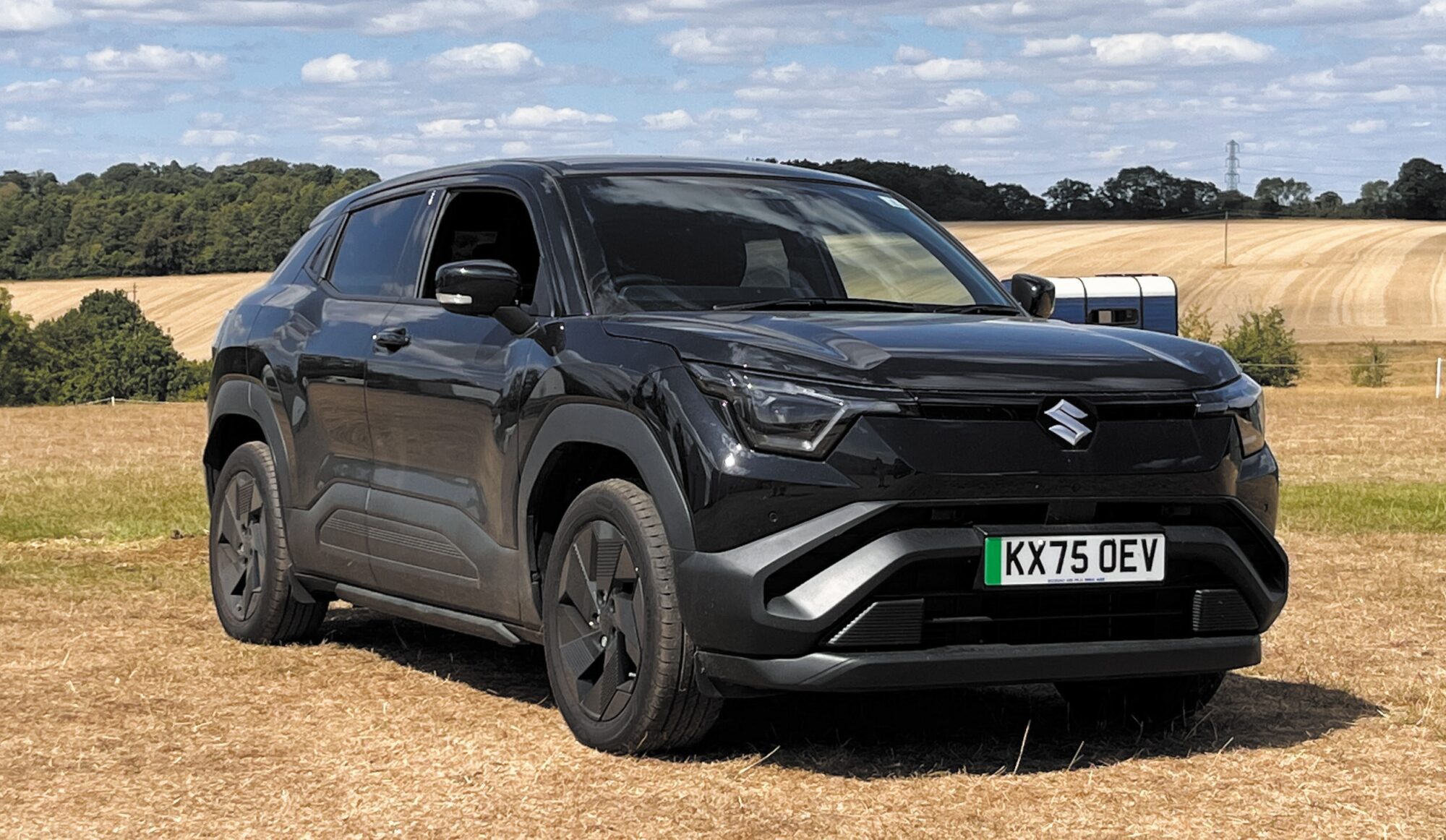
MODEL ON TEST: MOTION 61kWh – MILEAGE – 3,255
Permit me to state the obvious for a moment, but it’s been really, really, hot recently. I’ve always believed that you don’t really get to know an EV until you’ve lived through four seasons with it, but until now I’ve always seen winter as the acid test. It turns out summer can be brutal, too.
I’m not just talking about cold weather range loss. Winter EV driving is punctuated by the smugness of windows that de-ice every morning and a pre-warmed cabin for those chilly commutes. But in a period where my lounge thermostat has logged a sweltering 29 degrees, the e Vitara’s ability to offer an air conditioned space on the driveway without also running an engine has been a welcome bonus. Especially if it’s simultaneously charging from my solar panels. However, it’s also taken a significant chunk out of my average efficiency figures. Having spent a few weeks in Eco mode, the near-permanent need for cold air has meant switching to Normal, as this doesn’t limit the system’s performance. Suzuki hasn’t included a display that splits out what this is consuming from everything else, but it’s obviously working hard if the trip counter is to be believed.
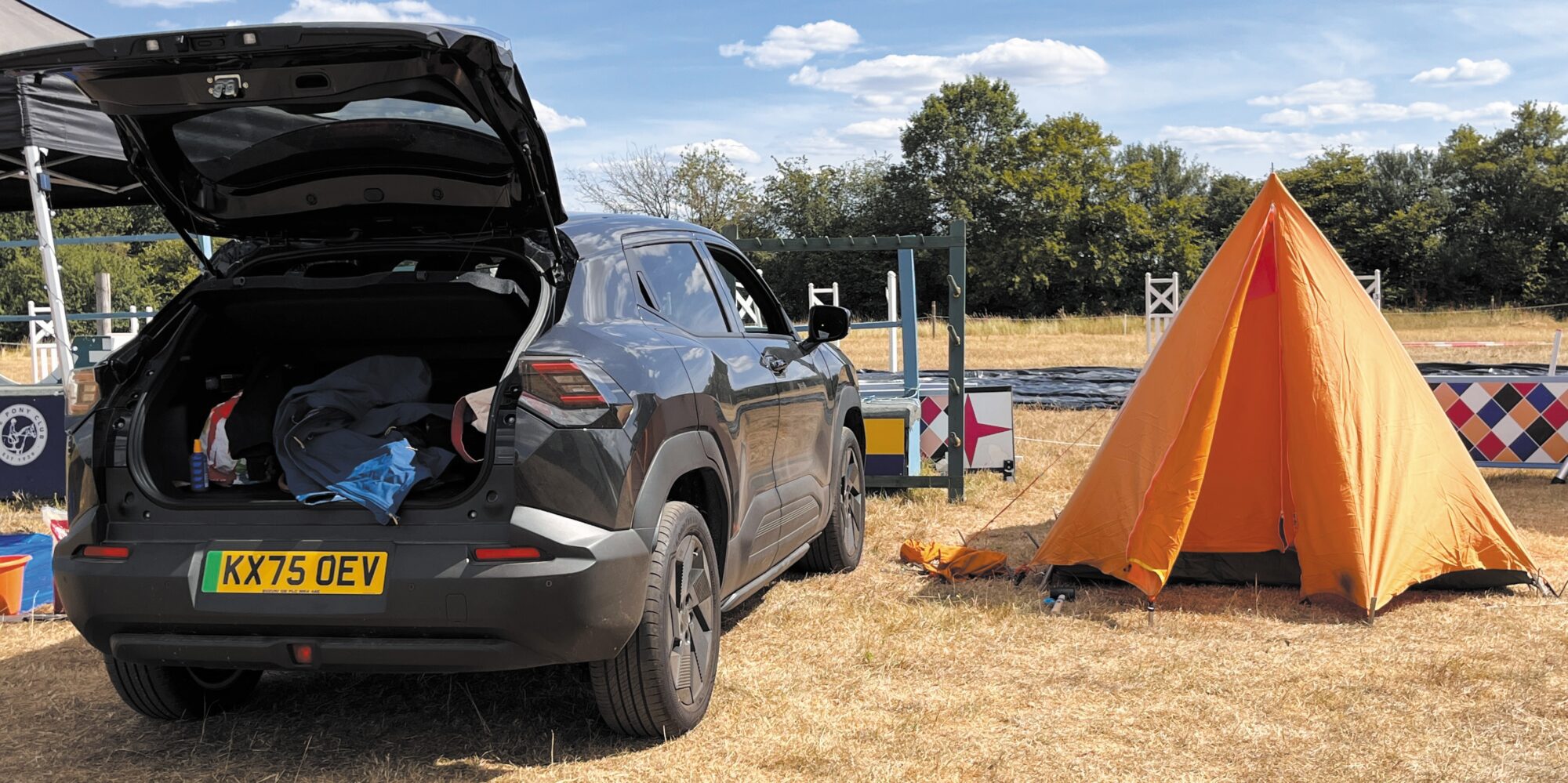
A case in point; I recently did a 300-mile round trip to Bedfordshire for a friend’s wedding. Camping was optional (technically, I viewed it as mandatory) so there was a decent amount of kit on board, but I only made it from Cardiff to Bristol before Eco mode outstayed its welcome in favour of a more comfortable drive. By the time I arrived at the venue, my two- and-a-half-month average efficiency had dropped from 3.3 to 2.9 miles per kilowatt-hour. It was down at 2.7 when I got home the next day.
These are abnormal UK conditions, but it’s quite an adjustment and one that doesn’t get much airtime compared to EVs’ cold weather range compromises. My much cooler May road trip to Hertfordshire easily returned a range of around 220 motorway miles, which is plenty. At somewhere in the region of 2.5 miles per kilowatt hour, my mental maths suggests I’m in the ballpark of 160 miles to a full charge. That’s in traffic with the adaptive cruise control set to a steady 70mph (where traffic allows). It’s a big chunk of range to lose, especially with a lacklustre 60kW maximum charging speed (100kW plus is the norm). That said, for a car that feels specified for intermittent motorway usage, it still didn’t struggle with the gruelling conditions.
I habitually stop at Reading Services if I’m headed to or from the London area, as it’s a break before or after the busiest bits of the route. If I’m in an EV, I’ll also plug it in. On a 300-mile round trip, with the air conditioning set to “Arctic Blast” and the battery’s thermal management no doubt working overtime in the heat, I spent a combined 40 minutes charging and arrived home with range to spare.
I also got to eat my sandwiches in a quiet, air-conditioned car while it charged, instead of the services’ busy, sweaty food hall. It’s becoming evident that even more city-focused EVs easily manage the big miles these days.
ALEX GRANT
WHAT’S HOT: At the moment, everything. Black seats, black rooflining, black wheels, near-black paint. Scorching!
WHAT’S NOT: Air conditioning in Eco mode can’t keep up with a solo driver in this weather, let alone a family.
CLICK HERE TO READ ALL OF OUR LONG-TERM REPORTS ON THE SUZUKI E VITARA
FACTS & FIGURES
ARRIVED: 11th May 2026
PRICE WHEN NEW: £29,249
PRICE AS TESTED: £29,899
ECONOMY: 4.1 miles/per kWh (official WLTP) 3.3 miles/per kWh (on test)
COSTS: None
FAULTS: None
© Motorworld Media 2023
Registered Office: 4 Capricorn Centre, Cranes Farm Road, Basildon, Essex. SS14 3JJ
Company Number: 8818356
Website designed by Steve Dawson