MODEL ON TEST: DOUBLE CAB V-CROSS AUTOMATIC – MILEAGE – 6,050
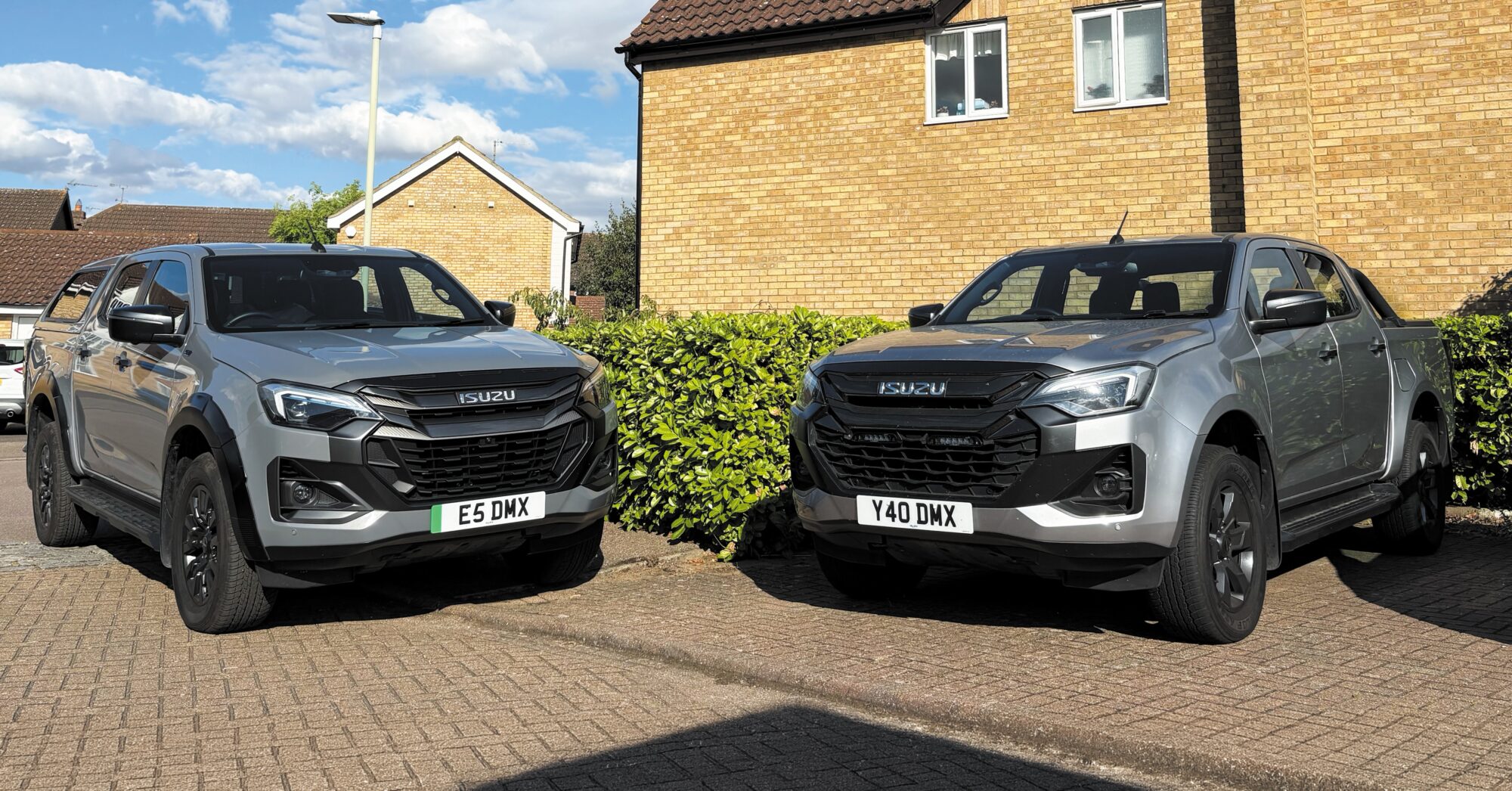
After spending five months with our Isuzu D-Max, and with continued fuel price uncertainty, I wondered whether an electrified pick-up might be a better solution. The options are few,but it seems like Isuzu has been reading my mind, as it’s now offering an electric version of the D-Max. And this month,I’ve had the opportunity to compare it with ours.
Outside, apart from the ‘EV’ badging, there are no obvious external differences over the diesel. The electric D-Max gets off to a good start if payload and towing capacity are key to the buying decision, as they are identical. Plus, the electric motors don’t hinder this Isuzu’s off-road ability, as it’s almost as capable, as we found on a previous off-road drive. Choose the D-Max EV and it’s currently available
on a 0% finance deal from Isuzu. This might take the edge off the fact that, in matching range-topping V-Cross trim, the EV is £74,911, which is a whopping £23,400 more than the newly launched 2.2-litre diesel in flagship trim. A cheaper eDL40 double cab is available, but that only saves you £1,800.
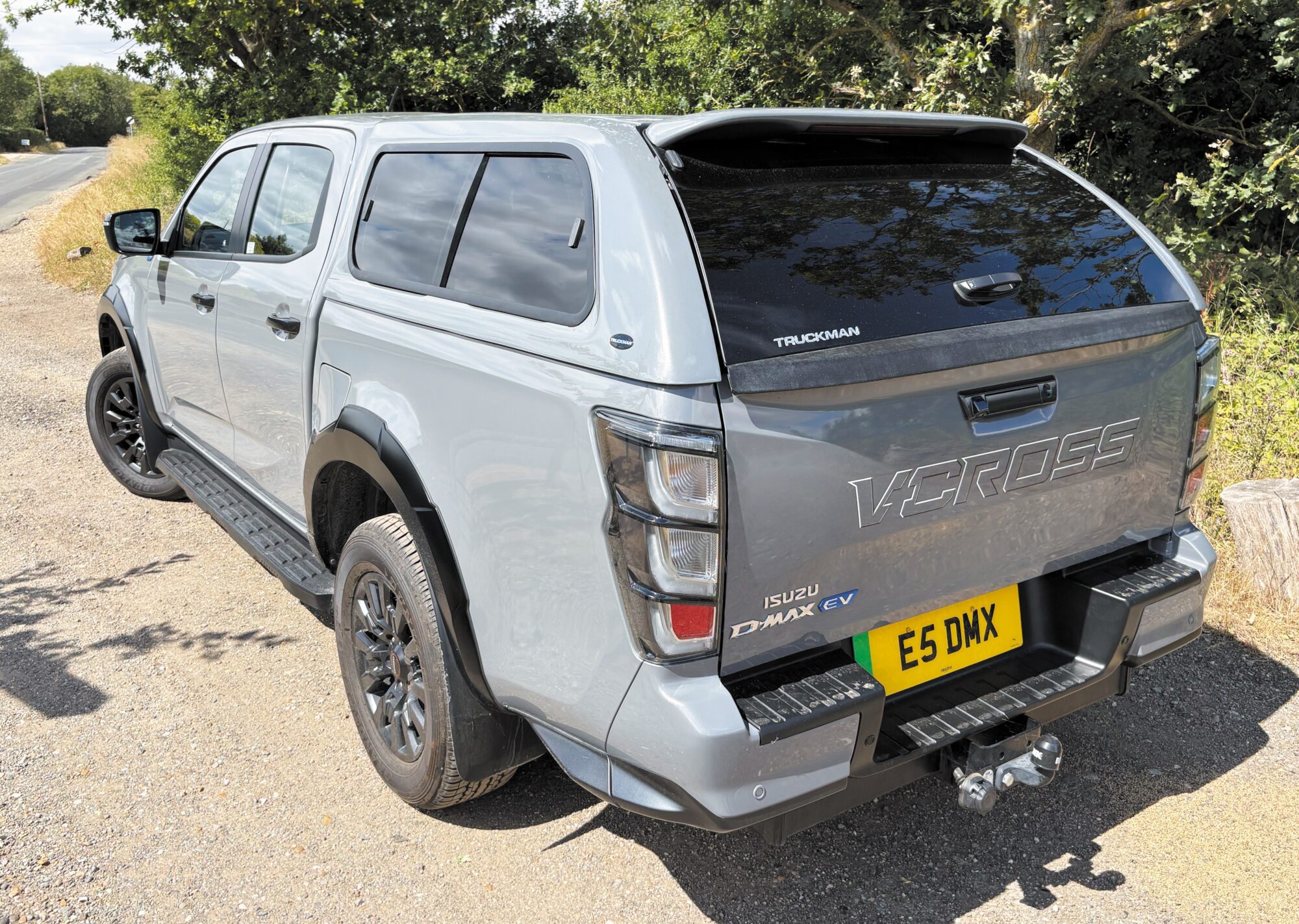
The only difference over the diesel at start-up is the eerie silence, rather than the chug of the diesel engine. Also, while the automatic gear selector might be the same, the EV doesn’t have the same mechanical feel as the combustion engine option. The fact that the D-Max EV is over 300kg heavier than the diesel means the dual motors have to work harder from the off, and despite having more power – with 200bhp – it certainly feels no faster when pulling away from junctions, even though the numbers say it is by almost two seconds.The EV doesn’t feel any quicker on the move, either. Top speed is 80mph, but even getting to the national speed limit takes patience, and at this speed on motorways, the battery range drops rapidly, so we often slowed to a more leisurely 60mph, just to eke out more mileage. Then there’s the ride. The EV gets its own bespoke De Dion rear suspension to handle the extra weight of the battery and to improve ride and handling. We found the ride softer than our diesel, but with a choppier, more unsettled edge.
Inside, like the outside, the changes for the EV are subtle. The rev counter is now a ‘power’ gauge, there are small paddles behind the steering wheel to control the level of regeneration when braking, and extra unwelcome beeping from the infotainment system.
So, we’ve established that the EV is more refined than our diesel, but unless we had a specific job need, such as a farmer working on his own land, we’d still stick with our slower, noisier diesel. Why? Well, the biggest problem with the EV is its lack of range. Isuzu claims 164 miles – better than its key rival, the upcoming Toyota Hilux at 159 miles – but we were closer to 140 miles on our mixed test route, and that’s bound to drop when loaded or when the weather gets colder. Then, when charging is needed, the fact this Isuzu has 11kW three-phase charging as standard impresses, but DC charging isn’t exactly speedy. Isuzu estimates the D-Max EV will go from 20 to 80% in one hour and reach full in 10 hours using an 11kW AC charger.

For context, our 1.9-litre diesel may be noisy and now replaced by the more refined 2.2 edition, but in our hands the D-Max diesel achieved over 466 miles – its best yet – from its last fill-up, bettering Isuzu’s own claimed combined figure at 34.2mpg. That said, Isuzu should be congratulated for offering something different, as the EV version of the D-Max is well-engineered and executed. But its small range means it will only have limited appeal amongst fleet and job- specific buyers.
MARTYN COLLINS
WHAT’S HOT: Comprehensive warranty and after care.
WHAT’S NOT: The 1.9-litre diesel engine feels overworked.
CLICK HERE TO READ ALL OF OUR LONG-TERM REPORTS ON THE ISUZU D-MAX
FACTS & FIGURES
ARRIVED: 14th March 2026
PRICE WHEN NEW: £49,594 (including VAT)
PRICE AS TESTED: £54,848 (including VAT)
ECONOMY: 31.4mpg (official WLTP) 34.2mpg (on test)
COSTS: None
FAULTS: None
© Motorworld Media 2023
Registered Office: 4 Capricorn Centre, Cranes Farm Road, Basildon, Essex. SS14 3JJ
Company Number: 8818356
Website designed by Steve Dawson