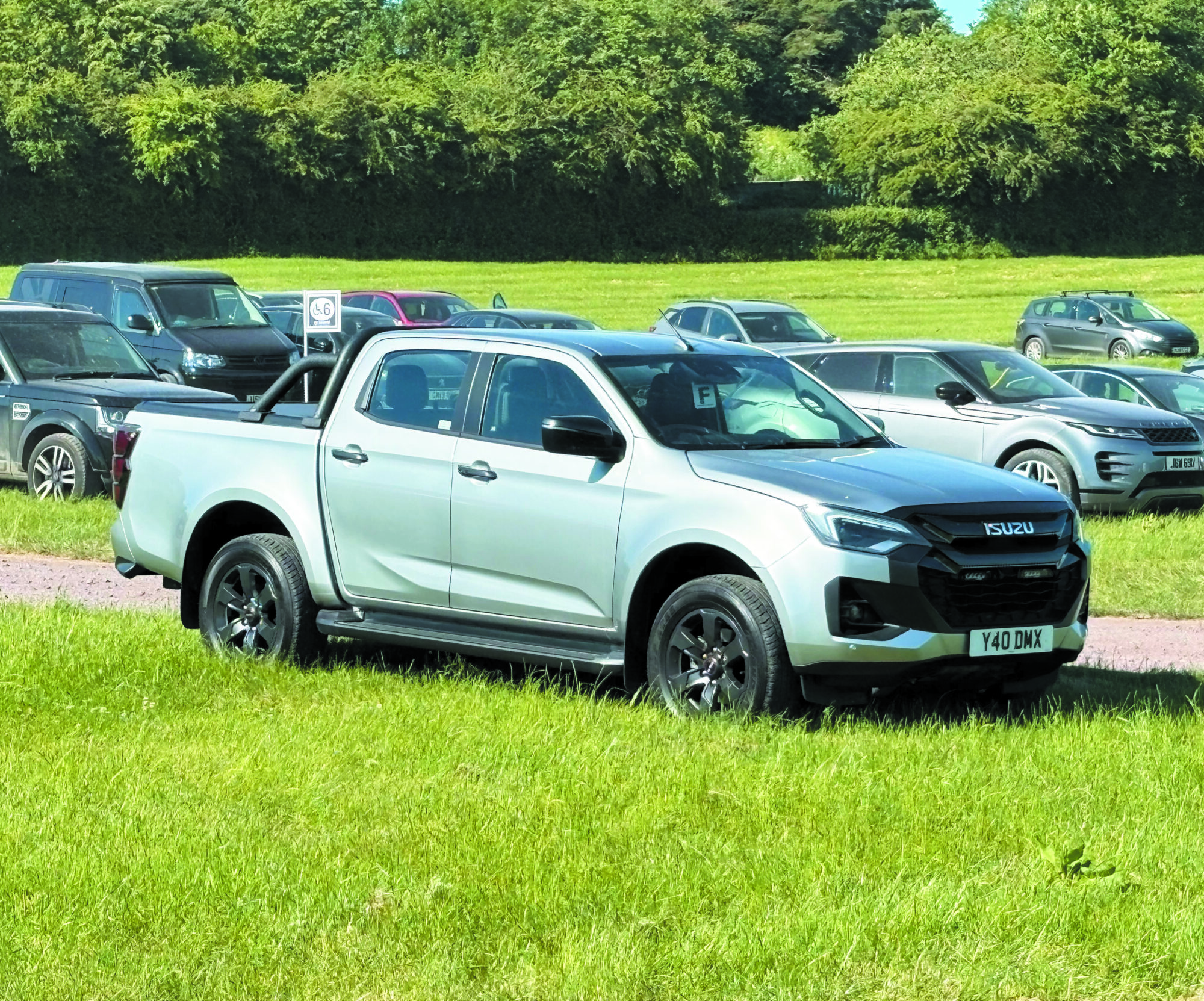
MODEL ON TEST: DOUBLE CAB V-CROSS AUTOMATIC – MILEAGE – 5,278
A general rule of thumb is that a start-stop system helps fuel economy, as it automatically turns off the engine when the vehicle is stopped in traffic or at a red light. Usually this can result in up to a 10% improvement in fuel economy around town, and up to 20% in heavy traffic. So, with fuel economy dropping to around the 25mpg mark after a week of commuting, any improvement in consumption would be a welcome relief for my wallet, especially considering current diesel prices.
Yet, even after a long run with the battery fully charged, our Isuzu’s stop- start system seems to spend more time started rather than stopped. According to the dashboard, reasons for the stop-start system not working can include the front wheels not being in the straight-ahead position. During the recent heatwave, it would also remain inactive if the air- conditioning was running at full blast, and finally, if there was not enough charge in the battery. On top of this, the brake pedal needs a firm press to cut the engine.
I was going to check with the Isuzu press office to see if the stop-start system was working correctly on our pick-up. Then, at a recent industry event where I briefly got to try the EV version of the D-Max, mostly off-road, I got chatting to one of their spokespeople, who was actually a D-Max diesel owner. The D-Max EV impressed, and it was the perfect opportunity to ask about the Isuzu’s stop-start system. It turns out our D-Max is working fine, which is disappointing, especially given how hard you have to press the brake pedal to operate it.
My only previous experience of stop- start systems was with one of my own BMW MINIs, which, as long as there was enough charge in the battery, seemed to cut the engine far more often. Then again, the Isuzu is a more complicated vehicle, but I suspect any economy gains with the D-Max will not be because of the stop-start system.
Otherwise, this month, the long drive to see family that I mentioned in the last report went ahead. As I expected, the D-Max proved to be perfect transport for a busy weekend visit to Somerset. Firstly, the load area was untroubled by all of our luggage, as well as the dog’s belongings, for our four-day visit, although a rainstorm proved that the Winbo Electric Roll Top isn’t entirely waterproof. More worrying, the tailgate handle jammed on a couple of occasions, which, if it continues, will mean a visit to a dealer.

However, on the late-night drive to Shepton Mallet, mostly on dark country roads, I once again appreciated the power of those Lazer Linear 6 Elite front bumper lights.
Our Isuzu was the perfect transport for the Bath and West show, mixing it with other D-Maxes in the car park. The day ended with a light test of the Isuzu’s off-road capabilities while visiting friends and watching a beautiful sunset. The following day, we all squeezed into the D-Max to visit a local water park, where the generous load space was once again welcome, considering all the inflatables we were carrying. At the end of the weekend, I was happy with the 30.4mpg fuel consumption and the cheaper diesel we discovered on the way home.
EV version of the D-Max, mostly off- road, I got chatting to one of their spokespeople, who was actually a D-Max diesel owner. The D-Max EV impressed, and it was the perfect
MARTYN COLLINS
WHAT’S HOT: Comprehensive safety kit.
WHAT’S NOT: The sometimes jiggly ride can be tiresome.
CLICK HERE TO READ ALL OF OUR LONG-TERM REPORTS ON THE ISUZU D-MAX
FACTS & FIGURES
ARRIVED: 14th March 2026
PRICE WHEN NEW: £49,594 (including VAT)
PRICE AS TESTED: £54,848 (including VAT)
ECONOMY: 31.4mpg (official WLTP) 30.4mpg (on test)
COSTS: None
FAULTS: None
© Motorworld Media 2023
Registered Office: 4 Capricorn Centre, Cranes Farm Road, Basildon, Essex. SS14 3JJ
Company Number: 8818356
Website designed by Steve Dawson