MODEL ON TEST: ULTIMATE 1.6T PLUG-IN HYBRID 4WD AUTOMATIC – MILEAGE – 706
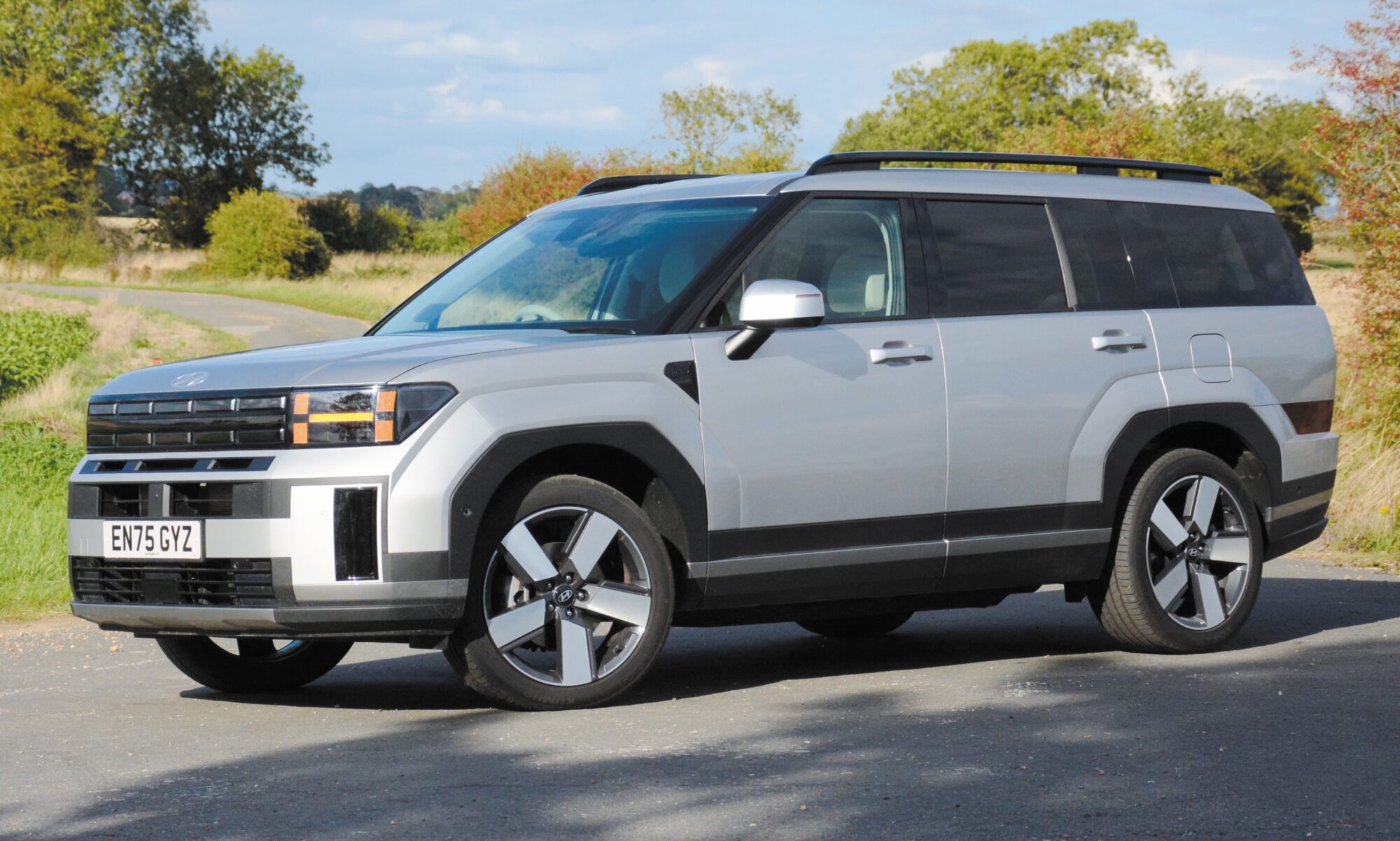
When appraising any vehicle on test, it’s vital for motoring journalists to set their expectations to one side, judging each by its merits and niggles. Yet some preconceptions are so difficult to shake that spending a substantial amount of time and mileage with a car which blows them apart can feel discombobulating – the Hyundai Santa Fe Plug-in Hybrid is one such model.
It’s that ‘Plug-in’ aspect I automatically home-in on with fervent suspicion: the extra weight of a larger battery plus associated cabling and ancillaries surely must make it less economical in the real-world than a self-charging hybrid version of the same car? Yet, in EV mode, it can’t possibly be as energy efficient as an electric car of comparable vital statistics, can it?
On paper, the Santa Fe Plug-in’s electric-only range seems distinctly sub-ordinary at 33.6 miles, yet in the mildness of a damp Lincolnshire late summer, my hands-on experience has been 29 to 30 miles from each charge, at least two-thirds of which is typically closer to the national speed limit, not urban pace. I also religiously did what few PHEV drivers supposedly do and plugged it in whenever it was parked on the driveway. Note that there’s no CCS provision and the energy flow rate is about half of what a conventional type- 2 domestic wallbox can deliver, but as the battery capacity’s only 13.8kWh, a flat-to-full zap takes under five hours.
According to the revised, PHEV-specific WLTP efficiency methodology, the Hyundai can average 74.3mpg, so I’d expected this to translate to something around 50 to 55mpg in my hands if I was lucky. Nope. Over 706 miles, it returned 96.5mpg. Even typing it out there I’m shaking my head as though David Blaine’s just performed a one-to- one illusion for me. In fact, for the first 500 or so miles, the trip computer never registered below 100mpg, only dropping when I ran it for a spell with zero plug-in charge, during which it returned an indicated 40.4mpg. Remember, this is a circa 2.1 tonnes family SUV with 283bhp and 280lb ft at your right foot’s disposal. Not that the Santa Fe ever feels as quick as its 8.0-second 0-62mph benchmark time suggests it might. Brisk enough to nip into traffic gaps on roundabouts and safely complete single-carriageway overtaking manoeuvres, but it’s no fireball.
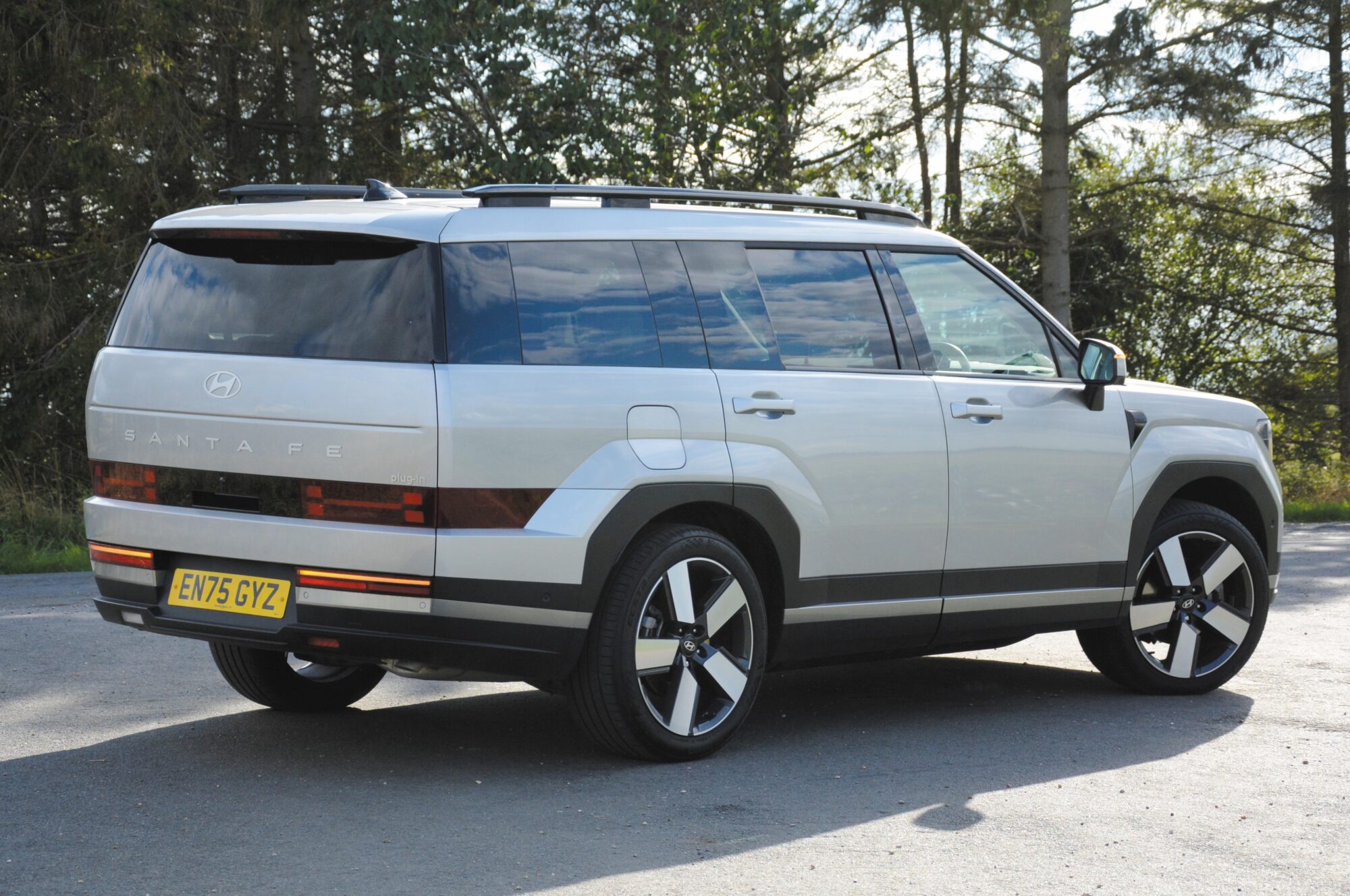
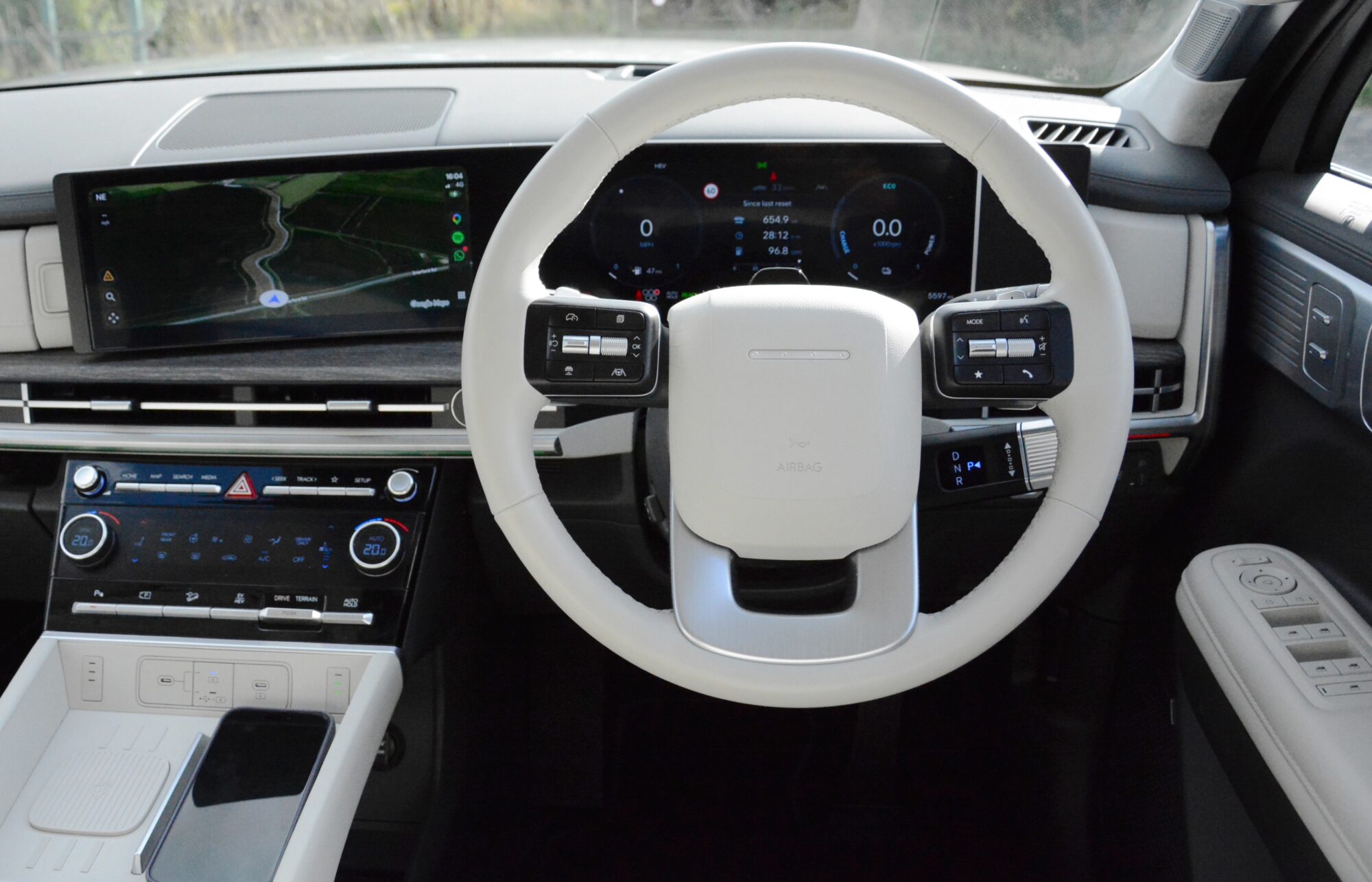
As a family wagon, the seven-seater Santa Fe impresses. Its cabin doesn’t feel as avant garde as the Peugeot 5008’s, but its physical controls count is higher, plus it feels slightly more substantial from a material quality perspective and the roominess in all three rows feels a tad more generous, amplified
by this mid-range Ultimate derivative’s pale Supersonic Grey hide upholstery. Adults can just about fit in the rearmost seats, but most will need the 60/40-split bench ahead sliding forwards to provide sufficient legroom. That doesn’t disguise the lack of cushioned support for thighs and spines back there. It’s better to think of the Santa Fe as a generously proportioned five-seater with an internal dickey for two extra, should occasion demand it.Amenities including air vents and USB-C ports are provided for all three rows, while the Hyundai’s perpendicularity ensures deep, rectangular windows, so third-row occupants can see out rather than staring at a chunky D-pillar. Quick release straps have the 50/50-split rearmost seats immediately folded down to extend the floor, providing you’ve remembered to remove the retractable luggage cover first. Buttons on the boot wall drop the middle-row seats flat, creating a continuous load area without having to faff around trundling to the back doors. They’re similarly equipped with buttons that automatically tip and slide them forward to ease access into the very back seats.
Being 250mm shorter than the Hyundai Ioniq 9 helps the Santa Fe feel significantly wieldier, both around tight multistorey car parks as well as out on more open roads, where it also displays far greater composure and body control than its larger sibling. That said, it’s not a car you’ll wake up early for in order to take the scenic route to work. Comfort remains the order of the day, Hyundai’s dynamics team having struck a sensible balance of rounding-off sharper road imperfections without making it so floaty
This particular Santa Fe Ultimate costs £56,450, and even the most expensive Peugeot 5008 Plug-in Hybrid, albeit with only 225bhp but a 48-mile electric range, is £9k cheaper, which is closer in price to PHEV iterations of the Mazda CX-80 and just discontinued Land Rover Discovery Sport.The Hyundai’s ride is more settled than the former and the brand has a superior reliability record than the latter’s maker. At the end of the day, for a hard-working family car, those are both crucial factors. Its deeply impressive fuel efficiency is a super-sized cherry that’s bigger than the cake it’s perched upon. Just make sure that you plug it in as often as you possibly can.
KEITH WR JONES
WHAT’S HOT: Real-world fuel efficiency, flexible interior, material quality, comfort.
WHAT’S NOT: Lacklustre electric-only range, third row not adult-friendly, engine sound.
STANDARD EQUIPMENT: 12.3-inch digital instruments, 20-inch alloy wheels with Kumho Ecsta PS71 255/45 R20 tyres and tyre repair kit, 50/50 split/fold third row seats, 60/40 split/fold/slide/reclining second row seats, 360-degree camera system, Adaptive cruise control with stop and go, Alarm system, Ambient lighting, Anti-lock brakes with electronic brake force distribution and brake assist, Automated parking system, Automatic headlights, Autonomous emergency braking system, Blind spot warning, DAB/FM/AM radio with 12.3-inch touchscreen, navigation, with BOSE premium sound system, 12-speakers, six USB-C sockets, voice control and steering wheel controls, Digital key, Digital rear-view mirror, Drive mode selector, Driver monitoring system, Driver, passenger, centre, side and head airbags with passenger side de-activation, Dual-zone climate control, Electric and heated mirrors with power folding, Electric front seats with memory functionality, Electric park brake with auto hold, Electric tailgate, Electric windows front and rear, Electrically adjustable steering column, Electronic stability programme with traction control, Emergency e-call system, Head-up display, Heated and ventilated front seats, Heated second row seats, Heated steering wheel, ISOFIX child seat safety fasteners for second row outer seats, Keyless entry and start, Lane follow assist, Lane keep assist, Leather steering wheel, Leather upholstery, LED daytime running lights, LED headlights, LED rear lights, Parking sensors front, rear and side, Rain sensing windscreen wipers, Rear cross traffic alert, Rear door blinds, Rear privacy glass, Roof rails, Self-levelling rear suspension, Traffic sign recognition, Tyre pressure monitors, Wireless Android Auto, Apple CarPlay and Bluetooth smartphone compatibility and Wireless smartphone charging
OPTIONAL EQUIPMENT FITTED TO TEST CAR:
Typhoon Silver metallic paint (£0)
FACTS & FIGURES
PRICE (NEW): £56,450
PRICE (AS TESTED): £56,450
COLOUR: Typhoon Silver metallic
BUILT IN: Ulsan, South Korea
CODENAME: MX5
GENERATION: 5
PLATFORM: N3
BODYSTYLE: 5-door SUV, 7-seats
LAYOUT: Four-wheel drive
POWERPLANT: 1,598cc, 4-cylinder, 16-valve, turbocharged petrol with electric motor and 13.8kWh battery pack
GEARBOX: 6-speed automatic
MAX POWER (ENGINE): 132kW/178bhp/180ps
MAX POWER (ELECTRIC MOTOR): 79kW/106bhp/107ps
MAX POWER (COMBINED): 211kW/283bhp/288ps
MAX TORQUE (ENGINE): 195lb ft/265Nm
MAX TORQUE (ELECTRIC MOTOR): 246lb ft/334Nm
MAX TORQUE (COMBINED): 280lb ft/380Nm
TOP SPEED: 128mph
0-62MPH: 8.0secs
CO2 EMISSIONS: 36g/km
ECONOMY (COMBINED): 74.3mpg
ECONOMY (ON TEST): 96.5mpg
FUEL TANK: 47 litres
RANGE (ELECTRIC RANGE): 33.6 miles
INSURANCE GROUP: 43
BIK RATE (2026/2027 TAX YEAR):14%
SIZE: (LENGTH/WIDTH WITH MIRRORS/HEIGHT/ WHEELBASE) 4,830/2,206/1,780/2,815mm
BOOT SPACE: (7/5/2 SEATS) 621/985/1,942 litres
KERB WEIGHT: 2,090kg
TOWING WEIGHT: 1,700kg
EURO NCAP RATING: Not yet tested
SPARE WHEEL: (FULL-SIZE/SPACESAVER/RUN-FLAT/ SELF-SEALING/REPAIR KIT) No/no/no/no/yes
WARRANTY: 5 years/Unlimited miles
DATE ARRIVED: 17th August 2026
COSTS: None
FAULTS: None
© Motorworld Media 2023
Registered Office: 4 Capricorn Centre, Cranes Farm Road, Basildon, Essex. SS14 3JJ
Company Number: 8818356
Website designed by Steve Dawson