MODEL ON TEST: CROSS 49kWh – MILEAGE – 709
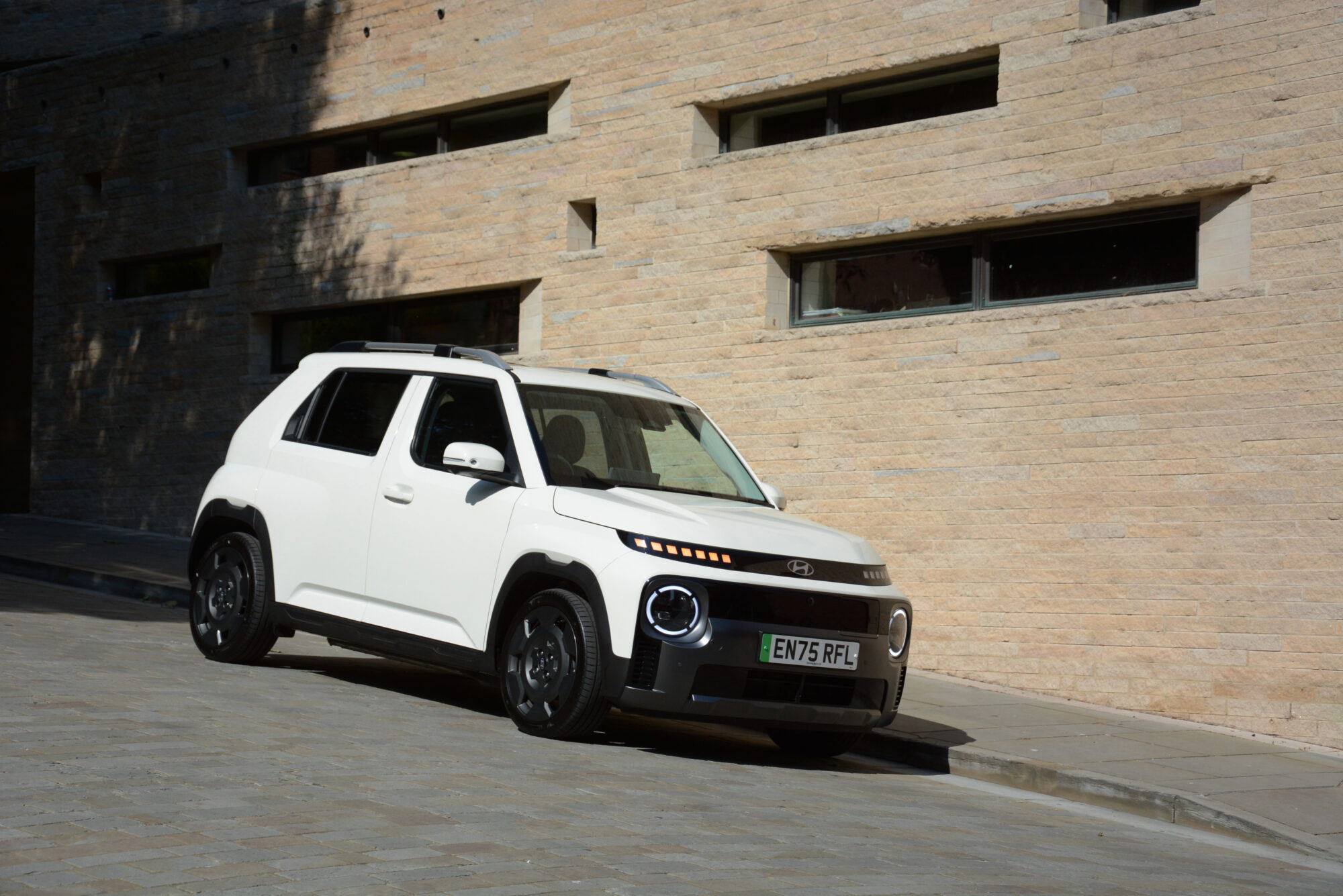
Given the praise lavished upon a certain retro futuristic, French, compact EV, you’d be forgiven for wondering if the alternatives were equally devoid of appeal as they were virtue. Far from it, many are far more accomplished than simply being shortlisted to bolster the numbers, while some are excellent in their own right, including the Hyundai Inster Cross I’ve spent the past month with. In reality, the Inster’s a closer rival to the forthcoming electric Twingo than it is the Renault 5, being 77mm shorter, 164mm narrower across the body and 112mm taller, even with its chunky roof rails discounted, and those last two statistics make the Hyundai feel so capacious.
Okay, the Inster’s a strict four-seater,but in many small cars the central rear bench position isn’t particularly appealing. Both the Cross and 02 variants of the Inster benefit from an extended driver’s seat cushion incorporating a pair of moulded cupholders, while the two individual rear seats slide and recline, prioritising legroom or boot volume depending on your needs. With the back seat pushed to the back of its runners, I had plenty of space with the front seat set to my own driving position, with ample headroom despite the presence of an electric glass sunroof above the front seats. Though the Inster’s narrow, you don’t feel uncomfortably close to fellow occupants, although the seatbelt buckle positions, front and rear, can seem on the snug side for the broader among us.
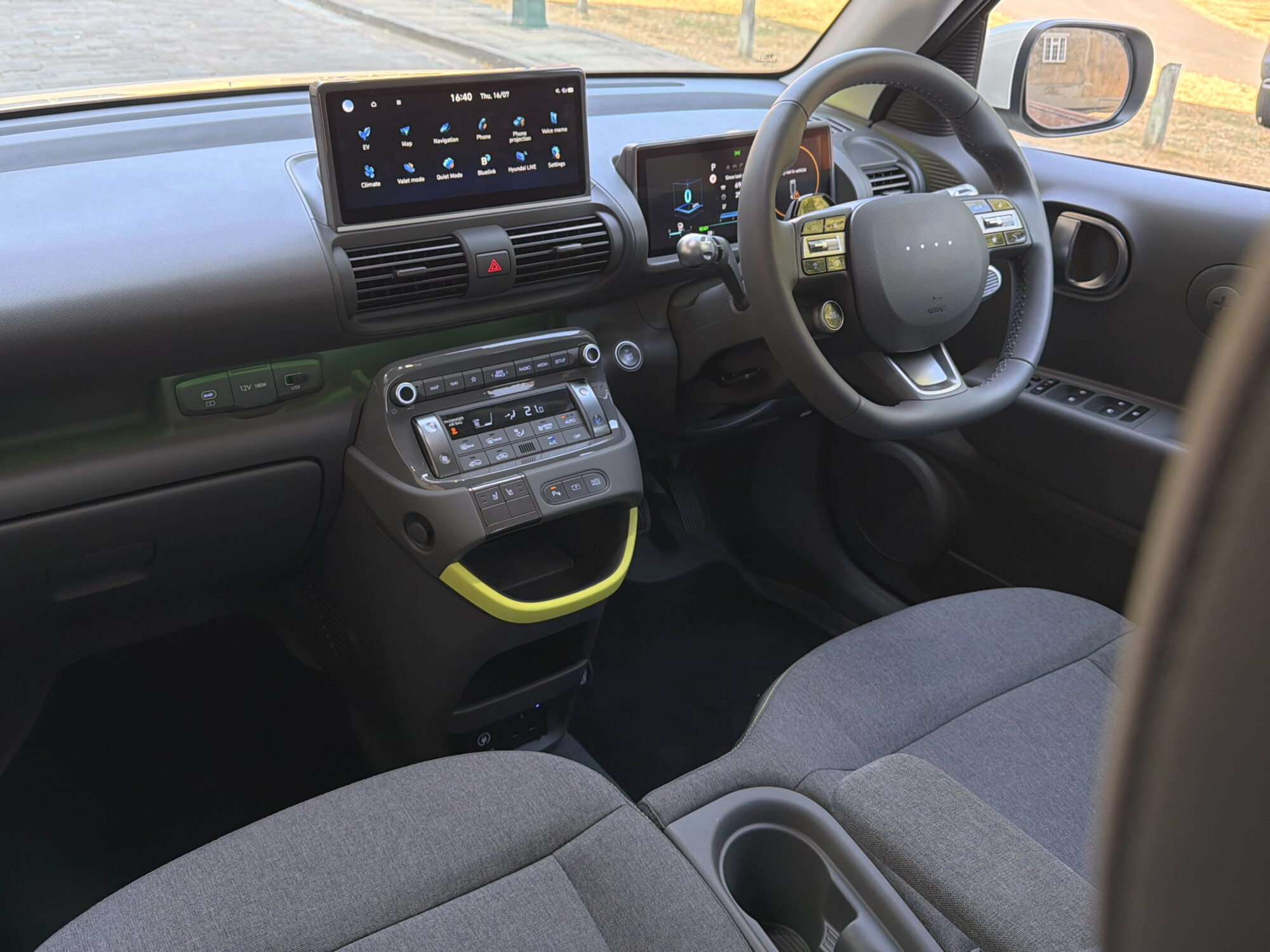
Depending on the position of the rear seats, boot space varies from 238 to 351 litres, inclusive of the void beneath the floor which is capable of accommodating more than just the Hyundai’s charging cables.They fold flat too, liberating a 1,059-litre volume, aided and abetted by neat touches such as the substantial flaps bridging the gap from the now horizontal seatbacks to the boot floor. Interior mouldings are bereft of squidgy plastics, but there’s no sense of cheapness to the finish or fit.That’s reinforced by the colossal standard equipment list – over the 02 trim the Inster Cross has chunkier, SUV-esque bumpers, as well as Hyundai’s Blind Spot View Monitor which pings rear-facing camera views onto the relevant side of the driver’s display screen and a 360-degree parking camera package.
They’re welcome because at £29,005, the Inster Cross sounds expensive for a dinky car, even with post-Covid price resetting mentally factored in.
This one also had a £500 bundle option of dashboard-mounted three- pin socket and the ability to use your phone or smartwatch in lieu of a key. Unfortunately, the Inster isn’t eligible for the Electric Car Grant, but there are generous discounts to be had if you take up Hyundai’s finance deal.Yet, for all the technology squeezed into the Hyundai, it didn’t have wireless Apple CarPlay, which meant drive-through- based caffeine fixes were sullied by tautening the charging wire from the passenger side of the dashboard to the contactless payment device being thrust through the driver’s window.
Cross versions are only available with the 49kWh battery pack yielding a claimed Combined cycle range of 223 miles, averaging 4.1miles per/kWh. And in the real world? I’ve been averaging exactly that – and that’s in the Normal driving mode, not the hair-shirted Eco setting. In fact, when my journeys have predominantly been local, the display has suggested as much as 247 miles was possible from a full charge.
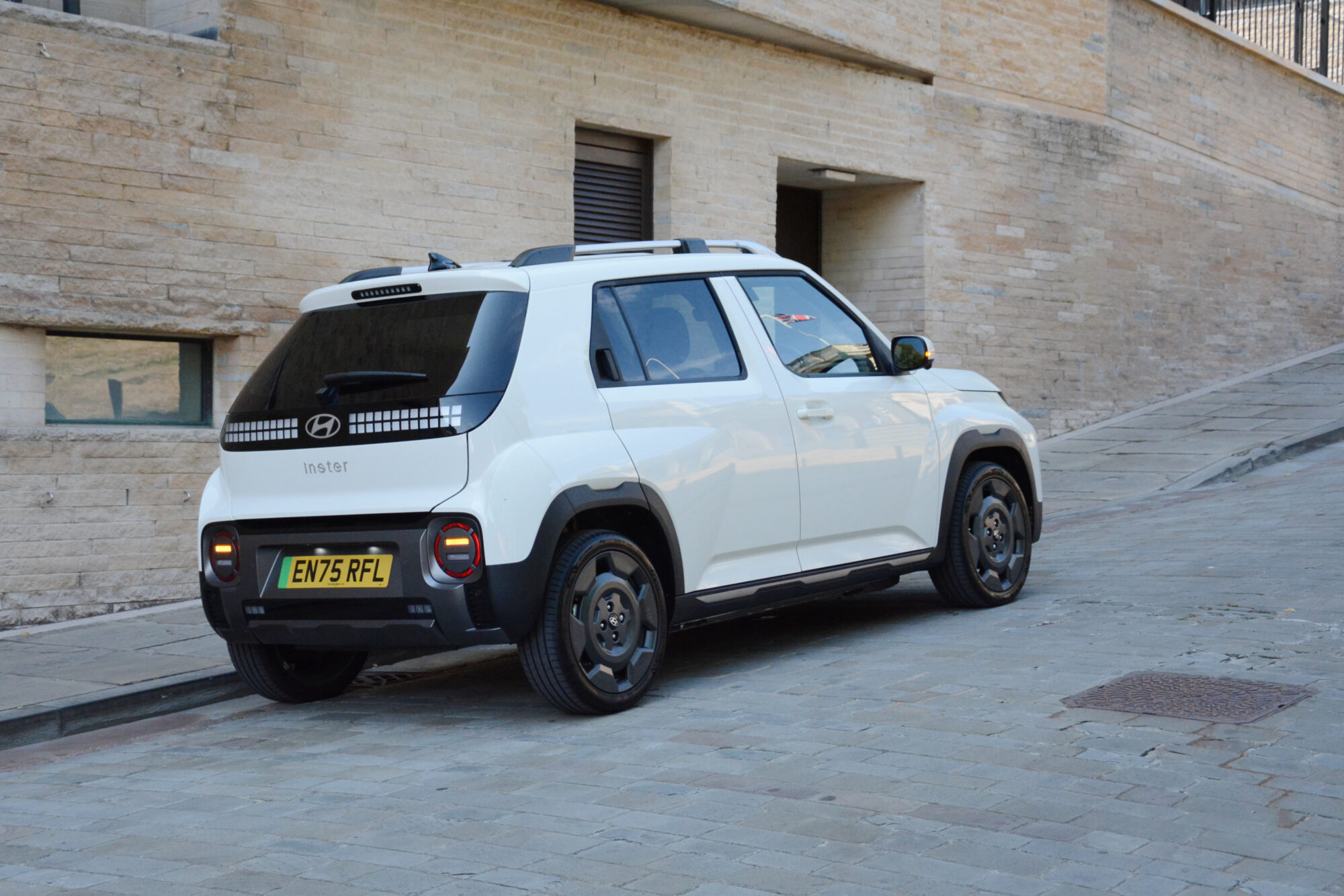
With 115bhp and 108lb ft of torque, performance isn’t what the Inster’s about, yet it feels far zippier than its 10.6-second 0-62mph time implies. From a standstill to 30mph it can feel unnecessarily quick, even without engaging Sport mode, with overtaking acceleration remaining strong up to 60mph, from which point you can expect to be smoked by parcel couriers in their 3.5-tonne panel vans of choice. Although it is narrow, the Inster Cross doesn’t feel like an Alton Towers attraction when tackling winding B-roads at the legal limit, with plenty of traction through bends and progressively weighted steering, albeit not especially communicative. While its springs and dampers do a commendable job of rounding-off sharper road imperfections, they can’t dial out the stereotypical short- wheelbase bounciness at higher speeds on undulating country lanes, though it all feels authentically in tune with the Hyundai Inster Cross’s character.
So, would I take the Hyundai Inster over other similarly sized EVs available right now? Yes, it’s far more accomplished and rangier than the BYD Dolphin Surf and Honda Super-N, while the prices on finance make it significantly more affordable based on current deals. But I would save myself a couple of grand further by plumping for 02 grade over the Cross.That interior in an Inster for a little over £24k looks much more enticing, plus the tethered CarPlay might dissuade me from visiting Starbucks as frequently.
KEITH WR JONES
WHAT’S HOT: Capacious, flexible cabin, real-world efficiency, equipment roster.
WHAT’S NOT: No wireless CarPlay, Cross interior lacks cutesiness, seatbelt buckle positions.
STANDARD EQUIPMENT:
10.25-inch digital instruments, 17-inch alloy wheels with Kumho Ecsta 205/45 R17 tyres and tyre repair kit, 50/50 split/fold/reclining/sliding rear seats, 360-degree reversing camera, Adaptive cruise control with stop and go functionality, Ambient lighting, Android Auto,Apple CarPlay and Bluetooth smartphone compatibility, Anti- lock brakes with electronic brake force distribution and brake assist, Auto-dimming rear-view mirror, Automatic headlights, Autonomous emergency braking system with pedestrian, cycle and junction turning, Blind spot recognition, Climate control, DAB radio with 10.25-inch touchscreen, navigation, 6-speakers, USB-C sockets, voice control and steering wheel controls, Driver drowsiness detection, Driver, passenger and side airbags with passenger side de-activation, Electric and heated mirrors with power folding Electric, park brake, Electric sunroof, Electric windows front and rear, Electronic stability programme with traction control, Emergency e-call system, Heat pump, Heated front seats, Heated steering wheel, Hill start assist, ISOFIX child seat safety fasteners for rear seats, Keyless entry and start, Lane follow assist, Lane keep assist, Leather steering wheel, LED daytime running lights, LED headlights LED taillight clusters, Parking sensors front and rear, Rain sensing windscreen wipers, Rear privacy glass, Rear cross traffic alert system, Roof rails, Traffic sign recognition, Tyre pressure monitors and Wireless smartphone charger
OPTIONAL EQUIPMENT FITTED TO TEST CAR:
Tech pack – digital key and internal V2L three-pin plug (£500)
FACTS & FIGURES
PRICE (NEW): £29,005
PRICE (AS TESTED): £29,505
COLOUR: Atlas White
BUILT IN: Gwanju, South Korea
CODENAME: AX1
GENERATION: 1
PLATFORM: K1
BODYSTYLE: 5-door hatchback, 4-seats
LAYOUT: Front-wheel drive
POWERPLANT: Single electric motor and 49kWh lithium-ion battery pack
GEARBOX: 1-speed automatic
MAX POWER: 86kW/115bhp/116ps
MAX TORQUE: 108lb ft/147Nm
TOP SPEED: 93mph
0-62mph: 10.6secs
CO2 EMISSIONS: 0g/km
ECONOMY (COMBINED): 4.1 miles/kWh
ECONOMY (ON TEST): 4.1 miles/kWh
RECHARGE TIME:
AC 2.3kW (10-100%) 19 hours 31 minutes
AC 7.4kW (10-100%) 6 hours 44 minutes
AC 11KW (10-100%) 4 hours 35 minutes
DC 50KW (10-80%) 55 minutes
DC 150kW (10-80%) 30 minutes
RANGE: 223 miles
INSURANCE GROUP: 25
BIK RATE: (2026/2027 TAX YEAR) 4%
SIZE: (LENGTH/WIDTH WITH MIRRORS/HEIGHT/ WHEELBASE) 3,845/1,875/1,610/2,580mm
BOOT SPACE: (MIX/MAX) 238-351/1,059 litres KERB WEIGHT 1,335kg
TOWING WEIGHT: 0kg
EURO NCAP RATING: four stars
SPARE WHEEL: (FULL-SIZE/SPACESAVER/RUN-FLAT/ SELF-SEALING/REPAIR KIT) No/no/no/no/yes
WARRANTY: 5 years/Unlimited miles
BATTERY WARRANTY: 8 years/100,000 miles
DATE ARRIVED: 17th June 2026
COSTS: None
FAULTS None
© Motorworld Media 2023
Registered Office: 4 Capricorn Centre, Cranes Farm Road, Basildon, Essex. SS14 3JJ
Company Number: 8818356
Website designed by Steve Dawson